



Antique Tester Bedstead
An antique tester bedstead brings architectural presence and grand scale to a bedroom through its substantial posts and overhead canopy frame.
Antique Tester Bedstead
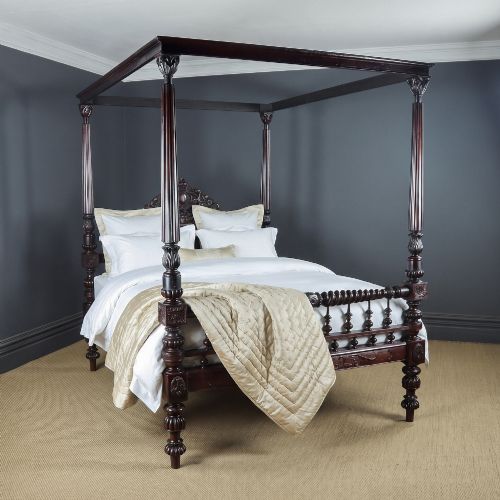
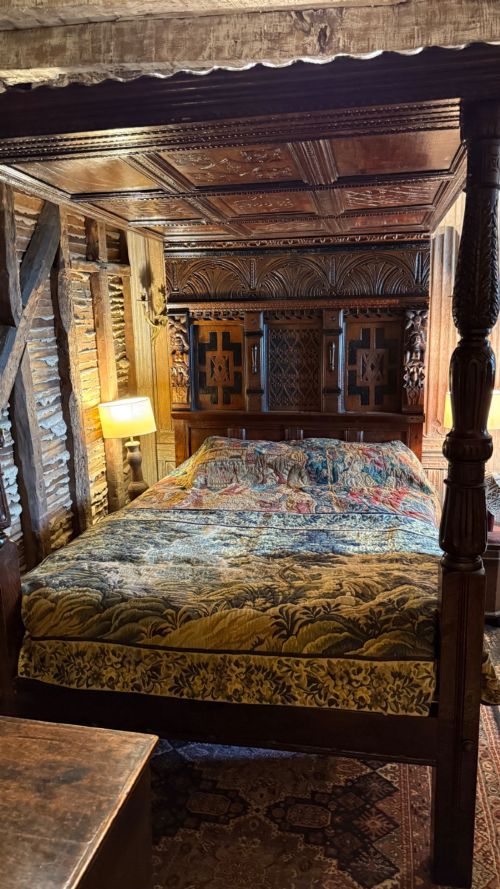
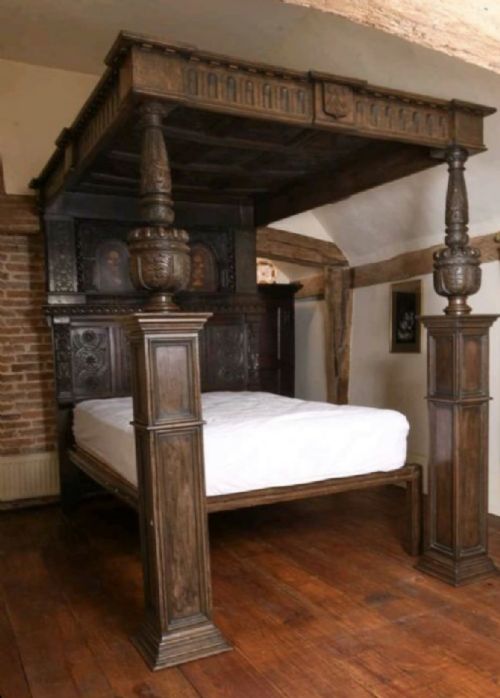
An antique tester bedstead defines a sleeping space through upright posts supporting an overhead canopy, known as a tester. The selections available range from sturdy seventeenth century oak frames to refined nineteenth century mahogany and gleaming brass half tester designs.
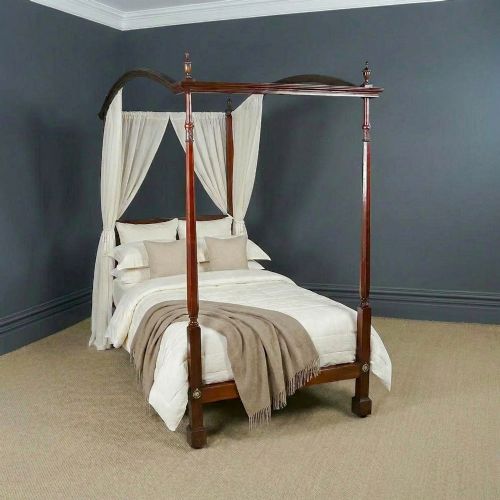
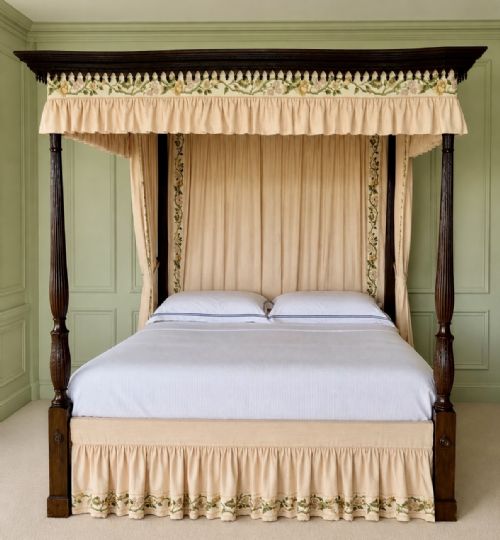
Buyers encounter substantial full tester configurations alongside half tester versions where the canopy extends only partway over the head of the bed. These pieces cross various historical idioms, including Jacobean, Regency, and Victorian Gothic styles.
Origins span from English workshops to Anglo-Indian colonial production centres, incorporating local timbers and distinctive regional carving traditions. The forms serve as both functional sleeping furniture and dominant architectural fixtures within a room.
Materials and Construction Methods
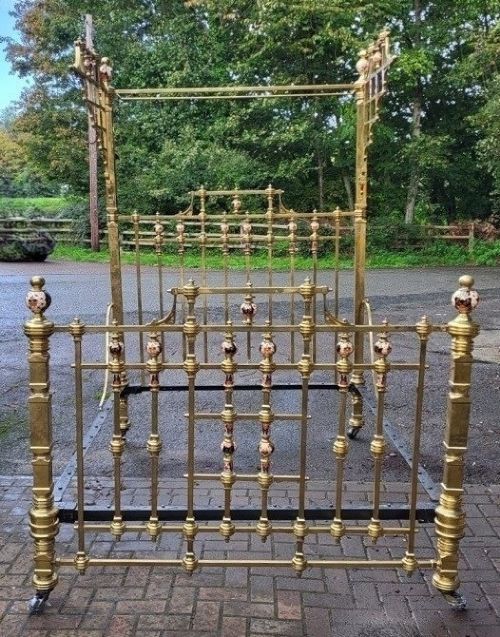
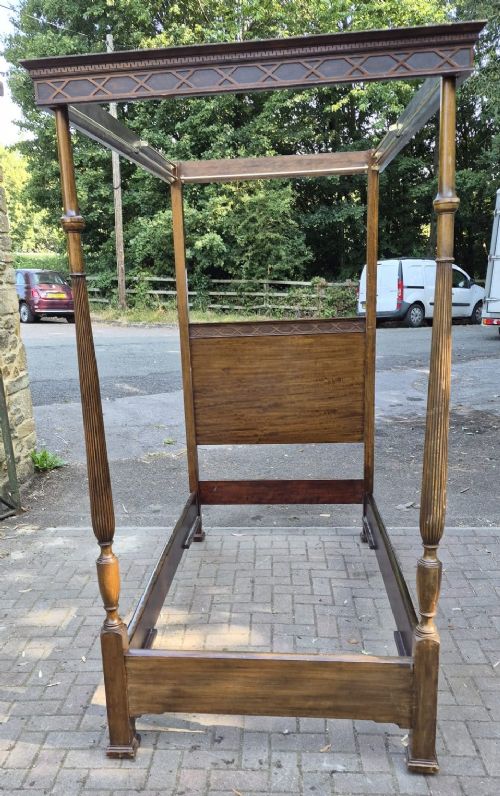
Cabinetmakers constructed the earliest frames from solid English oak, often incorporating fruitwood inlay and traditional mortise and tenon joinery. Later nineteenth century examples utilise rich mahogany and burr walnut, sometimes enhanced by porcelain mounts and turned columns.
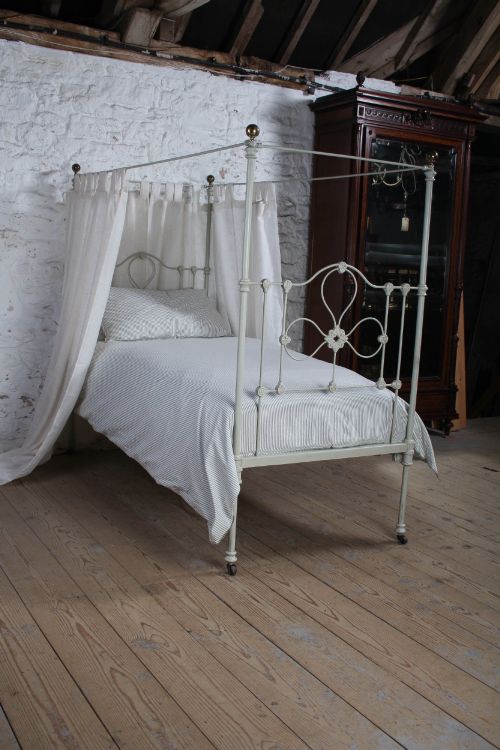
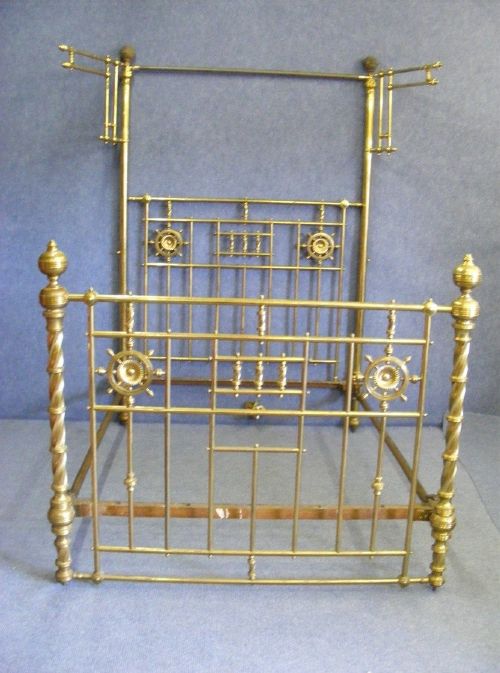
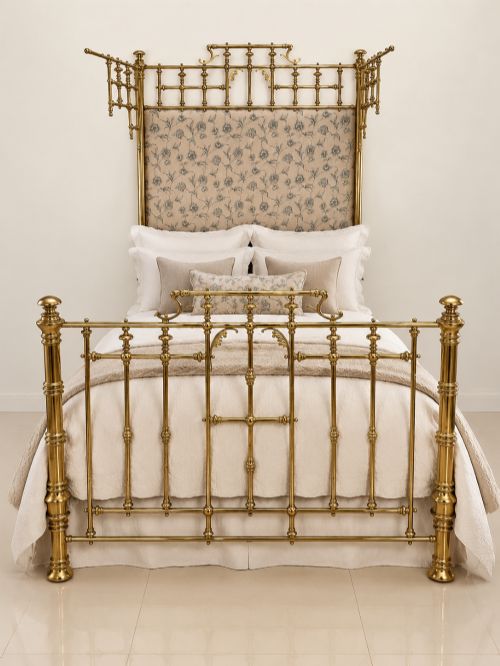
Metal alternatives emerged strongly during the Victorian era, employing heavy brass, cast iron, and wrought iron to form intricate half tester and four poster frames. These metallic structures combined tubular brass components with sturdy internal iron supports for stability.
Distinctions in Build and Execution
Quality rests upon the depth of timber carving, the crispness of turned posts, and the integrity of the structural joints. Superior examples display harmonious proportions between the heavy tester canopy and the supporting uprights.
In metal frames, the thickness of the brass tubing, the solidity of the cast joints, and the retention of the original finish separate standard commercial production from exhibition pieces designed for display.
Heals of London·Howard and Sons·RW Winfield
The Antique Tester Bedstead Glossary
- Tester
- The flat wooden canopy or ceiling suspended above a four poster bed. It historically provided privacy and warmth when paired with hanging curtains.
- Half Tester
- A wall-mounted or post-supported canopy that covers only the head portion of the bed rather than the entire length. This lighter design became popular during the Victorian period.
- Four Poster
- A bed featuring four vertical posts at each corner that support the upper tester frame. These posts range from simple turned timber to heavily carved architectural columns.
- Mortise and Tenon
- A traditional woodworking joint where a projecting tenon fits tightly into a matching mortise hole. This method provides the primary structural rigidity in early oak frames.
Antique Tester Bedstead: Frequently Asked Questions
How do I fit a modern mattress into an antique tester bedstead?
Many antique bedsteads were built to historical sizing standards that differ slightly from modern metric or imperial mattress dimensions. Custom mattress makers can build to exact historical measurements to ensure a proper fit within the frame.
Modern slats or supportive base boards can be integrated discreetly inside the wooden rails to provide the necessary foundation for contemporary mattresses without altering the historic structure.
How do I care for brass and iron on a Victorian bedstead?
Metal frames require dusting with a soft, dry cloth to prevent the accumulation of airborne particles. Avoid harsh chemical polishes that can strip original lacquers or protective patinas built up over decades.
Inspect the structural joints periodically to ensure that bolts and fixings remain secure. Gentle maintenance preserves the lustre of brass components and the painted surfaces of cast iron frames.
How do I date an oak tester bed from the seventeenth century?
Seventeenth century oak frames display characteristic tool marks, pegged joinery, and panelled headboards reflecting Elizabethan and Jacobean design motifs. The timber develops a deep, dark patina over centuries of exposure to light and air.
Construction details such as hand-cut tenons and natural shrinkage patterns distinguish period timber from later revival pieces. Examining the interior surfaces often reveals the original methods used by early carpenters.