



Antique Tea Service Tray
These antique tea service tray examples bring enduring craft to a table, offering solid metalwork and porcelain ready for daily use.
Antique Tea Service Tray
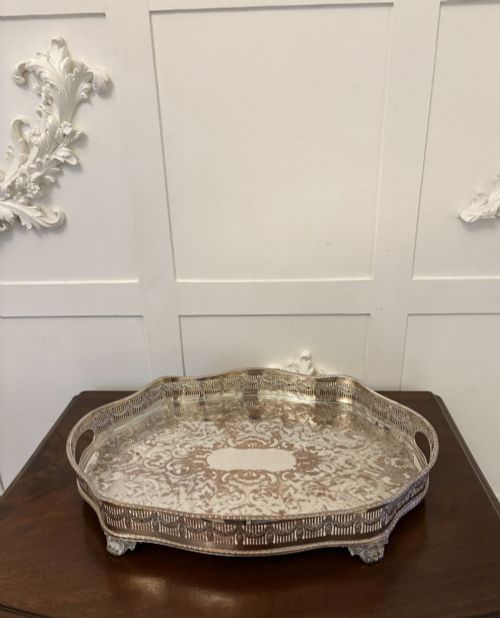
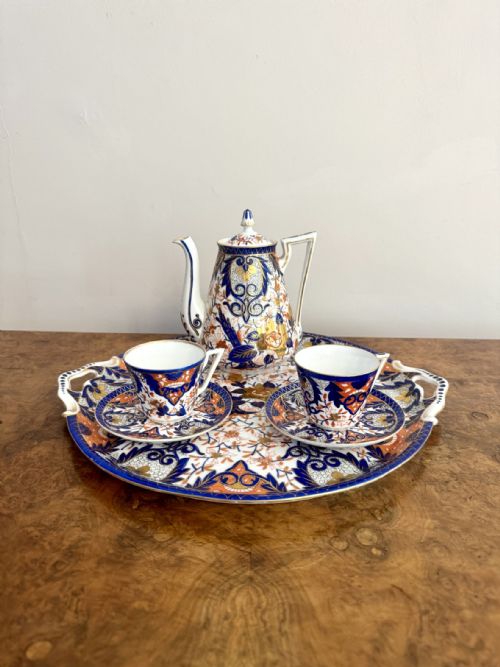
When you search for an antique tea service tray, you encounter an array of serving pieces spanning the Victorian, Edwardian, and Art Deco eras. These items include silver plated gallery trays, engraved silver plates, and porcelain breakfast or coffee sets designed for hospitality.
The most common versions met on this page are silver plated serving trays and tea sets from the late nineteenth and early twentieth centuries. Pieces range from large cocktail and drinks trays with handles to compact porcelain sets.
How they were made
Maker workshops utilised sterling silver, silver plate, electroplated nickel silver, and porcelain, often embellished with gold leaf, enamel, and copper. Metal pieces were shaped and engraved by hand or machine, whilst porcelain sets received detailed painted decoration.
Techniques varied from traditional silversmithing on sterling and plated metals to fine ceramic firing and glazing for porcelain coffee and tea sets.
Antique Tea Service Tray Retail Price Guide 2026
Typical asking prices for tea service tray among the pieces listed under this phrase on Sellingantiques today, from the lower quarter to the upper quarter. They describe what is for sale here now, not the wider market.
What varies in quality
Quality rests upon the depth and crispness of the engraved decoration and the integrity of the base metal or porcelain body. Pieces by established makers show superior weight, balanced handles, and precise surface finishing.
At the higher end, heavier silver plating and refined porcelain bodies demonstrate greater durability and more harmonious proportions than simpler commercial wares.
Mappin & Webb·Elkington & Co.·Walker & Hall·Royal Crown Derby
The Antique Tea Service Tray Glossary
- Silver Plate
- A thin layer of silver applied to a base metal such as copper or nickel silver. This technique provided the visual appeal of solid silver at a lower cost.
- Gallery Tray
- A tray featuring an openwork metal rim or gallery around the edge to secure cups and teapots. These raised borders were often pierced or cast in decorative patterns.
- Electroplated Nickel Silver
- A durable alloy of copper, nickel, and zinc coated with a layer of pure silver through an electrical process. It became standard for mid-range and high-end tableware.
- Imari
- A style of ceramic decoration featuring deep blue, iron red, and gold, originating in Japan and imitated by European potteries. Victorian versions bring vibrant colour to porcelain sets.
- Sterling Silver
- An alloy consisting of pure silver and other metals, usually copper, meeting a strict fineness standard. It represents the highest grade of silver used for tablewares.
Antique Tea Service Tray: Frequently Asked Questions
How do I clean an antique silver plated tray?
Clean silver plated trays using a soft cloth and a specialised silver polish designed to remove tarnish without scratching the metal surface. Avoid harsh abrasives that can wear through the thin plating over time.
Rinse the tray thoroughly in warm water and dry it immediately with a lint-free cloth to prevent water spots and maintain its bright finish.
Can I use an antique tray for daily serving?
Most antique serving trays and drinks trays are robust enough for gentle everyday use, provided you handle them with care. Metal and porcelain surfaces withstand normal beverage service when dried promptly after use.
Keep in mind that fragile porcelain sets and pieces with delicate enamel or gold leaf require extra care and hand washing rather than dishwasher cleaning.
How do I date an Edwardian tea tray?
Edwardian trays typically date from the reign of King Edward VII, spanning the early years of the twentieth century. They often feature bright cut engraving and stylistic influences that bridge Victorian heaviness and later Art Deco geometry.
Look for maker marks, registration numbers, or stamps on the underside, which often provide clues to the exact decade of manufacture.
What is the difference between a coffee set and a tea set?
Coffee sets generally include taller pots designed for brewed coffee alongside smaller cups and saucers, whilst tea sets feature wider pots intended for steeping loose leaves. Trays accompanying these sets are sized accordingly to hold the specific vessel proportions.
Some collections also incorporate matching sugar bowls and cream jugs to complete the service arrangement.