



Antique Tea Service Piece
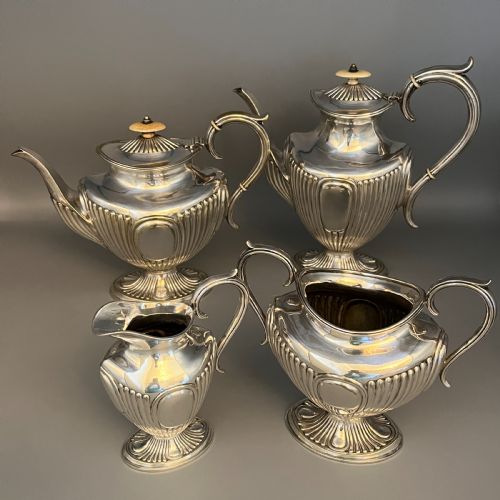
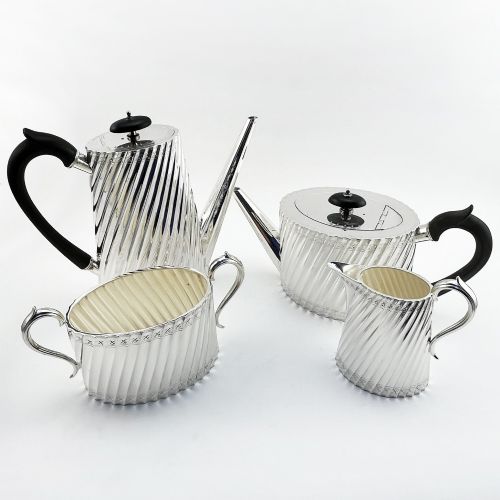
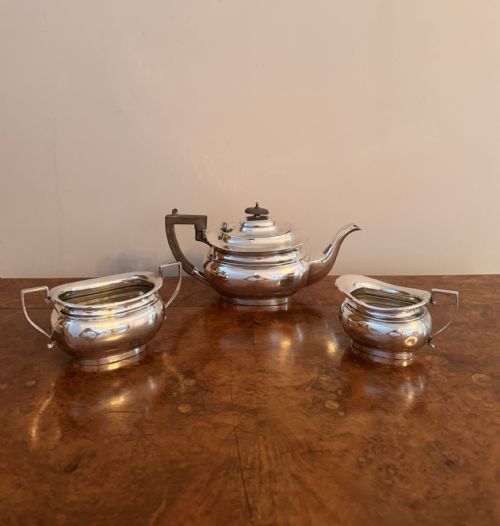
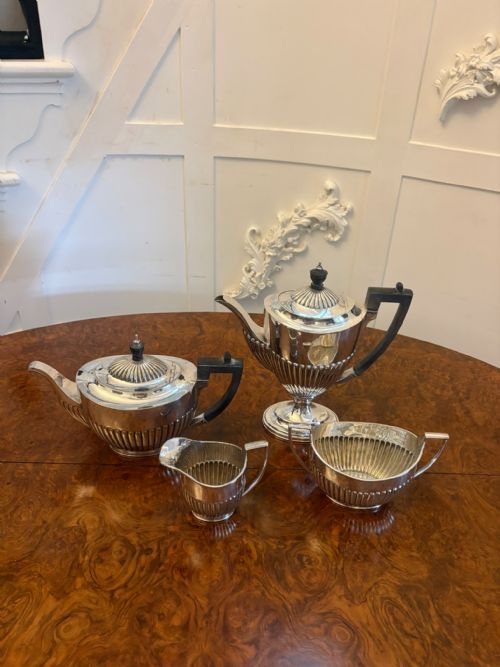
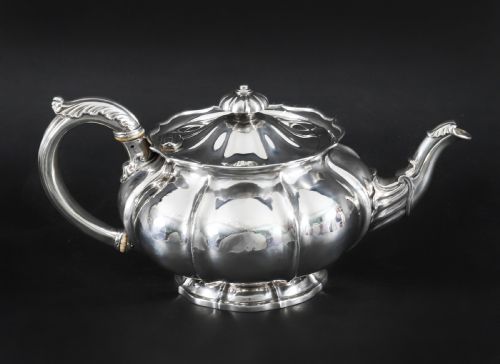
An antique tea service piece provides the missing vessel to complete a set, ranging from Georgian sterling silver teapots to Edwardian silver-plated milk jugs.
Antique Tea Service Piece
An antique tea service piece comprises individual vessels and matching components from larger sets, including teapots, coffee pots, cream jugs, sugar bowls, and tea sets spanning the Georgian, Victorian, and Edwardian eras.
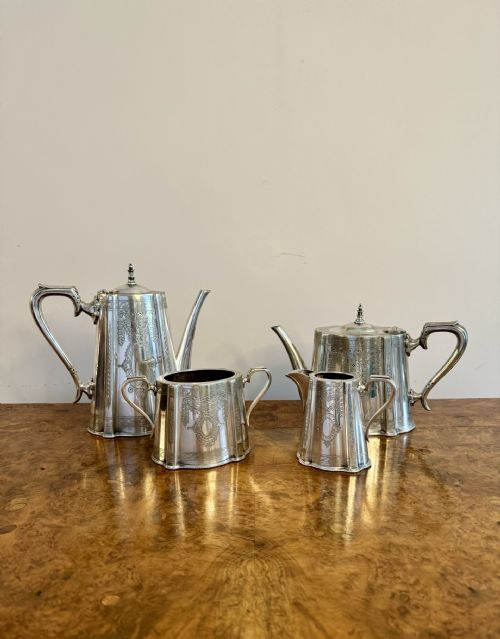
The most common examples on this page are Edwardian silver-plated three-piece and four-piece tea sets alongside individual sterling silver jugs and teapots from the nineteenth century.
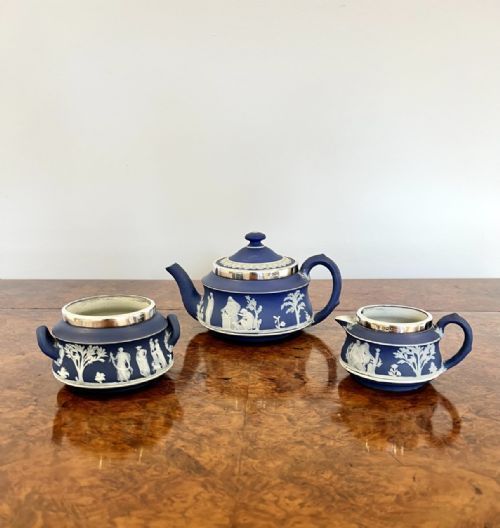
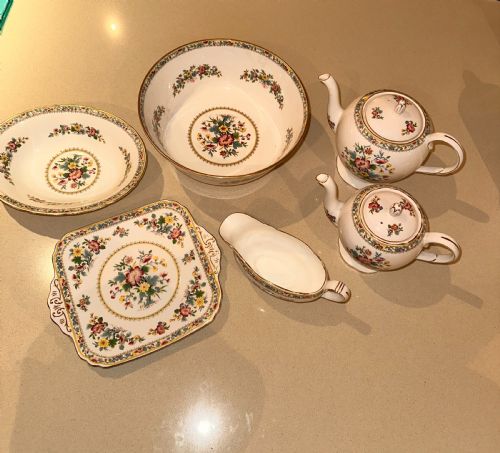
Forms extend from traditional English shapes to porcelain dinnerware and ceramic sets produced by makers such as Wedgwood, Royal Davenport, Doulton, and Royal Albert.
Materials and construction
Metals form the majority of the selection, utilising sterling silver and silver plate applied over base metal foundations, frequently complemented by insulating handles in ebony or ebonised wood.
Ceramic pieces utilise porcelain, bone china, and Jasperware, shaped into vessels and decorated with hand-painted motifs or moulded relief details.
Silversmiths employed techniques such as casting, hammering, and detailed embossing, incorporating ornate grapevine detailing and engraved crests into the metal surface.
Antique Tea Service Piece Retail Price Guide 2026
Typical asking prices for tea service piece among the pieces listed under this phrase on Sellingantiques today, from the lower quarter to the upper quarter. They describe what is for sale here now, not the wider market.
Tea service sets frequently include ebony insulators shaped like tiny pagodas to keep your fingers cool while pouring.
What separates the best pieces
Quality rests in the heaviness of the metal gauge, the crispness of chased or embossed ornamentation, and whether original fitted wooden cases accompany the set.
Maker attribution elevates a piece, with recognised silversmiths and potteries demonstrating superior balance, precise hinge alignment, and finer internal gilding on cream jugs.
The integrity of the material finish matters, distinguishing substantial sterling silver vessels and robust silver plate from thinner, heavily worn alternatives.
Joseph Rodgers & Sons·Walker and Hall·Paul Storr·Goldsmiths & Silversmiths Co.·Harry Atkin
The Antique Tea Service Piece Glossary
- Silver Plate
- A thin layer of silver fused or electroplated onto a base metal such as copper, nickel brass, or Britannia metal. This technique allowed manufacturers to produce domestic tea wares at a lower cost than solid sterling silver.
- Jasperware
- A type of fine stoneware developed by Josiah Wedgwood in the late eighteenth century, characterised by a matte unglazed finish and contrasting moulded white relief figures. It appears frequently in Victorian tea sets.
- Hallmark
- An official stamp applied to precious metal items by an assay office to guarantee the purity of the metal, the maker, and the year of manufacture. Sterling silver pieces carry specific town marks and date letters.
- Sterling Silver
- An alloy of silver containing 92.5 percent pure silver and 7.5 percent other metals, usually copper, to increase durability. It serves as the primary standard for high-grade British tea services.
- Ebonised Wood
- Timber that has been chemically or physically treated to resemble ebony, a dense black wood. It is commonly utilised for the insulating handles and finials on teapots to prevent heat transfer.
Antique Tea Service Piece: Frequently Asked Questions
How do I clean antique silver tea pieces?
Wash silver pieces gently in warm soapy water using a soft cloth, avoiding abrasive dips or harsh commercial pastes that strip the underlying metal.
Dry the vessel thoroughly with a lint-free towel to prevent water spots and preserve the natural patina built up over decades.
Can I use an antique teapot daily?
Sterling silver and silver-plated teapots remain entirely functional for everyday tea preparation, provided you check the handle insulation and interior condition first.
Porcelain and bone china pieces require careful handling due to hairline cracks or fragile glazes that may not withstand boiling water.
How do I identify a Victorian silver mark?
Examine the base or rim of the metal vessel with a magnifying glass to locate the small stamped duty marks, lion passant, and assay office symbols.
Compare the specific letter stamp against standard assay office date tables to determine the exact year the piece was hallmarked.
What is the difference between sterling and plate?
Sterling silver contains a solid, legally regulated proportion of precious metal throughout the entire thickness of the object, bearing official assay office hallmarks.
Silver plate consists of a base metal core coated with a thin external layer of pure silver, which may reveal the underlying metal where wear occurs.