


Antique Taper Stick Holders
Antique taper stick holders bring small flames to writing desks and dining tables, offering neat pools of light in heavy brass, silver plate and porcelain.
Antique Taper Stick Holders
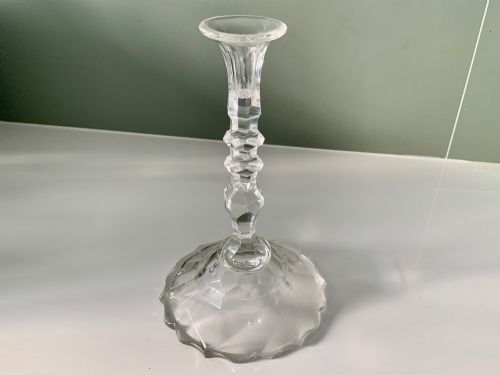
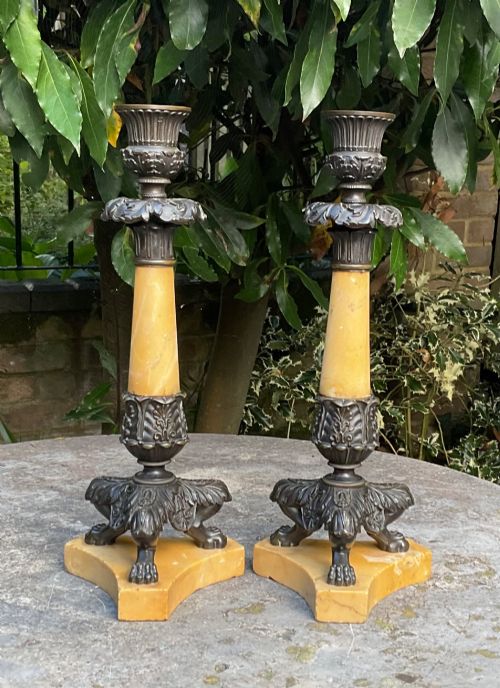
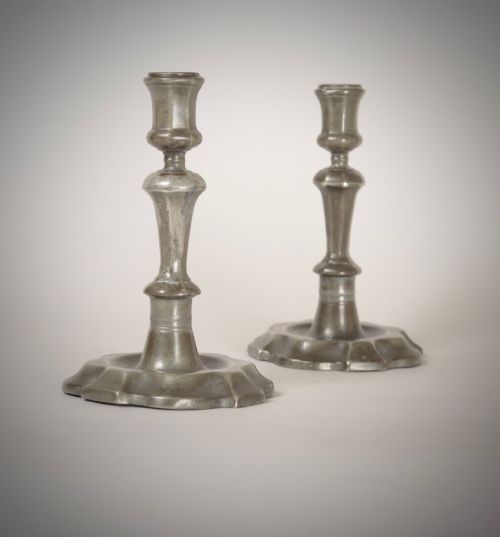
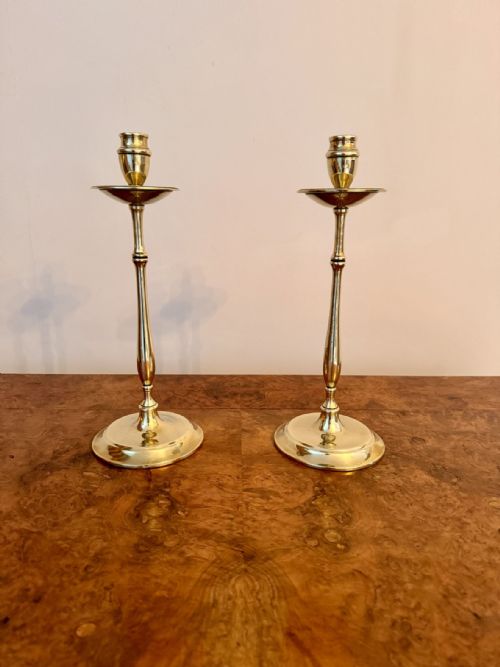
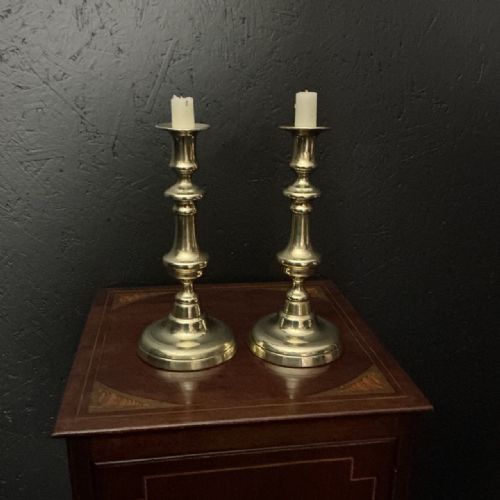
These items are small domestic light fittings designed specifically for wax tapers rather than heavy household candles. When exploring antique taper stick holders, expect to find diminutive brass, silver plated and porcelain examples spanning the Georgian, Victorian and Edwardian periods.
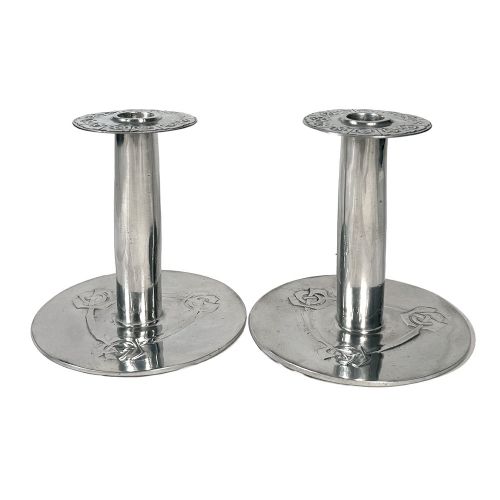
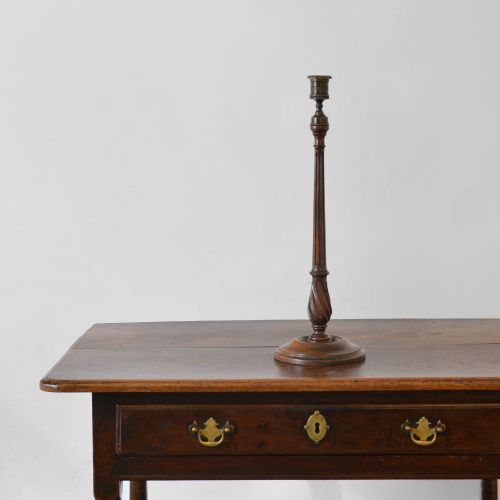
The selection here encompasses Georgian brass and mahogany designs alongside later silver plate and pewter pieces. Many date from the eighteenth and nineteenth centuries, reflecting domestic lighting habits before the widespread adoption of gas and electricity.
How they were made
Metal versions rely on casting, seaming and spinning techniques in materials such as brass, bronze, copper and pewter. Early examples often utilise seamed construction methods where sheet metal is rolled and joined before attachment to a cast base.
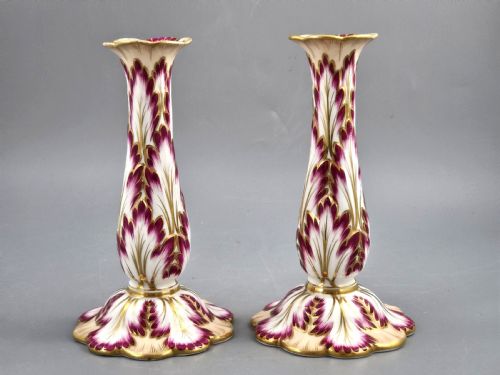
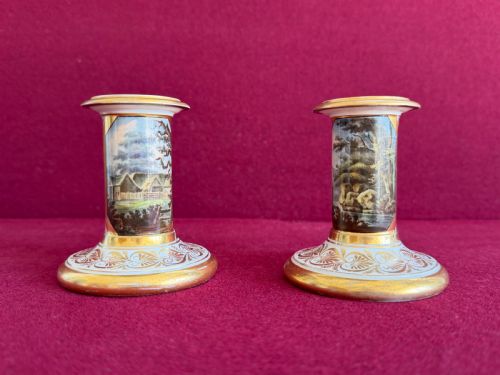
Silver and silver plate items employ plating over base metals or solid sterling construction, while ceramic pieces involve moulded porcelain with applied glaze and enamel decoration. Treen examples are turned from dense hardwoods on a lathe to create compact, stable desk accessories.
Antique Taper Stick Holders Retail Price Guide 2026
Typical asking prices for taper stick holders among the pieces listed under this phrase on Sellingantiques today, from the lower quarter to the upper quarter. They describe what is for sale here now, not the wider market.
Listings feature brass, silver plate, sterling silver, copper, pewter, bronze, enamel, porcelain and treen across Georgian, Victorian and Edwardian eras.
What varies in quality
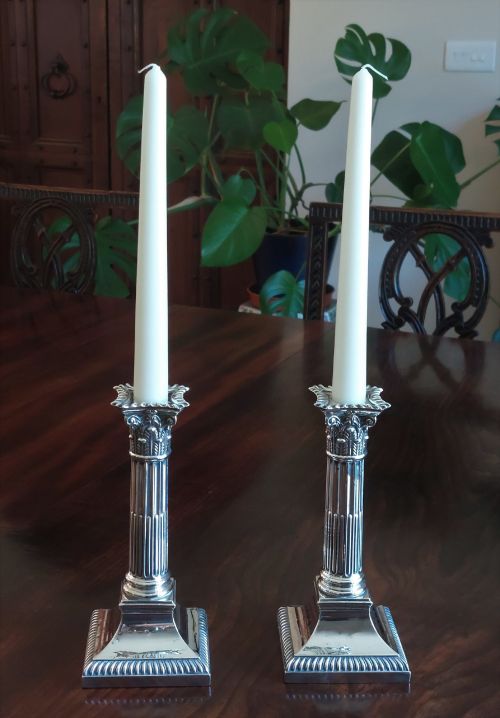
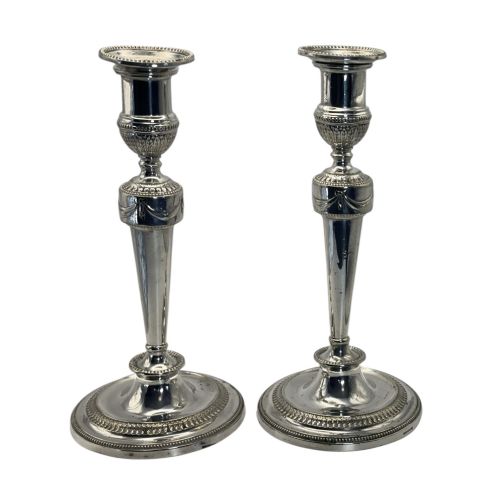
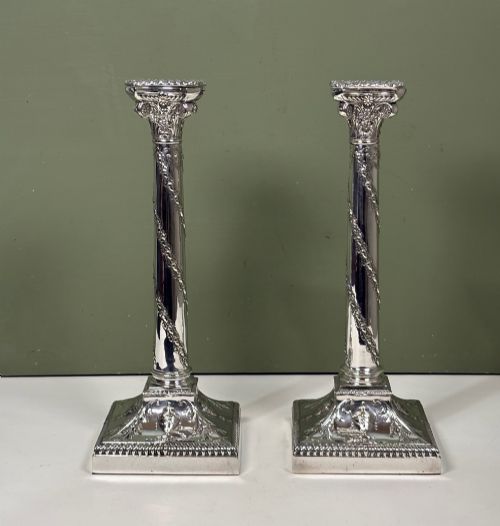
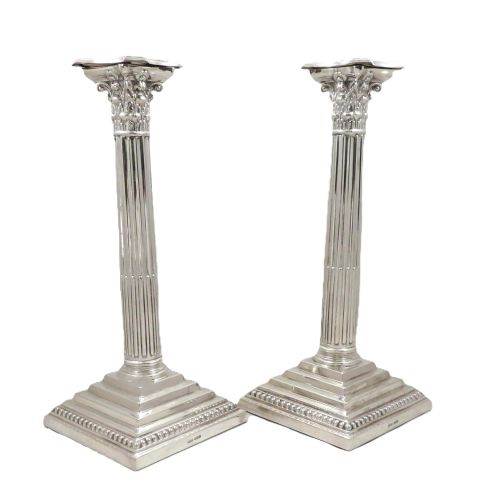
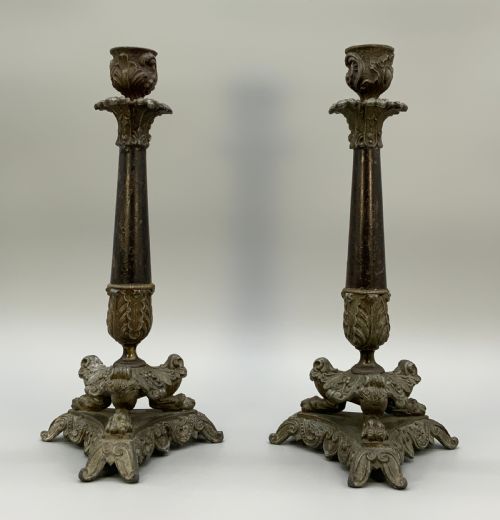
The degree of crispness in cast ornament and the weight of the metal determine the initial grade of a piece. Finer examples display sharp definition in neoclassical motifs, Corinthian fluting or petal bases without smoothing from excessive cleaning.
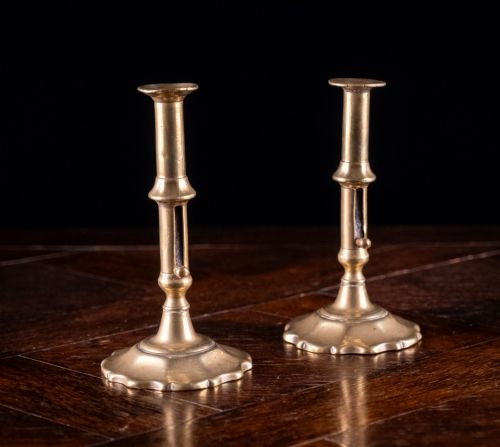
Integrity of construction and material purity separate standard production items from distinguished workshop outputs. Original components, such as matching ejector mechanisms in brass pieces or well-preserved silver plating, indicate superior manufacture.
Archibald Knox for Liberty and Co·Garrard and Co·Mappin and Webb·Ridgway·Barr Flight and Barr·John Pound and Co
The Antique Taper Stick Holders Glossary
- Taper stick
- A miniature candlestick designed for burning thin wax tapers used to melt sealing wax or ignite larger lamps and fires. These compact items take up minimal space on a desk or bureau.
- Ejector candlestick
- A brass form containing an internal sliding mechanism pushed from below to raise and remove old candle stubs. This clever engineering aids cleaning and maintenance.
- Old Sheffield plate
- A fused composite material made by melting a sheet of sterling silver onto a thicker copper base before rolling. This technique predates modern electroplating.
- Corinthian column
- A classical architectural order featuring an ornate capital decorated with acanthus leaves, frequently adapted for the stems of silver and brass candlesticks.
- Treen
- Small domestic wooden objects turned or carved from timber. These pieces show the natural grain and warmth of materials like mahogany.
Antique Taper Stick Holders: Frequently Asked Questions
What is the difference between a taper stick and a candlestick?
Taper sticks are scaled down significantly in height and diameter compared to standard household candlesticks. They are intended for thin wax tapers rather than thick tallow or wax candles.
Because of their small size, they sit comfortably on writing desks, bureaus and small side tables where space is limited.
How were these holders used in period homes?
Residents utilised taper sticks to melt sealing wax on correspondence or to carry a small flame from room to room before gas lighting became common. They provided concentrated light for intimate tasks rather than illuminating an entire space.
Servants also moved them between bedchambers and reception rooms as evening routines required.
How do I date an antique brass taper stick?
Georgian examples often feature petal bases, cast seamed construction and distinct tool marks from the lathe. Later Victorian and Edwardian pieces tend to have heavier, machine-cast bases with more uniform finishes.
Examining the casting method and wear patterns helps place an item within the eighteenth or nineteenth century.