

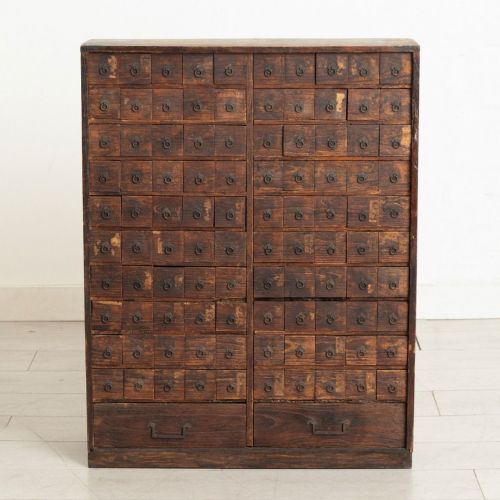


Antique Tansu Drawers
These antique tansu drawers are traditional Japanese storage chests built from cedar, elm, and zelkova wood, offering versatile cabinetry for modern homes.
Antique Tansu Drawers
When you search for antique tansu drawers, you are looking at Japanese storage chests that range from the Edo and Meiji periods through the Taisho period. These pieces function as versatile cabinetry, appearing as apothecary banks of drawers, kitchen tansu mizuya, ship's chests, and step chests.
The version you are most likely to meet on this page is a 19th-century Japanese cedar or elm tansu chest. These forms span from traditional step chests designed for staircases to red lacquered storage cabinets and portable ship's chests.
Makers built these pieces using regional woods and traditional joinery to meet specific domestic storage needs. Their forms reflect the distinct social strata and utilitarian demands of historic Japanese interiors, making them practical focal points for contemporary spaces.
How they were made
Makers constructed these cabinets using timbers such as cedar, elm, cypress, pine, and zelkova wood. These woods provided both structural integrity and varied grain patterns that defined the appearance of each chest.
Craftsmen integrated iron and brass hardware for reinforcement, corner brackets, and drawer pulls. Red lacquer finishes appear on select pieces, adding a protective and decorative surface layer to the timber.
Antique Tansu Drawers Retail Price Guide 2026
Typical asking prices for tansu drawers among the pieces listed under this phrase on Sellingantiques today, from the lower quarter to the upper quarter. They describe what is for sale here now, not the wider market.
Some ship's tansu chests were built to be thrown overboard during a fire so the waterproof wood would float until retrieved.
What varies in quality
The refinement of the joinery and the choice of primary timber separate standard utility pieces from more finished examples. Woods like zelkova and figured elm demand greater skill to shape than simple pine or cedar.
The complexity of the hardware, including hand-forged iron mounts and engraved brass elements, dictates the overall execution. Elaborate locking mechanisms and robust corner straps indicate a higher tier of construction intended for secure transport or display.
The Antique Tansu Drawers Glossary
- Tansu
- A traditional Japanese mobile chest of drawers used for storage. These cabinets evolved into specialised forms for clothing, kitchen items, and valuables.
- Mizuya
- A traditional Japanese kitchen tansu used for storing food and utensils. These pieces often feature sliding panels alongside banks of small drawers.
- Kaidan tansu
- A Japanese step chest built in a staircase configuration. These dual-purpose structures provided both upper floor access and compartmentalized storage beneath the treads.
- Zelkova
- A hardwood native to Japan, known for its distinct grain and durability. Makers utilised this timber for the primary faces of finer storage chests.
Antique Tansu Drawers: Frequently Asked Questions
What are antique tansu drawers?
Antique tansu drawers are traditional Japanese storage chests produced during periods such as the Edo, Meiji, and Taisho eras. They include specialised forms like apothecary cabinets, kitchen units, and step chests.
These pieces utilise native timbers like cedar, elm, and zelkova wood, reinforced with iron and brass hardware.
How were tansu chests used?
Original owners used tansu chests for domestic storage, organising clothing, medicines, kitchenware, and valuables. Step chests additionally served as functional staircases in multi-level Japanese homes.
Their modular construction allowed households to transport belongings easily during fires or relocations.
How do I live with a tansu?
You can integrate a tansu chest into modern interiors as a low sideboard, a bedside cabinet, or a feature storage piece. Their deep drawers and compartments suit contemporary organizational needs.
Place them away from direct heat sources to protect the historic timber and traditional lacquer finishes.
How do I date a tansu chest?
Dating relies on identifying stylistic markers from the Edo, Meiji, and Taisho periods, alongside material choices. Earlier pieces often display simpler iron mounts, while later Meiji examples incorporate denser brass work.
Construction techniques and wood selection further help distinguish nineteenth-century examples from twentieth-century pieces.