




Antique Tambour Table
An antique tambour table brings sliding slatted closures and compact surfaces together, offering a clever way to conceal writing gear or bedside essentials.
Antique Tambour Table
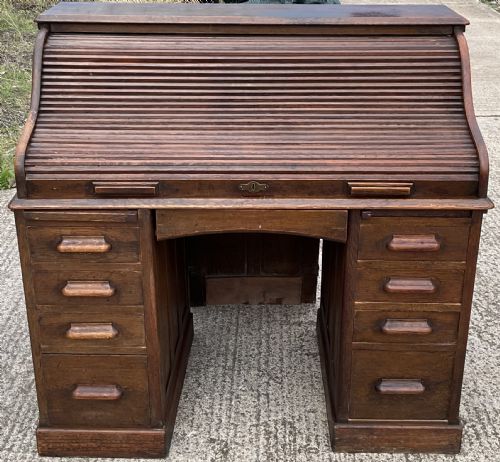
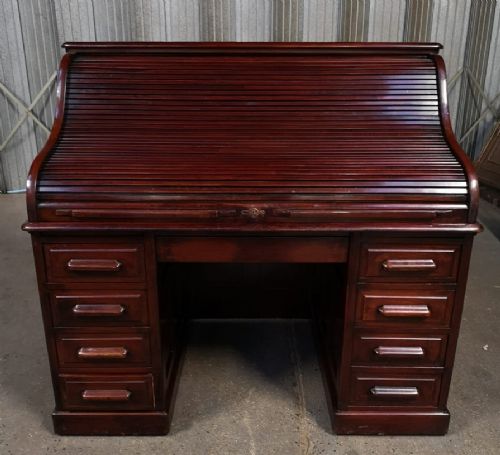
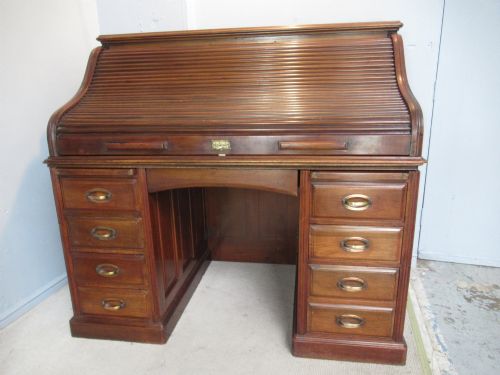
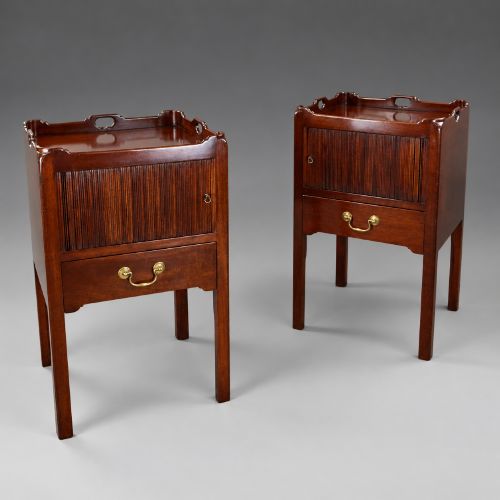
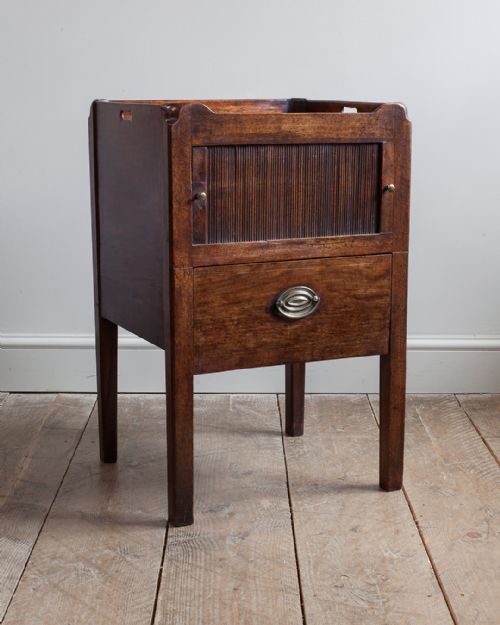
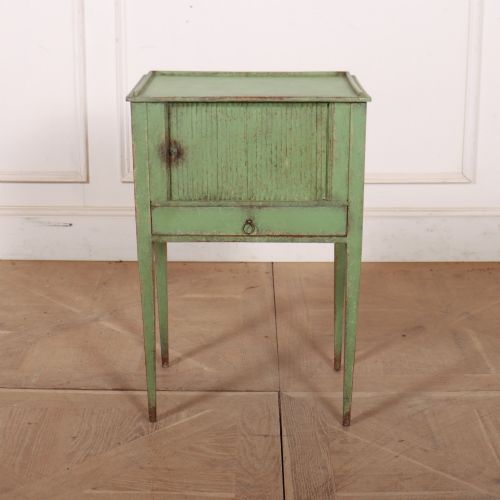
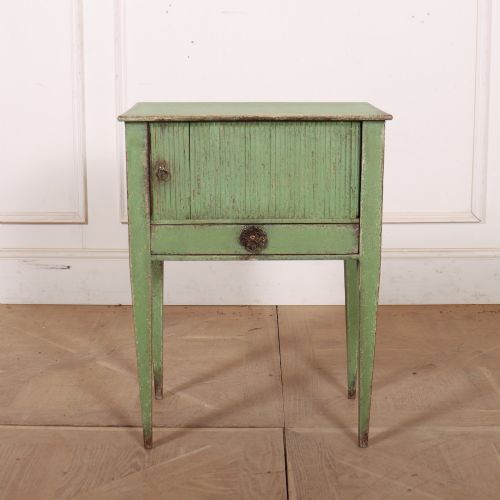
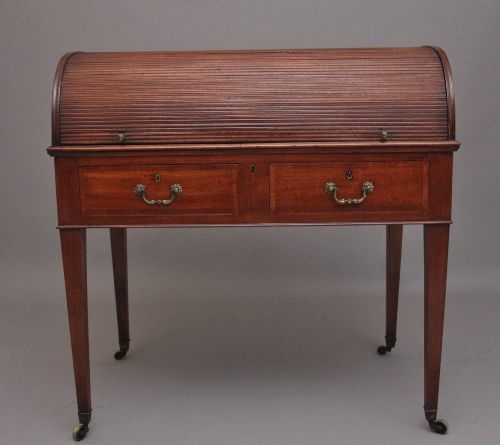
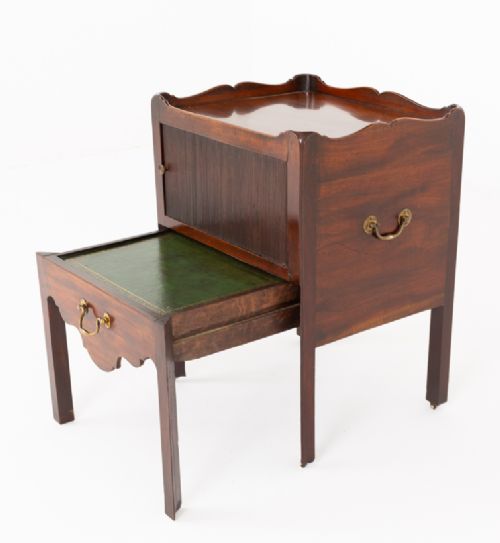
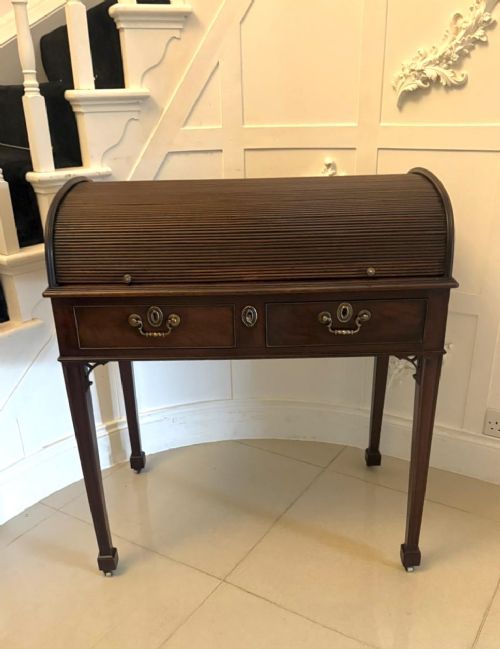
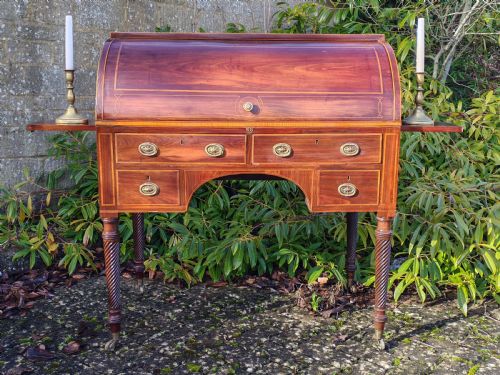
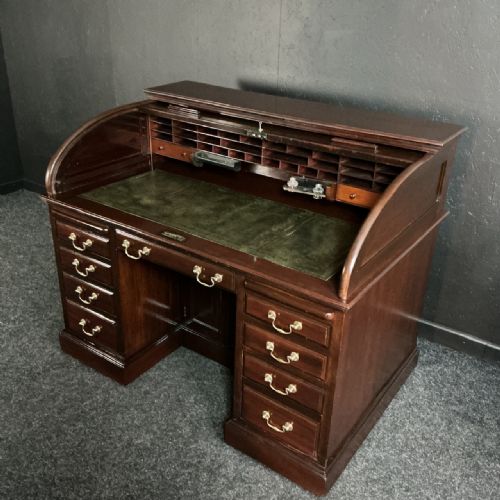
An antique tambour table encompasses small writing desks, bedside cabinets, and nightstands equipped with flexible slatted doors that slide smoothly along a grooved track. When searching this phrase, buyers encounter pieces primarily originating from the Georgian and Edwardian eras, alongside occasional Victorian and later examples.
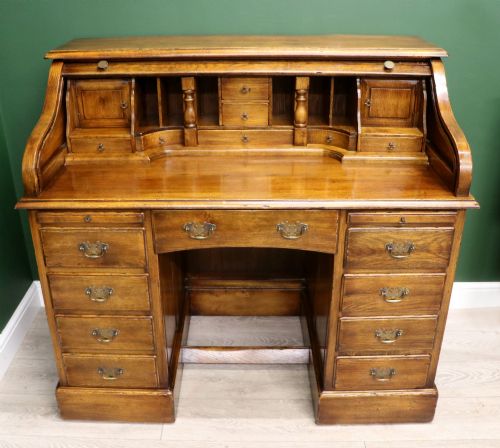
The domestic role of these pieces varies between intimate bedroom storage and compact study furniture. Bedside cupboards and nightstands share floor space with cylinder desks and writing tables, each relying on the signature slatted front to hide compartments without swinging doors taking up room.
Mahogany dominates the surviving inventory, frequently detailed with satinwood, boxwood inlay, or walnut veneers. Regional variations also appear, ranging from Dutch painted finishes and floral marquetry to French pieces incorporating marble tops.
Materials and construction
Cabinetmakers constructed the flexible tambour shutters by gluing thin strips of timber onto a strong canvas or linen backing, allowing the curtain to curve around tight corners effortlessly. These delicate slats run within precisely milled wooden tracks hidden inside the frame.
Solid mahogany and walnut form the structural carcasses, complemented by secondary timbers like oak and pine for drawer linings and internal dividers. Marquetry and boxwood stringing enhance selected surfaces, while brass hardware provides functional pulls and hinges.
Antique Tambour Table Retail Price Guide 2026
Typical asking prices for tambour table among the pieces listed under this phrase on Sellingantiques today, from the lower quarter to the upper quarter. They describe what is for sale here now, not the wider market.
Listings feature woods such as mahogany, walnut, satinwood, and yew, spanning Georgian, Victorian, and Edwardian periods.
Judging quality and craftsmanship
Timber selection and grain matching separate standard production from exceptional examples. Cabinetmakers who carefully figured mahogany veneers across curved fronts and maintained crisp boxwood inlay demonstrate the highest level of workshop skill.
The Antique Tambour Table Glossary
- Tambour
- A flexible shutter made of narrow vertical wooden strips glued to canvas backing. This ingenious invention allows a desk or cabinet to secure its contents while following a rounded contour.
- Commode
- A decorative low cabinet or bedside chest of drawers. In Georgian terms, this often describes a refined bedside cupboard or nightstand with enclosed storage.
- Marquetry
- The art of forming decorative patterns using fitted pieces of coloured wood veneer. Dutch provincial makers frequently employed floral designs using this meticulous technique.
- Satinwood
- A lustrous, fine-grained timber with a golden yellow colour utilised for banding and inlay. It provides sharp contrast against darker woods like mahogany and walnut.
- Cylinder desk
- A writing desk featuring a rotating half-cylinder shutter similar in principle to a tambour. It conceals the writing surface and pigeonholes when closed.
Antique Tambour Table: Frequently Asked Questions
What is a tambour table?
A tambour table is a compact item of furniture featuring a sliding slatted door made of wood strips on fabric. It conceals storage compartments in desks and bedside cabinets.
This mechanism allows the piece to maintain a smooth rounded profile while keeping contents out of sight.
How do you clean tambour slats?
Cleaning requires a soft brush to remove dust from the narrow grooves between individual wooden strips. Moisture must be avoided so the canvas backing remains dry.
Applying a traditional beeswax polish helps preserve the timber without letting liquid seep into the tracks.
Were these tables used as desks?
Many tambour pieces incorporate pull-out writing slides and internal stationery compartments designed for correspondence. They served as space-saving writing desks in smaller rooms.
Other variants functioned purely as bedside cabinets or nightstands to hold nighttime necessities.
How can I date an antique tambour table?
Dating relies on examining the secondary timbers, construction methods, and prevailing architectural styles of the period. Georgian examples often display solid mahogany and hand-cut dovetails.
Later Edwardian and twentieth-century pieces generally show machine-processed components and different internal framing techniques.