
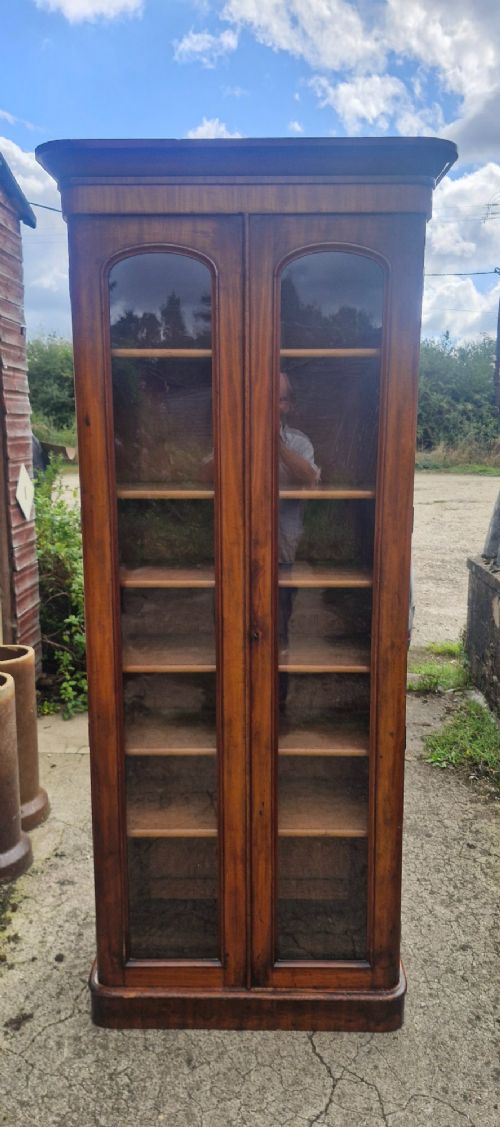
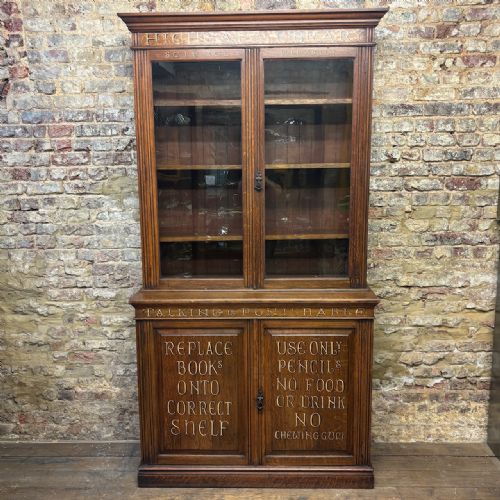

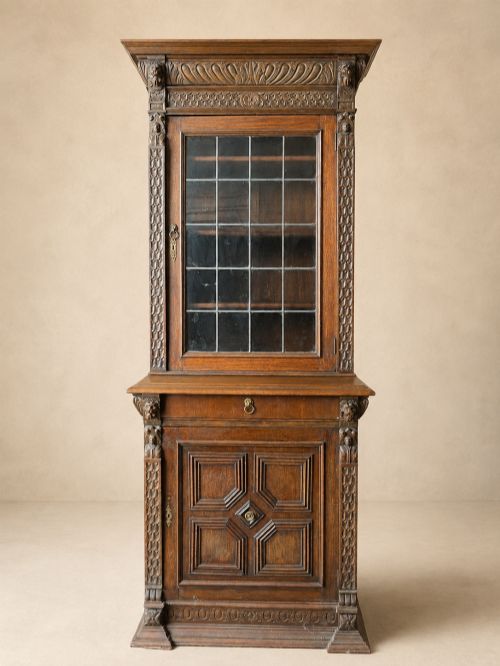
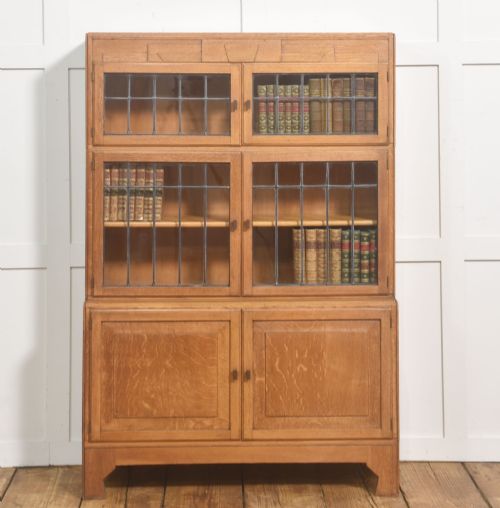
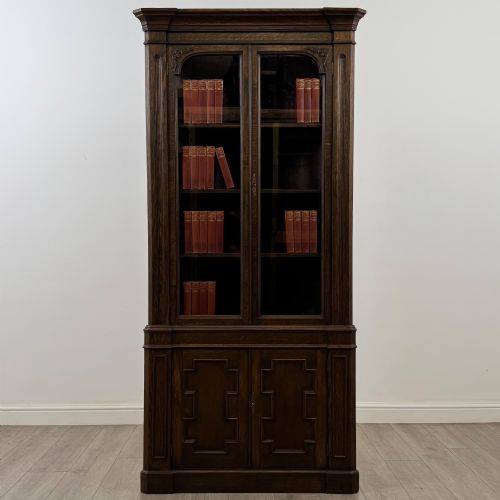

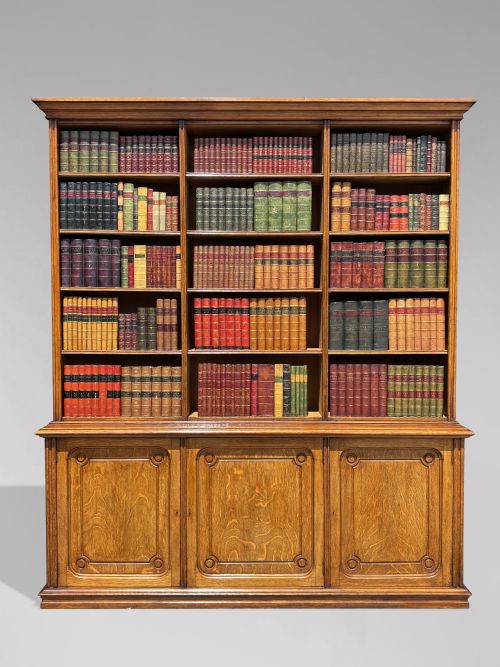
Antique Tall Display Cupboard
An antique tall display cupboard organises a room by raising books and collections off the floor behind glass.
Antique Tall Display Cupboard
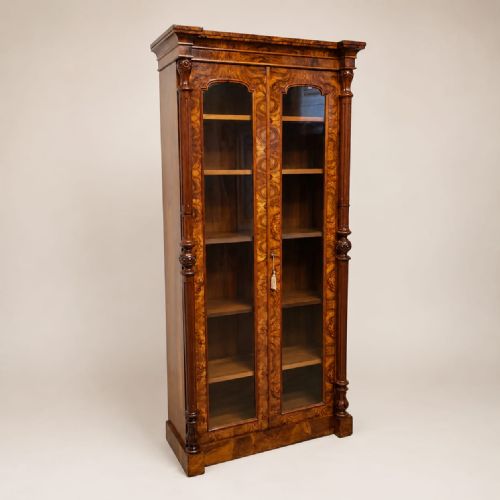
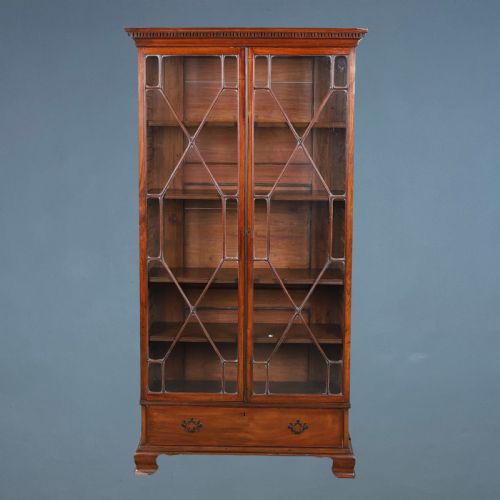
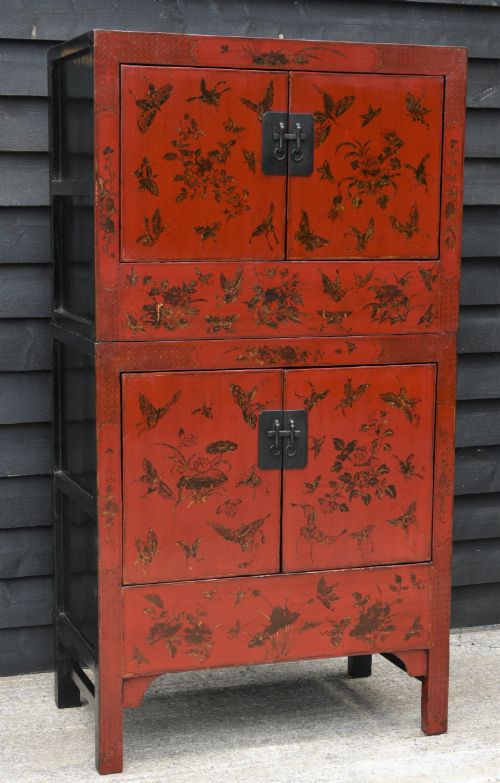
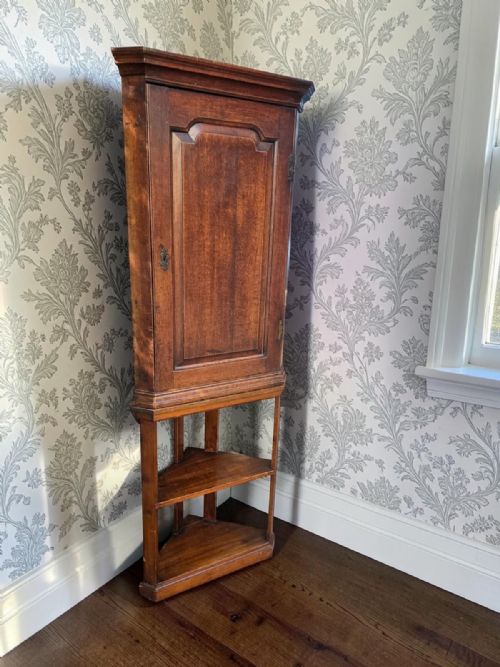
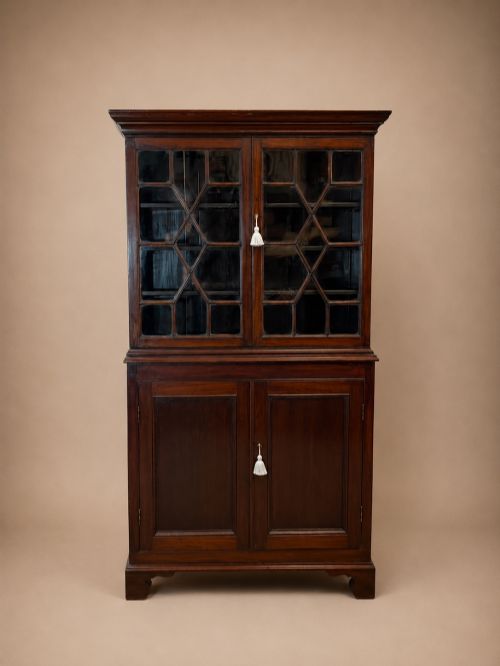
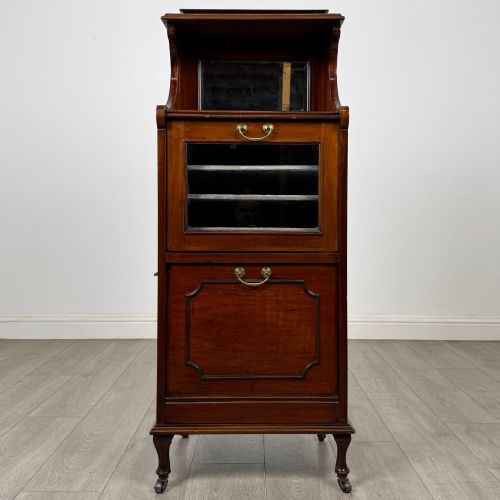
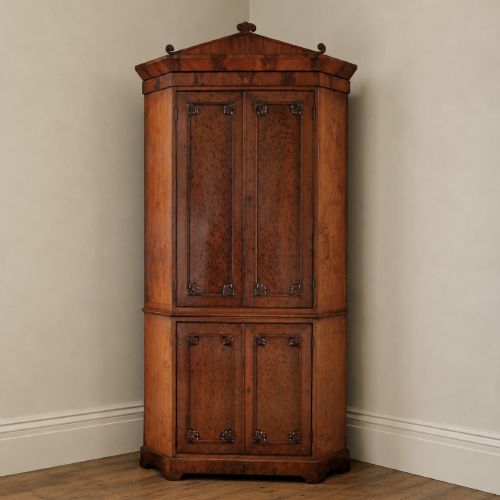
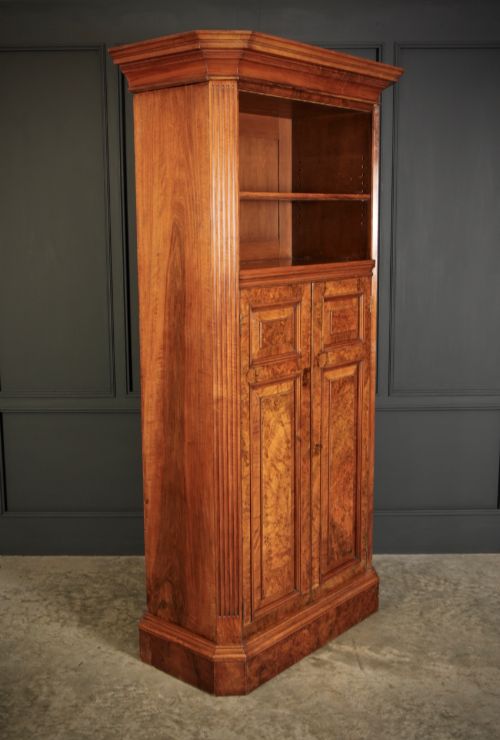
An antique tall display cupboard appears on this page in forms ranging from glazed mahogany bookcases to oak corner cabinets and pine storage pieces. These tall vertical structures combine enclosed shelving for display with lower cupboard storage, spanning periods from the eighteenth century through the Victorian and Edwardian eras.
The most frequent examples met here are nineteenth century mahogany and oak bookcases with glazed upper doors, alongside corner cupboards designed to fit room angles. Makers built these tall cabinets for libraries, parlours and living spaces to protect volumes and objects from dust while keeping them visible.
How they were made
Cabinet makers constructed these tall carcasses predominantly in solid timbers and veneers of mahogany, oak, walnut and pine, often incorporating brass hardware and iron fittings. Glazing takes the form of individual leaded or wooden astragal panes that secure the glass within the door frames.
Joinery methods rely on traditional frame and panel construction for stability in tall structures, complemented by carved wooden details, inlaid banding and applied mouldings. Surfaces finished in polish, wax or red lacquer protect the timber while highlighting the grain of burr walnut, plum pudding mahogany and pollard oak.
A green man carved into Victorian oak glowers from the cornice, keeping watch over whatever collection sits inside.
What varies in quality
Quality rests on the selection of timber figures, such as burr walnut or plum pudding mahogany, and the crispness of carved details like Gothic Revival motifs or classical mouldings. Superior execution shows in balanced proportions on tall, narrow bookcases and fine joinery in astragal glazing bars.
The integration of secondary timbers, original brass hardware and functioning locks with keys distinguishes more accomplished workshops from standard utility pieces. Finer cabinets maintain structural rigidity across tall vertical spans without relying on heavy reinforcement.
Howard & Sons
The Antique Tall Display Cupboard Glossary
- Astragal glazing
- Timber bars dividing glass panes within a cabinet door into smaller geometric sections. These delicate mouldings define the visual rhythm of Georgian and Victorian display furniture.
- Corner cupboard
- A triangular storage piece designed to fit neatly into room angles. These tall cabinets maximise interior space in smaller domestic rooms.
- Plum pudding mahogany
- A dense mahogany variant featuring distinctive circular markings resembling Christmas pudding ingredients. This decorative figuring appears on select nineteenth century English furniture.
- Gothic Revival
- An architectural and decorative style incorporating pointed arches, tracery and heavy carved motifs. This aesthetic influenced late Victorian cabinet design.
Antique Tall Display Cupboard: Frequently Asked Questions
How do I secure a tall display cupboard?
Tall cabinets require wall fixing brackets attached discreetly behind the upper cornice to prevent tipping on uneven floors.
Most period cupboards include original internal fixing points or benefit from professional anchor installation into masonry or studs.
Are the shelves adjustable?
Many Victorian and Edwardian bookcases feature rows of wooden peg holes allowing shelves to shift for different book heights.
Earlier eighteenth century examples often retain fixed wooden shelving built into the main structural carcass.
How should I clean the glass?
Clean antique glass gently with a soft microfibre cloth and mild solution, avoiding harsh ammonia sprays near timber.
Take care around old leaded sections or delicate astragal glazing bars so the wooden framework remains undamaged.
Can these cabinets hold heavy books?
Mahogany and oak library bookcases feature robust internal construction suited to supporting heavy rows of bound volumes.
Lighter pine or narrow display cabinets suit lighter ornaments and collections rather than dense folio volumes.