

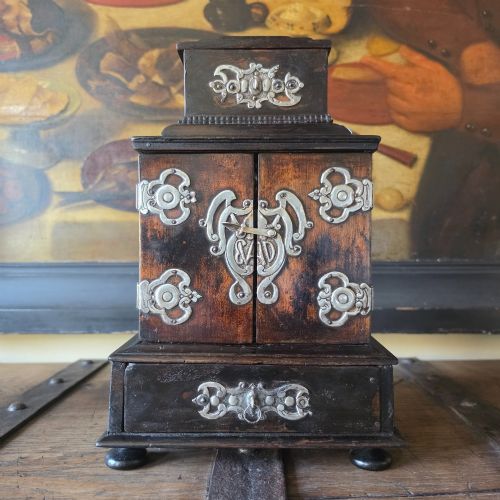


Antique Tabletop Casket
These antique tabletop caskets are small portable strongboxes and cabinets designed to keep valuables, letters and trinkets secure on a desk or dressing table.
Antique Tabletop Casket
An antique tabletop casket encompasses a diverse group of portable storage containers, ranging from jewellery cabinets and stationery boxes to games compendiums and trinket boxes. When you search for an antique tabletop casket, you are looking at items designed for personal luxury and organisation.
The pieces available span multiple centuries and regions, including 17th-century Flemish ebony examples, 18th-century walnut jewelery cabinets, and Victorian rosewood and burr walnut boxes. You will also encounter specialised items such as sterling silver trinket boxes, tooled-leather table cabinets, and papier mache jewellery boxes.
Materials and Construction Techniques
Cabinetmakers utilised dense hardwoods such as walnut, rosewood, burr walnut, and kingwood as the structural foundation for many of these pieces. These woods were frequently selected for their rich grain patterns and polished to a smooth finish.
Decoration relied on contrasting inlays and mounts, incorporating materials like mother-of-pearl, bone, tortoise shell, and gilt-brass. Metalwork appears in the form of sterling silver bodies, brass hinges, and relief ornamentations such as cherubs.
Specialised surface treatments distinguished specific origins and dates, including tooled leather, papier mache embellished with painted scenes, and ebony mouldings characteristic of Flemish Baroque work.
Antique Tabletop Casket Retail Price Guide 2026
Typical asking prices for tabletop casket among the pieces listed under this phrase on Sellingantiques today, from the lower quarter to the upper quarter. They describe what is for sale here now, not the wider market.
The selection includes specimens spanning the 17th, 18th, and 19th centuries, alongside early 20th-century items.
Distinctions in Quality
The standard of a tabletop casket is defined by the precision of its joinery and the selection of its timber veneers. Superior examples display carefully matched grain patterns across the exterior surfaces and tight, stable joints that withstand regular opening and closing.
Interior fittings and hardware contribute significantly to the overall merit of a piece. Finer items feature intact silk or velvet linings, working locks with original keys, and precisely fitted compartments that demonstrate the maker's care.
The Antique Tabletop Casket Glossary
- Burr walnut
- A type of wood veneer taken from the burl growth of a walnut tree, prized for its swirling, highly figured grain patterns. It frequently covers the exterior of high-status Victorian boxes.
- Compendium of games
- A multi-functional box designed to hold equipment for various parlour games, such as cards, chess, and backgammon. These incorporate internal trays and partitions.
- Stationery box
- A desk accessory intended for holding writing paper, envelopes, and correspondence. They often feature tiered or upright compartments inside a lidded case.
- Gilt-brass
- Brass that has been treated with a thin layer of gold to produce a bright, golden surface finish. It appears on mounts, handles, and feet.
- Papier mache
- A composite material made from paper pulp mixed with adhesive, moulded and dried into a rigid form. It accepts lacquer and paint decoration smoothly.
Antique Tabletop Casket: Frequently Asked Questions
What were tabletop caskets used for?
These boxes served as secure, portable receptacles for personal valuables, correspondence, and specialised accessories.
Owners kept items such as jewellery, letters, and gaming pieces organised within dedicated compartments and velvet-lined trays.
How do I date a tabletop casket?
Dating relies on examining the timber species, construction methods, hardware styles, and decorative techniques used on the piece.
Victorian boxes often use rosewood and mother-of-pearl, while earlier 18th-century examples tend to feature plain walnut and simpler brass escutcheons.
Are the locks usually in working order?
Many boxes retain their original locks, though the survival of a matching key is less common.
Specialist antique locksmiths can sometimes provide replacement keys if the mechanism remains functional.
How should I care for a wooden box?
Keep wooden caskets away from direct sunlight and extreme temperature fluctuations to prevent the timber and veneer from splitting.
Occasional dusting with a soft, dry cloth is sufficient; harsh chemical polishes should be avoided.