


Antique Table Wine Accessory
These antique table wine accessory pieces are traditional serving implements and bottle stands designed to manage wine at the dining table with period elegance.
Antique Table Wine Accessory
An antique table wine accessory encompasses a range of traditional serving items designed to assist with the presentation and pouring of wine during formal dining. The selection spans several distinct forms used for holding bottles, filtering wine, cutting fruit, and identifying decanted spirits.
The most common items found within this category are wine coasters, bottle holders, and stands that protect dining tables from moisture and stains. These vessels appear alongside smaller implements such as grape shears, wine funnels, and inscribed decanter labels.
The pieces originate predominantly from the Georgian, Victorian, and Edwardian eras, reflecting the changing social rituals of nineteenth and early twentieth-century dining. Craftsmanship from these periods combines functional utility with decorative metalwork and turned timber.
How they were made
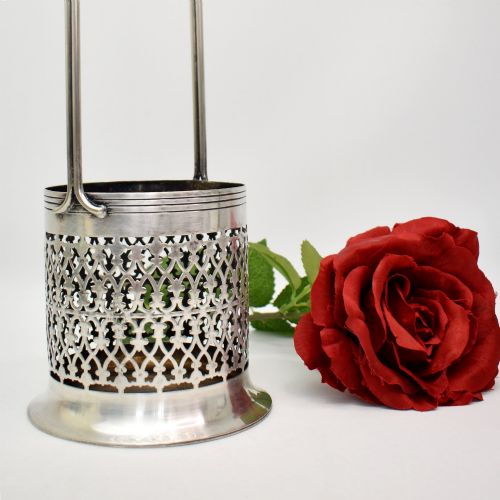
Metalwork forms the primary structural foundation for many examples, utilising sterling silver and silver plate shaped through casting, stamping, and piercing techniques. These metallic elements frequently feature decorative borders, engraved crests, or pierced scrolling motifs.
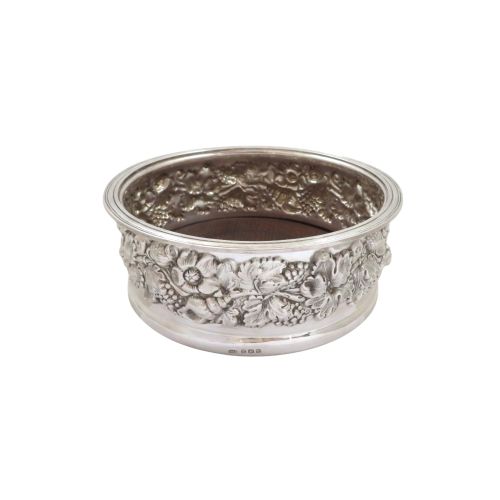
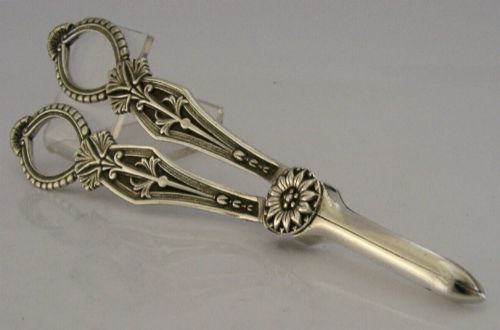
Object types represented in the collection include grape shears, wine funnels, decanter labels, and bottle coasters.
What varies in quality
The standard of an antique table wine accessory depends heavily upon the crispness of its original casting and the depth of any hand-engraving. Finer examples display sharp, well-defined decorative motifs and substantial gauge metal rather than thin, pliable plating.
In composite pieces involving both wood and metal, quality is determined by the precision of the joinery and the preservation of the turned timber. Superior items maintain a tight, flush fit between the metallic rim and the wooden base without excessive movement or adhesive residue.
Brook & Son
The Antique Table Wine Accessory Glossary
- Wine coaster
- A low circular tray designed to hold a wine bottle or decanter, protecting the dining table from condensation rings. They frequently incorporate wooden bases and metal galleries.
- Decanter label
- A small metal tag suspended by a chain around the neck of a decanter to identify the contents, such as claret or port. These are often engraved with decorative borders.
- Baize
- A coarse woolen material resembling felt, traditionally used to line the undersides and interiors of bottle coasters. It prevents scratching on both the furniture and the glassware.
- Grape shears
- Specialised scissors designed for cutting small clusters of fruit from a larger bunch at the table. Victorian examples in silver often feature ornate cast handles.
- Wine funnel
- A conical implement used to decant wine while filtering out sediment. Many period examples include a removable pierced strainer insert.
Antique Table Wine Accessory: Frequently Asked Questions
What is an antique table wine accessory?
An antique table wine accessory is a functional item designed for serving, pouring, or presenting wine during meals in past centuries. These objects include bottle stands, funnels, labels, and cutting tools.
Such items were essential components of formal dining service, particularly during the Georgian and Victorian periods when wine was brought to the table in decanters.
How were bottle coasters used?
Bottle coasters were placed on the dining table to hold wine bottles or decanters securely while passing them among guests. Their raised sides prevented bottles from sliding off during transit.
Many featured integrated wheels or baize-lined wooden bases so they could be slid smoothly across polished mahogany dining tables without causing scratches.
What materials are common in these pieces?
The most frequent materials seen in these items are sterling silver, silver plate, and mahogany wood. Additional elements include brass, felt, and baize linings.
Silver and plated metals provide the decorative rims and structural mounts, while dense hardwoods form the sturdy circular bases of coasters and bottle holders.
How do I identify the period of an item?
Period identification relies on stylistic cues, hallmarks, and manufacturing techniques associated with specific eras like the Georgian or Victorian reigns. Gothic Revival motifs, for instance, point toward specific nineteenth-century design revivals.
Silver pieces often bear official assay office marks and date letters that narrow down the year of manufacture with precision.