





Antique Table Chair Bench
An antique table chair bench brings ingenious dual-purpose seating into a room, combining the practicality of a table with the shelter of a settle.
Antique Table Chair Bench
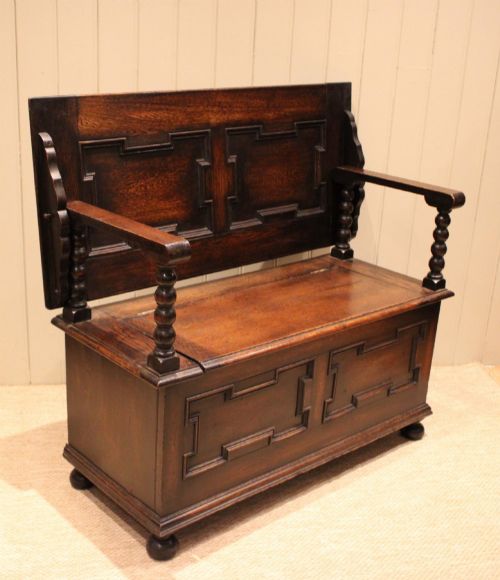
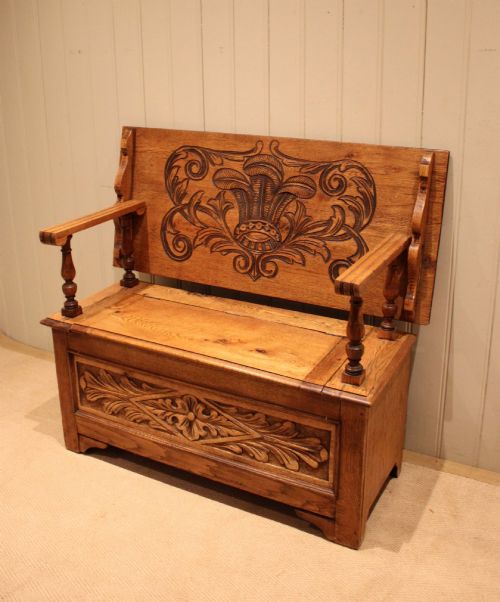
When you search for an antique table chair bench, you encounter multi-functional seating forms that transform from chairs or settles into tables, most frequently represented here by oak monks benches and seventeenth-century style chair-tables. These ingenious historical items served domestic spaces where floor area was at a premium, allowing a single piece of furniture to act as a seat by day and a surface by evening.
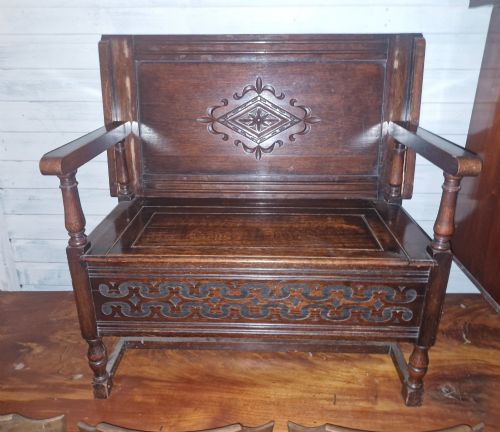
The selections span from late seventeenth-century oak examples to early twentieth-century revivals, alongside Victorian interpretations and country vernacular pieces in pine. Monks benches dominate the current offerings, featuring panelled construction, lift-up seats, and fold-over tabletops that reveal storage compartments beneath.
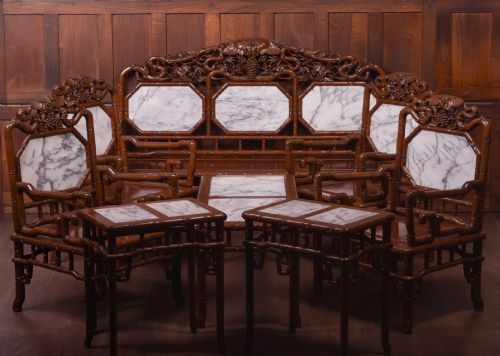
Alongside standard monks benches, the category embraces related forms such as hall seats, settle benches, and primitive chair-tables in solid oak and pine. Buyers also find dressing table stools in walnut and specialised items like Chinese carved hardwood parlour suites and tiled hall stands.
Materials and construction techniques
Solid oak provides the primary structural material across the majority of pieces, frequently enriched with carved decoration, panelled backs, and traditional peg-jointed frames. Walnut appears in later Victorian and Edwardian seating forms, often showcasing turned legs and applied textile covers.
Antique Table Chair Bench Retail Price Guide 2026
Typical asking prices for table chair bench among the pieces listed under this phrase on Sellingantiques today, from the lower quarter to the upper quarter. They describe what is for sale here now, not the wider market.
Listings feature solid oak, pine, and walnut, spanning from the seventeenth century through Victorian revivals to Art Deco designs.
Markers of distinction and craftsmanship
The integrity of the conversion mechanism dictates much of the distinction in table-chairs and monks benches, where smooth operation of the folding top and sturdy hinge construction separate standard items from superior examples. Timber selection also plays a central role, with dense, figured oak and patinated surfaces commanding greater appreciation than later, plain replacements.
Depth of carving and sharpness of detail in panelwork distinguish workshop output, while vernacular pieces rely on honest primitive joinery and untouched original painted surfaces. The presence of period-correct hardware and unaltered structural elements preserves the historical character that collectors value.
Ellen E Houghton of Minton
The Antique Table Chair Bench Glossary
- Monks Bench
- A multi-functional seating form featuring a hinged tabletop that folds down over the arms to create a table. This clever design provides enclosed storage beneath the seat while functioning as a comfortable hall chair.
- Chair-Table
- An early form of convertible furniture where a large high-backed chair incorporates a pivoting or removable top that forms a table. These pieces date primarily from the seventeenth and eighteenth centuries in British vernacular traditions.
- Settle
- A wooden bench with a high solid back designed to keep out draughts, often featuring enclosed storage beneath the seat. They served as communal seating near hearths in traditional interiors.
- Vernacular
- Furniture made by local craftsmen using regional materials and traditional techniques without high-style academic design influences. These items reflect the practical domestic needs of country households.
- Jacobean Revival
- A nineteenth and early twentieth-century style that imitates the robust, dark oak furniture of the early seventeenth century. Pieces in this style typically display heavy turnings, geometric mouldings, and deep panel carving.
Antique Table Chair Bench: Frequently Asked Questions
How did a monks bench work?
The hinged back of a monks bench folds forward on pivots or rests flat upon the arms to transform the seat into a table top. This ingenious dual-purpose engineering allowed medieval and later households to conserve valuable floor space in compact rooms.
Beneath the hinged seat, a spacious compartment provided secure storage for household linens, dry goods, or wool. When returned to the upright position, the high panelled back offered protection against cold draughts from stone walls.
Where were table chairs used?
Table chairs and settle benches traditionally stood in the halls and kitchens of farmhouses, cottages, and manor houses where daily life centred around a single heated room. Their versatile design made them indispensable for dining, working, and resting.
In later periods, smaller adaptations moved into hallways and parlours as decorative yet practical furniture for receiving visitors. Today, they function effectively in modern entrance halls and living spaces as statement seating with built-in utility.
How can I date an oak monks bench?
Dating relies heavily on construction methods, timber characteristics, and stylistic motifs carved into the oak panels. Early seventeenth-century examples display hand-split timber, pegged mortise and tenon joints, and distinctively primitive geometric or floral carvings.
Revival pieces from the late nineteenth and early twentieth centuries often feature machine-sawn components, standardised hardware, and cleaner interior surfaces despite their simulated antique finish. Examining the wear patterns around the pivots and hinges also reveals the age of the moving mechanisms.
What is the difference between a settle and a bench?
A settle incorporates a solid high wooden back and solid panelled sides designed specifically to block cold air currents in unheated rooms. They frequently include built-in storage boxes beneath the seat and substantial armrests.
Standard benches generally feature open frames, lower backs, and lighter construction meant for casual seating rather than draught exclusion. Table chairs combine these seating elements directly with a convertible surface for multi-tasking utility.