

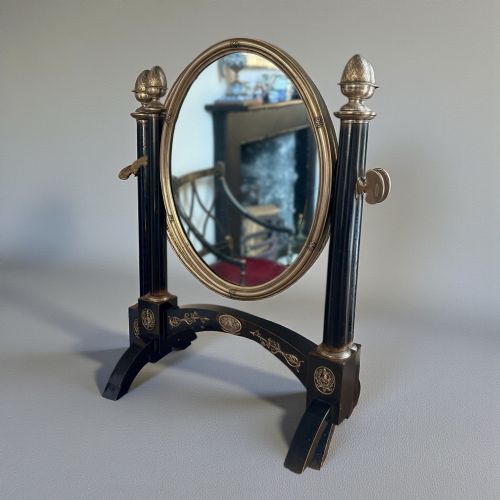
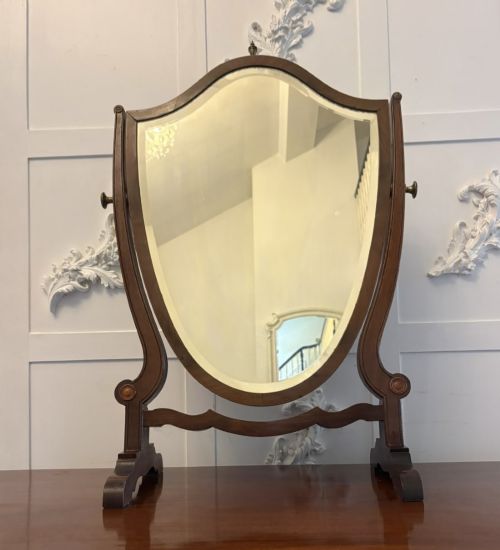
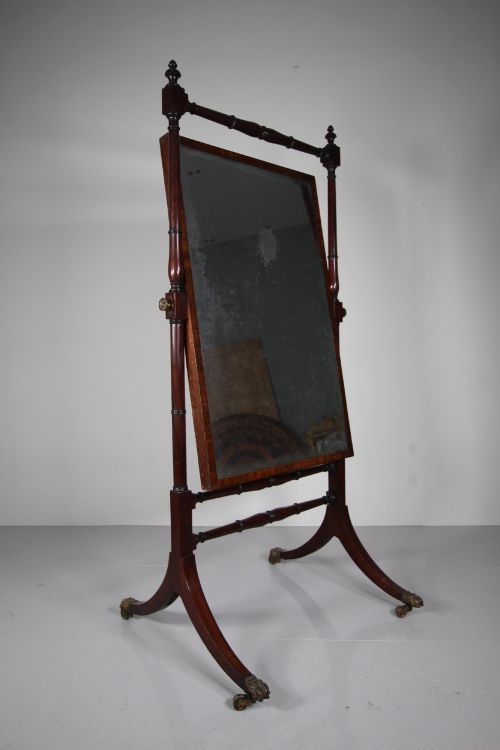
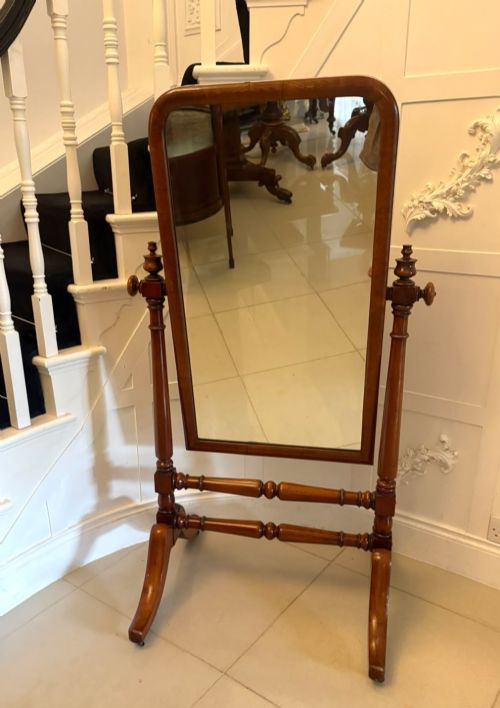
Antique Swinging Mirror
An antique swinging mirror brings adjustable reflection and warm timber tones to a bedroom, combining practical daily use with period craftsmanship.
Antique Swinging Mirror
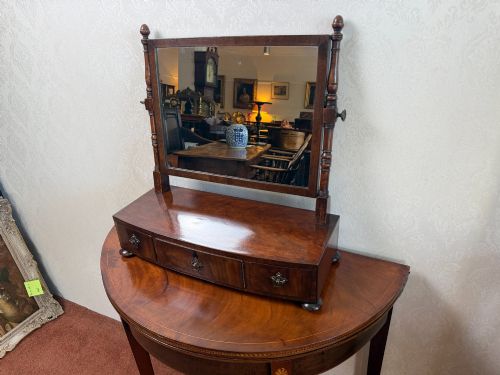
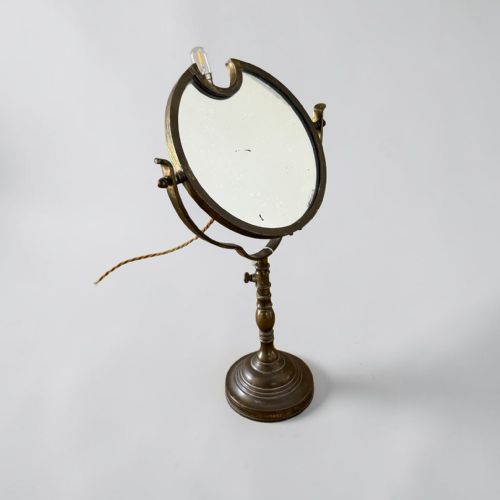
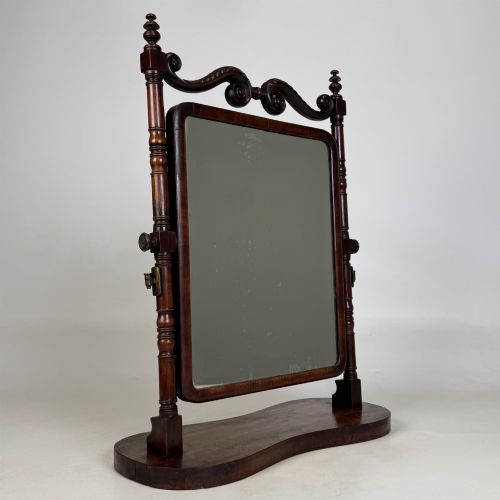
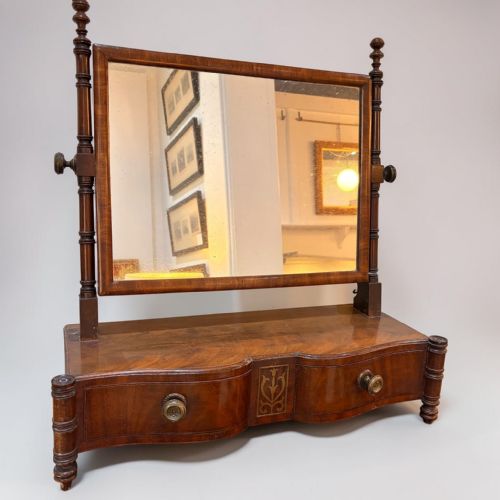
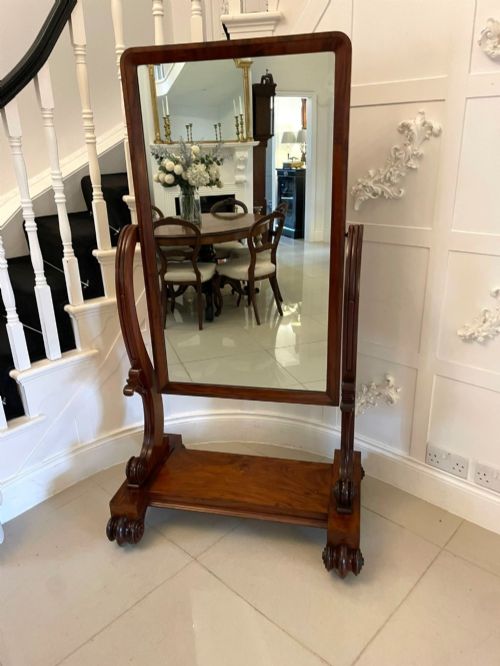
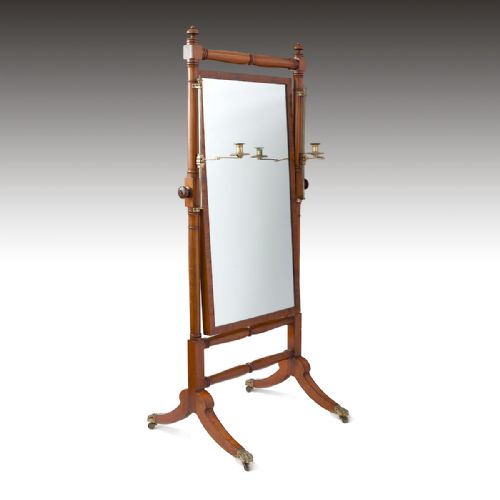
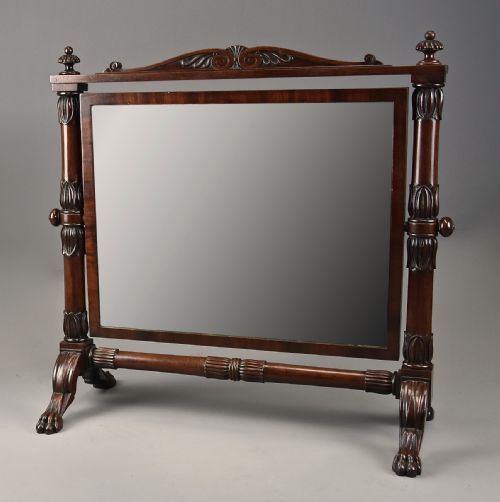
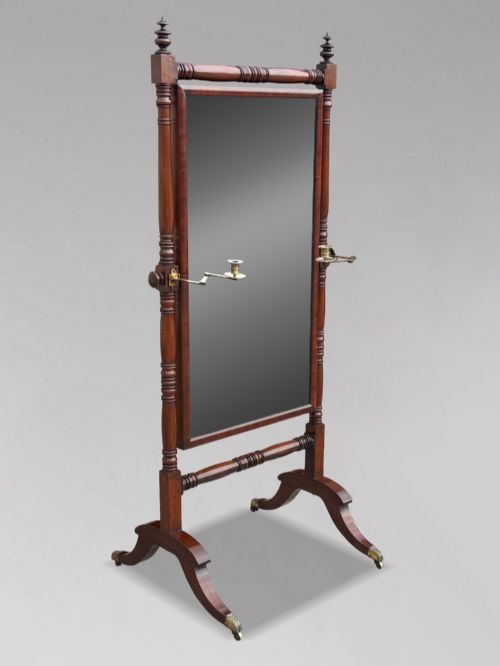
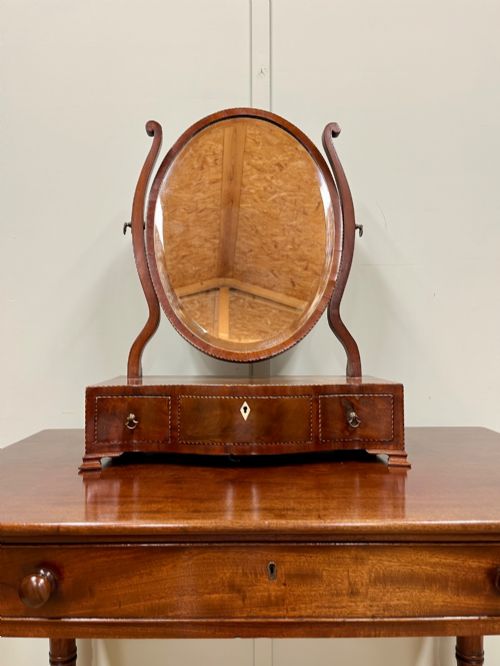
When you search for an antique swinging mirror, you encounter pieces designed to pivot within a frame for grooming and dressing. The selection spans table-top toilet mirrors and tall freestanding cheval mirrors.
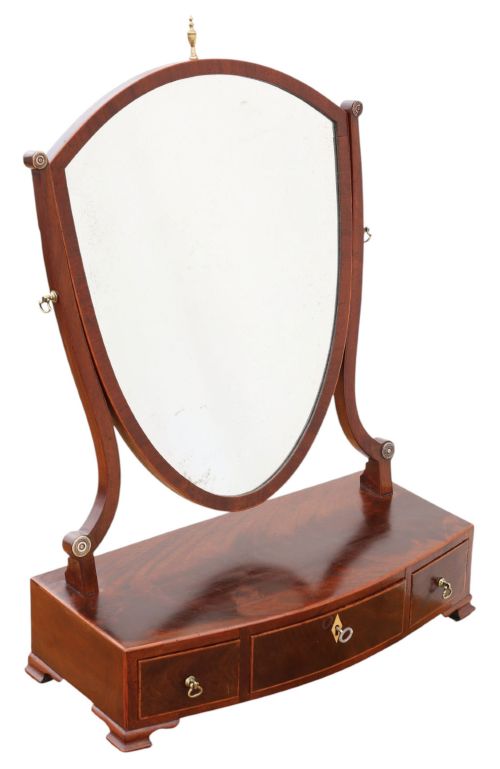
The most common examples on this page are mahogany dressing mirrors dating from the Georgian, Regency, and Victorian periods. These range from small box-base designs to large floor-standing cheval frames.
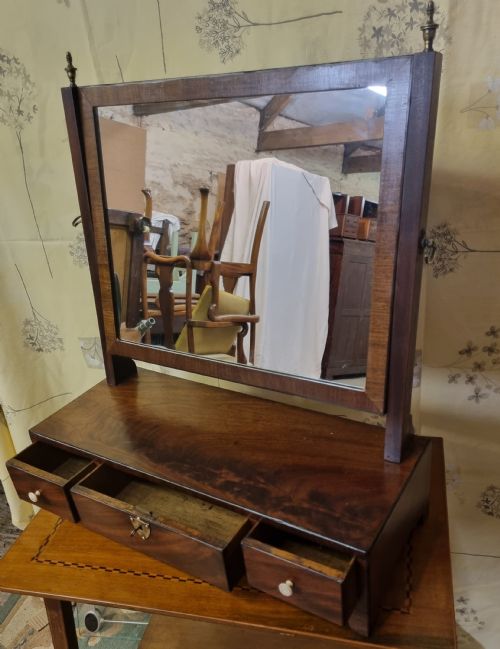
Origin and style variations include Edwardian satinwood, French Empire designs, Dutch walnut, and Chinese hardwood. Many rest on box bases fitted with small drawers for trinkets.
Assessing the Standard of Craftsmanship
Quality shows in the choice of timber figure, such as densely grained Cuban mahogany or figured walnut, and the crispness of carved details. Superior pieces display refined proportions and substantial brass hardware rather than light plated metal.
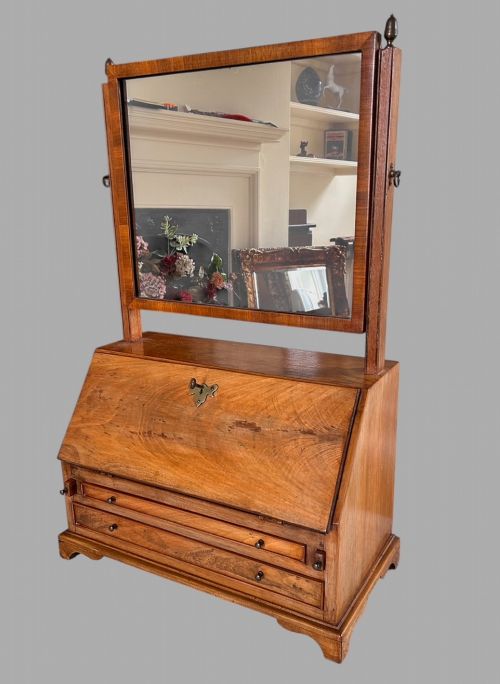
The sophistication of the base construction separates standard mirrors from finer examples, particularly where box bases incorporate integrated bureau compartments or serpentine fronts. The retention of the original mirror plate further elevates a piece.
Antique Swinging Mirror Retail Price Guide 2026
Typical asking prices for swinging mirror among the pieces listed under this phrase on Sellingantiques today, from the lower quarter to the upper quarter. They describe what is for sale here now, not the wider market.
Listings feature mahogany, walnut, satinwood, and oak across Georgian, Regency, Victorian, and Edwardian periods.
Heal & Sons·P & MA Nicholson·Gillow
The Antique Swinging Mirror Glossary
- Cheval mirror
- A large freestanding floor mirror that swings vertically within a tall frame. It allows a person to view their entire outfit.
- Toilet mirror
- A smaller tabletop mirror designed to sit on a dressing table or chest. These often incorporate a box base with small drawers.
- Shield mirror
- A mirror plate shaped like a heraldic shield, popular during the Georgian period. It is mounted on upright supports above a box base.
- Ormolu
- Gilded bronze applied as a decorative mount to furniture and mirror frames. It adds metallic contrast to the timber.
Antique Swinging Mirror: Frequently Asked Questions
Where should I place a dressing mirror?
These mirrors sit comfortably on top of low chests of drawers, dressing tables, or directly on the floor in the case of larger cheval designs. They require a stable surface and adequate natural light to function properly for grooming.
Positioning them near a window maximises their practical utility while reflecting daylight back into the room. Tabletop versions need sufficient depth to accommodate their swinging frames.
How do I date a swinging mirror?
Dating relies on timber choices, construction methods, and hardware styles. Georgian and Regency examples often feature dense mahogany and simple brass pivot screws, while Victorian and Edwardian pieces introduce inlaid details and satinwood.
Examine the backboards and drawer dovetails for hand-cut marks that indicate earlier periods. Labelled pieces from makers like Heal and Sons offer definitive timelines.
Can I adjust the tension on the swing mechanism?
Most swinging mirrors use brass pivot screws or threaded bolt assemblies set into the upright supports. Tightening or loosening these fixtures alters the resistance of the pivoting frame.
Care is needed when adjusting older hardware to avoid stripping original wood threads or damaging the surrounding timber. Leather or fabric washers inside the joint often provide the necessary friction.
What is the difference between a toilet mirror and a cheval mirror?
A toilet mirror is a compact tabletop object designed for close-up grooming while seated. It typically rests on a small chest or box base containing drawers.
By contrast, a cheval mirror is a tall freestanding piece that stands on the floor. It provides a full-length reflection and rests on heavy scrolled or trestle feet.