




Antique Swallow Jewellery
Antique swallow jewellery captures the enduring Victorian and Edwardian fascination with avian symbolism through finely worked gold, silver, diamonds and pearls.
Antique Swallow Jewellery
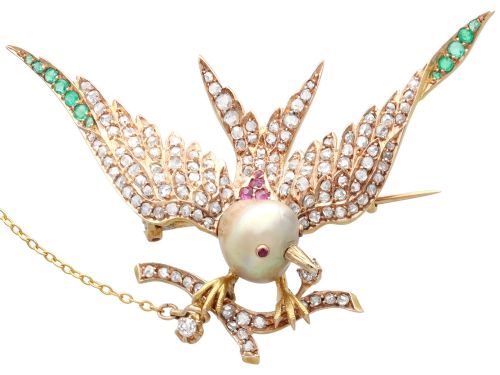
Antique swallow jewellery encompasses brooches, pendants, lockets, and bangles produced primarily during the Victorian and Edwardian eras. These pieces frequently incorporate romantic and naturalistic motifs, translating the swift flight of the bird into enduring personal adornment.
The most common form encountered on this page is the brooch, often rendered in yellow gold and set with seed pearls or gemstones. Alongside brooches, collectors frequently find lockets and pendants that demonstrate the same devotion to avian subjects.
Originating largely from the nineteenth and early twentieth centuries, these ornaments reflect the changing stylistic preferences from the Victorian Aesthetic Movement through to the lighter Edwardian period. Each item preserves a distinct craftsmanship rooted in its specific decade of manufacture.
How these pieces were made
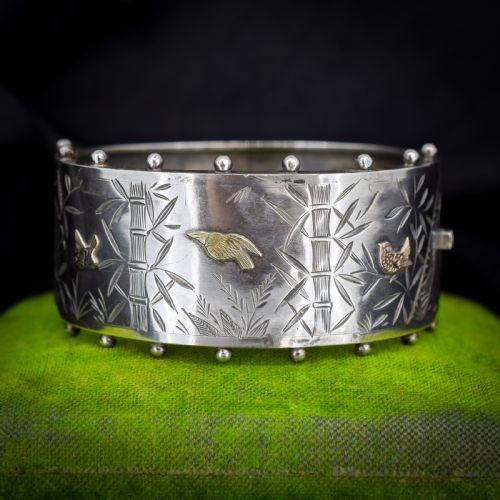
Makers utilised precious metals including nine carat gold, fifteen carat gold, eighteen carat gold, and sterling silver to form the structural bodies of the birds. Silver and gold combinations were frequently employed to mount gemstones securely while maintaining a brilliant contrast.
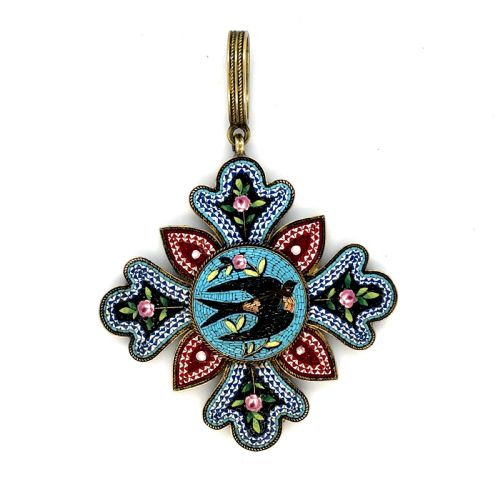
Gemstone setting involved the integration of rubies, emeralds, diamonds, and turquoise alongside natural pearls and seed pearls. Techniques such as micromosaic work and enamel application added vivid colour and textural depth to the metallic surfaces.
Antique Swallow Jewellery Retail Price Guide 2026
Typical asking prices for swallow jewellery among the pieces listed under this phrase on Sellingantiques today, from the lower quarter to the upper quarter. They describe what is for sale here now, not the wider market.
What varies in quality
The refinement of the metalwork and the precision of the stone setting distinguish the finer examples from simpler workshop output. Delicate engraving on gold and silver surfaces demands a high level of artisan skill.
The selection and matching of seed pearls and gemstones dictate the overall visual harmony of a piece. Superior items display careful gradation and secure mounting that withstands the passage of time.
The Antique Swallow Jewellery Glossary
- Seed pearls
- Tiny, naturally formed pearls often used in clusters to depict the body or wings of a bird. They provide a delicate, luminous texture characteristic of Victorian and Edwardian design.
- Micromosaic
- Tiny glass tesserae assembled to create detailed pictorial scenes. This technique appears in grand tour pendants featuring miniature avian portraits.
- Bar brooch
- A narrow horizontal pin popular during the late nineteenth and early twentieth centuries. Swallow motifs are frequently mounted centrally upon these slender metal bars.
- Silver gilt
- Silver that has been coated with a thin layer of gold. This treatment offers the warm appearance of gold while utilising a silver base.
Antique Swallow Jewellery: Frequently Asked Questions
What periods do these swallow pieces date from?
The pieces span the Victorian and Edwardian periods, stretching from the late nineteenth century into the early twentieth century. Additional examples reflect mid twentieth century craftsmanship.
Design characteristics shift subtly across these decades, moving from heavier Aesthetic Movement silver and gold towards lighter, gemstone dense Edwardian brooch settings.
How should I wear an antique swallow brooch?
These brooches work well pinned to lapels, heavy silk scarves, or structured coat collars where the metalwork receives adequate support. Ensuring the fabric is sufficiently robust protects the pin stem from bending.
Because many examples incorporate delicate seed pearls or enamel, wearing them away from heavy friction helps preserve their surface details over time.
What materials were commonly used for the birds?
Makers constructed the swallows using various grades of gold, including nine, fifteen, and eighteen carat, alongside sterling silver. Gemstones such as diamonds, rubies, and turquoise frequently accent the bodies.
Seed pearls and natural pearls are also widely integrated to render the plumage or surrounding decorative crescents with soft luminescence.
How can I tell a Victorian piece from an Edwardian one?
Victorian items often display bolder metalwork, sometimes combining silver and gold with Aesthetic Movement influences or micromosaic details. The forms tend to be robust and deeply engraved.
Edwardian pieces generally lean towards lighter mountings, frequently utilising platinum or higher carat gold set with brilliant diamonds and delicate seed pearl arrangements.