




Antique Sutherland
An antique sutherland table brings narrow drop-leaf folding convenience to tight spaces through hinged narrow flaps.
Antique Sutherland
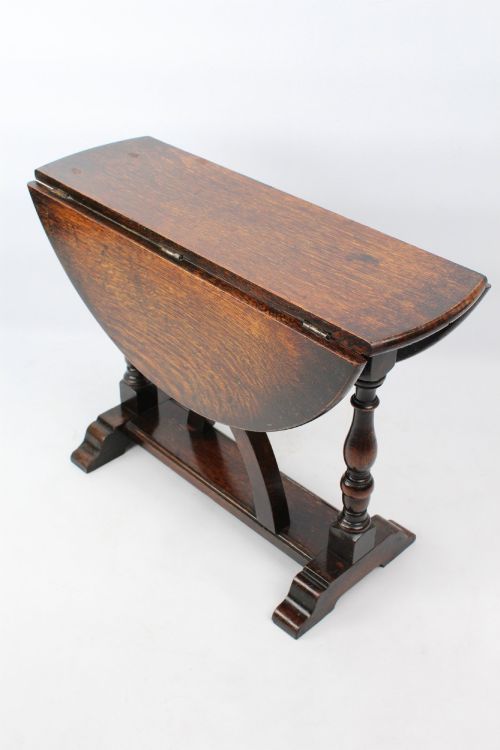
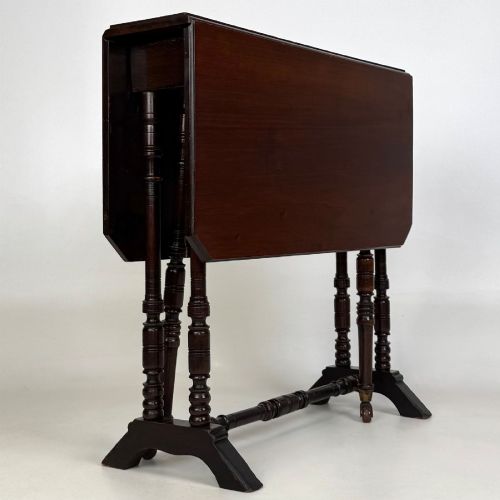
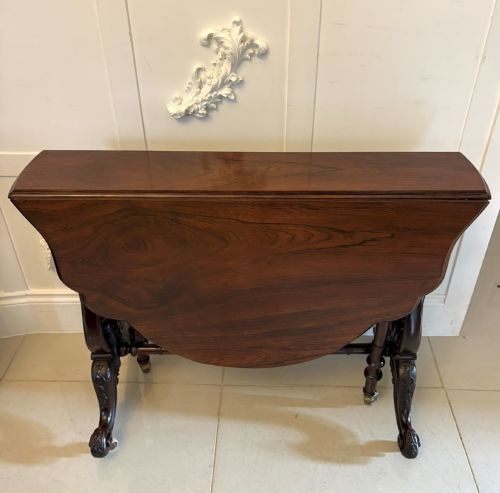
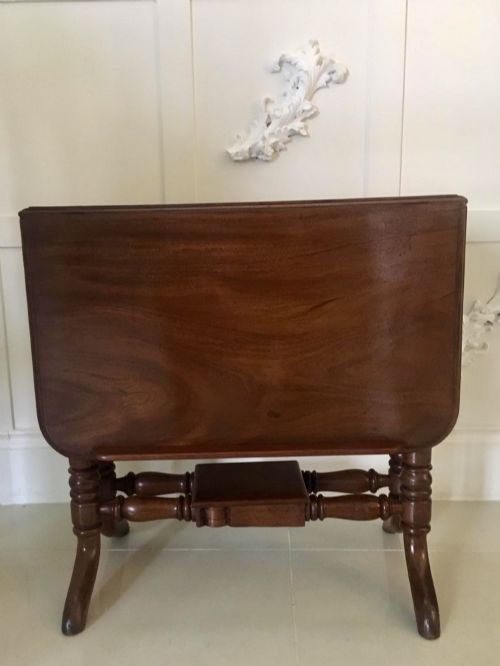
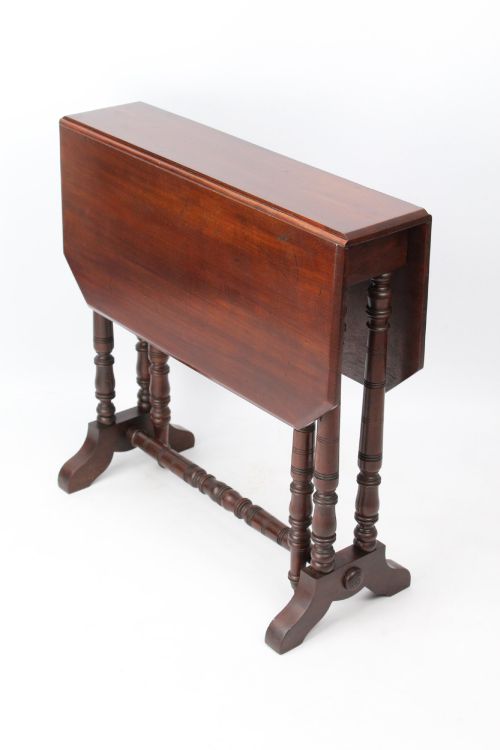
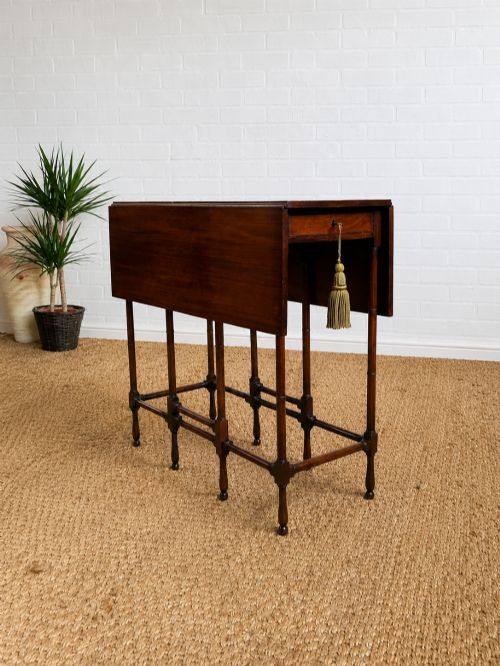
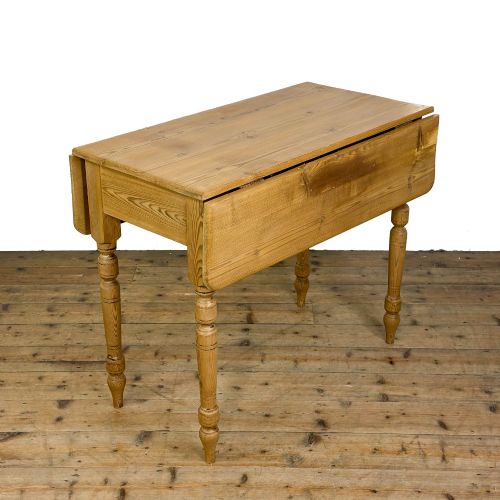
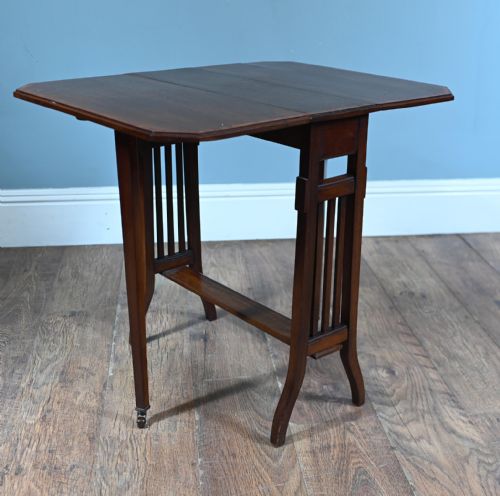
An antique sutherland table is a specific type of drop-leaf table designed with exceptionally narrow leaves supported by swinging gate legs, allowing the entire piece to fold flat when not in use. These tables appear frequently in Victorian, Edwardian, and nineteenth-century forms, serving as versatile occasional, tea, or side tables in sitting rooms.
The pieces listed on this page span several stylistic revivals and woods, most commonly encountered in rich burr walnut, mahogany, and rosewood. While many function as compact occasional surfaces, variations include reading tables, miniature models, and examples featuring inlaid satinwood or floral marquetry.
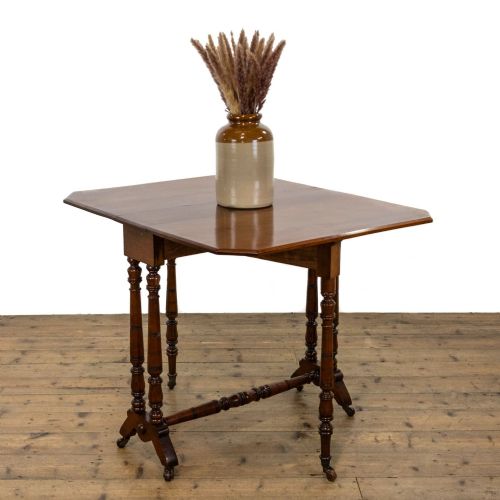
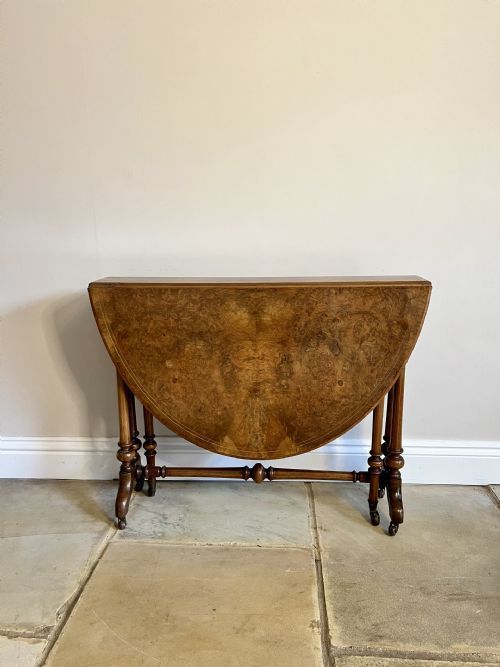
Originating in the nineteenth century, the form prioritises space-saving utility without sacrificing decorative presence. Buyers searching for an antique sutherland will find examples ranging from plain mahogany country pieces to highly polished Victorian burr walnut models with turned legs and ceramic castors.
How they were made
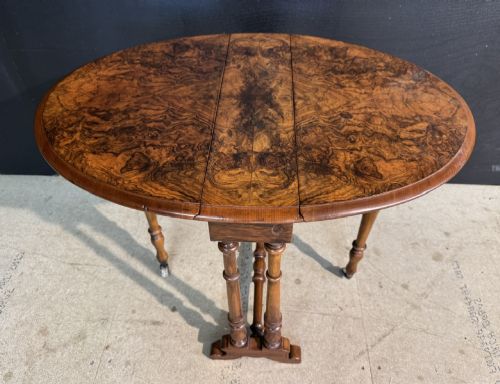
Cabinet makers utilised dense hardwoods such as mahogany, walnut, and rosewood to construct the frames and narrow drop leaves, often applying burr walnut veneers to the table tops for enhanced grain patterns. Satinwood stringing and floral marquetry provide delicate contrasting detail on finer Victorian and Edwardian iterations.
The characteristic folding mechanism relies on pivoted gate legs that swing outward from a fixed central underframe to support the drooping leaves. Turned wooden legs, sometimes bamboo-turned or supported on low ceramic castors, complete the stable support structure necessary for such a narrow footprint.
Antique Sutherland Retail Price Guide 2026
Typical asking prices for sutherland among the pieces listed under this phrase on Sellingantiques today, from the lower quarter to the upper quarter. They describe what is for sale here now, not the wider market.
Listings feature woods spanning mahogany, walnut, burr walnut, rosewood, satinwood, oak, and pine.
What varies in quality
The standard of timber selection and veneer work largely distinguishes finer examples from simpler vernacular pieces, particularly seen in the choice of richly figured burr walnut over plain secondary woods. Subtle decorative flourishes such as intricate marquetry inlay, satinwood banding, and ebonised finishes indicate workshop output intended for wealthy Victorian parlours.
Structural integrity of the complex hinge and gate-leg mechanism determines the durability and smooth operation of the folding leaves over time. Finely turned components, tight joinery, and well-preserved original polished surfaces elevate an individual table above standard utility furniture.
Maple & Co·Jenks & Woods
The Antique Sutherland Glossary
- Sutherland table
- A narrow drop-leaf table with hinged flaps supported by pivoting gate legs, designed to fold flat when stored. This space-saving form gained popularity during the Victorian period.
- Drop leaf
- A hinged table leaf that folds down at the side to reduce the overall footprint of the furniture. When raised, it provides an extended surface supported by swing legs.
- Burr walnut
- A prized wood veneer obtained from the deformed growths or burrs on walnut trees, yielding swirling patterns. It was frequently utilised on high-end Victorian table tops.
- Marquetry
- Decorative veneer patterns inlaid into the surface of wood using various contrasting timbers. Floral motifs appear frequently on nineteenth-century table tops.
- Gate leg
- A hinged leg that swings outward from the central frame to support an open drop leaf. It forms a stable structural support when fully extended.
Antique Sutherland: Frequently Asked Questions
What is a sutherland table?
A sutherland table is a narrow drop-leaf occasional table with hinged flaps supported by swinging gate legs. When folded completely, the top rests in a very slim vertical profile.
Cabinet makers designed these pieces to sit compactly against a wall or in small spaces, ready to expand into a tea or card table when guests arrived.
How do you fold a sutherland table?
To close the table, you lift each drop leaf slightly to release the pressure on the supporting gate legs. You then swing each gate leg inward toward the central underframe before lowering the leaves flat.
This simple mechanical action allows the furniture to tuck away neatly against a wall when floor space is required.
What woods were used?
Victorian and Edwardian makers constructed these tables predominantly from dense hardwoods, with mahogany and walnut appearing most frequently. Finer examples utilise figured burr walnut veneers or rosewood.
Decorative variations incorporate satinwood inlay, marquetry details, or ebonised finishes to suit changing interior fashions of the nineteenth century.
How can you date an antique sutherland table?
Dating relies on observing stylistic markers, timber choices, and construction methods associated with specific nineteenth and early twentieth-century periods. Georgian and early Victorian pieces often display simpler mahogany framing.
Later Victorian and Edwardian examples frequently feature elaborate burr walnut veneers, inlaid marquetry, or specific turned leg designs corresponding to the Aesthetic Movement.