



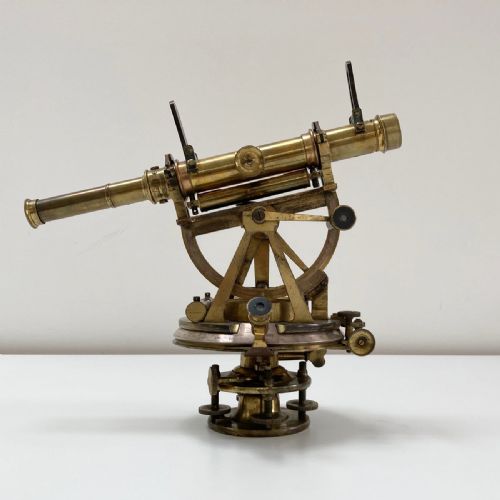


Antique Surveyor Instruments
Antique surveyor instruments are precision field tools in brass and mahogany that mapped estates and landscapes, prized by collectors for their intricate dials and engineering history.
Antique Surveyor Instruments
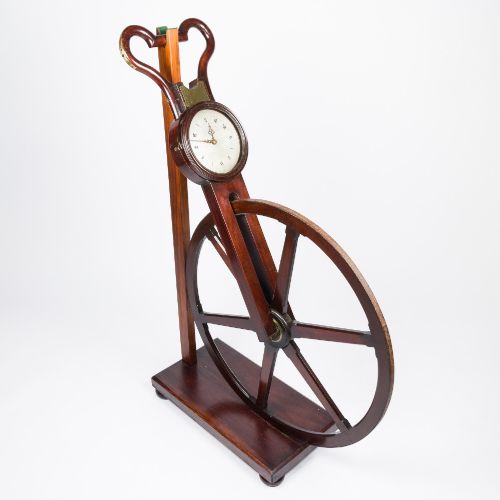
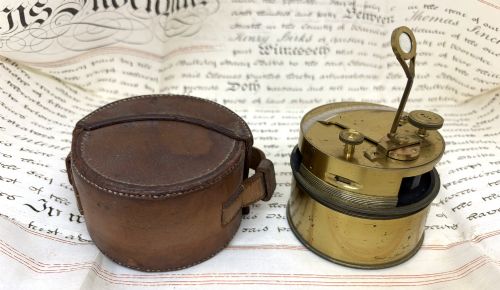
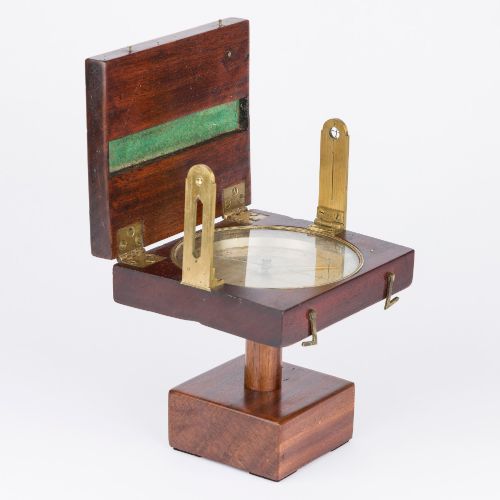
When you search for antique surveyor instruments, you encounter brass and glass field tools designed to measure angles, levels, and boundaries across the nineteenth century. These objects include complex theodolites, drainage levels, clinometers, and magnetic compasses housed in fitted wooden boxes.
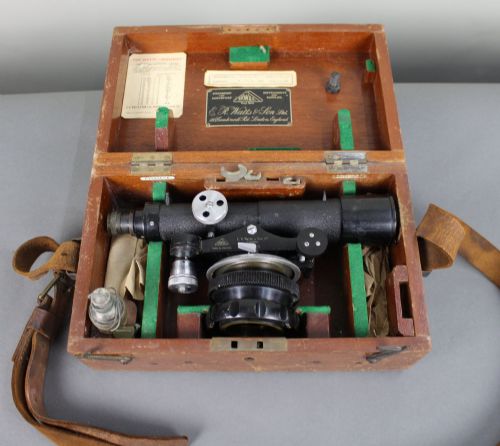
The specimens on this page span from Georgian examples through Victorian designs up to mid-twentieth-century utilities like the Watts highway level. Most survivors retain their original fitted mahogany cases and delicate silvered metal dials, reflecting their professional origins in land mapping and engineering.
Makers ranged from provincial opticians such as G. Davis of Leeds to prominent London firms like Elliott Bros. and W. & S. Jones. Collectors meet instruments scaled from miniature altazimuth theodolites to large desk compasses equipped with inclinometers.
How they were made
Makers constructed these instruments primarily from heavy polished brass for the chassis and delicate silvered metal for the graduated circles and compass cards. Glass protected the sensitive magnetic needles and spirit levels, while structural elements utilised seasoned mahogany and other woods for fitted storage cases.
Precision engineering defined the production process, relying on hand-engraved scales, cast brass components, and finely turned screws to achieve accurate readings. Makers often lined the protective boxes in leather and velvet to secure the instruments during transport across rough terrain.
Antique Surveyor Instruments Retail Price Guide 2026
Typical asking prices for surveyor instruments among the pieces listed under this phrase on Sellingantiques today, from the lower quarter to the upper quarter. They describe what is for sale here now, not the wider market.
The listings span the nineteenth century through the early twentieth century, featuring materials like brass, glass, mahogany, and silvered metal.
What varies in quality
The distinction between standard utility items and exceptional pieces rests upon the complexity of the movement and the reputation of the maker. Signed instruments by renowned London and regional makers command greater attention due to their superior graduation and mechanical refinement.
Completeness dictates much of the standing of an instrument, particularly the presence of original sighting arms, verniers, and matching mahogany fitted boxes. Surviving trade labels and retailer signatures from firms like L. Casella & Co add documented provenance to the physical object.
E.R. Watts & Son Ltd·G. Davis of Leeds·Baker, London·W & S Jones·L Casella & Co·Negretti & Zambra·Elliott Bros. of London·Alexander Adie of Edinburgh·W. H. Harling·Cox of Devonport·John Newman·R. Field & Son, Birmingham·WF STANLEY
The Antique Surveyor Instruments Glossary
- Altazimuth theodolite
- A specialised instrument designed to measure both altitude and azimuth angles simultaneously. These complex devices allowed surveyors to determine exact positions in the field.
- Clinometer
- A tool used for measuring angles of slope, elevation, or depression of an object with respect to gravity. Examples such as Cook's patent version incorporated spirit levels for accuracy.
- Pantograph
- An instrument used for copying maps, plans, and drawings at different scales through linked jointed frames. They were essential tools for draftsmen and cartographers.
- Vernier
- A secondary sliding scale that allows readings to be taken to a fraction of the main graduated divisions. It represents the high standard of precision found on nineteenth-century scientific apparatus.
- Inclinometer
- A built-in dial mechanism that measures the tilt of an instrument relative to the earth's magnetic or gravitational plane. They frequently appeared on desk compasses of the Georgian and Victorian eras.
Antique Surveyor Instruments: Frequently Asked Questions
What did surveyors use these instruments for?
Surveyors utilised these brass tools to measure land boundaries, map estates, and calculate elevations for construction and cartography. They provided the mathematical precision needed for civil engineering projects.
Instruments like theodolites and levels translated physical landscapes into accurate paper maps and plans. Field crews relied on them outdoors while desk compasses served indoors for calculations.
How do I identify a Victorian theodolite?
Victorian theodolites feature cast brass frames, silvered metal dials, and fine adjustment screws housed in fitted mahogany boxes. Many bear the engraved signature of the maker on the horizontal circle.
They often display the distinctive heavy construction and decorative finishing typical of nineteenth-century scientific manufacturing. Checking for maker signatures helps date the piece accurately.
Why are some instruments in wooden boxes?
Fitted wooden cases protected delicate brass components, glass dials, and spirit levels from damage during rough field transport. Mahogany was chosen for its durability and resistance to warping in variable weather.
These boxes often contain original accessories, spare lenses, and adjustment pins required for field calibration. The presence of a maker's trade label inside the lid adds historical context.
How should I display an antique compass?
Display these instruments on stable surfaces away from direct sunlight and moisture to preserve the polished brass and wood. Keeping them in well-lit rooms allows the engraved dials to be appreciated.
Many collectors exhibit them alongside their original mahogany cases to show how they were stored and transported. Proper placement highlights the intricate engineering of the silvered metal scales.