


Antique Sunderland Lustre
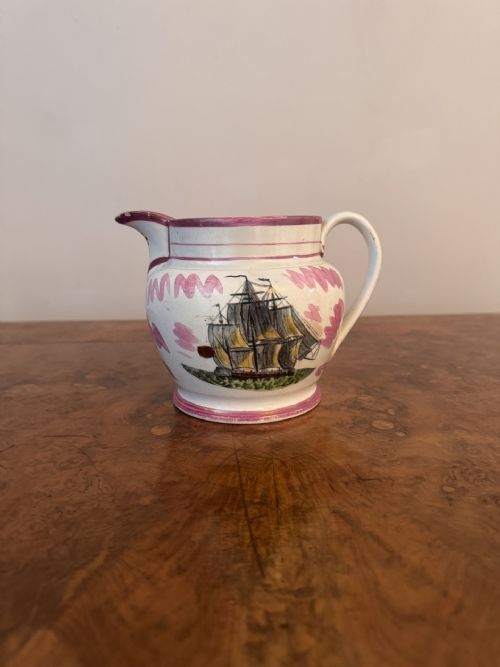
Antique sunderland lustre brings maritime romance and industrial heritage to the shelf through distinctive pink splash finishes and transfer-printed ships.
Antique Sunderland Lustre
When you search for antique sunderland lustre, you are looking at earthenware and pearlware vessels created in the North East of England during the nineteenth century. These pieces record the maritime life, industrial pride and fraternal associations of the region through transfer-printed designs.
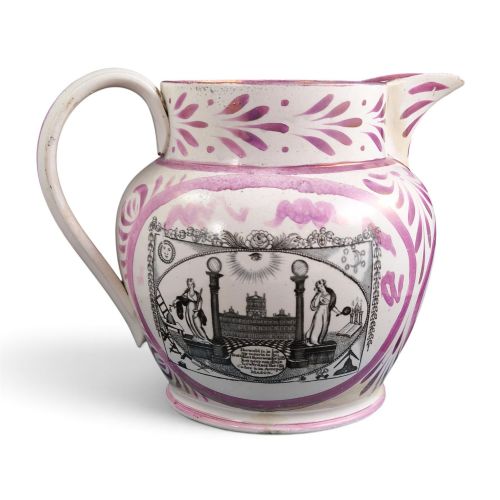
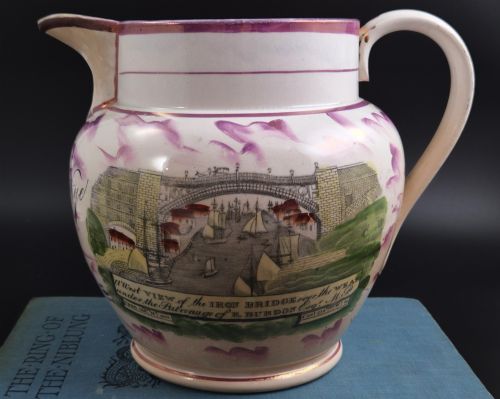
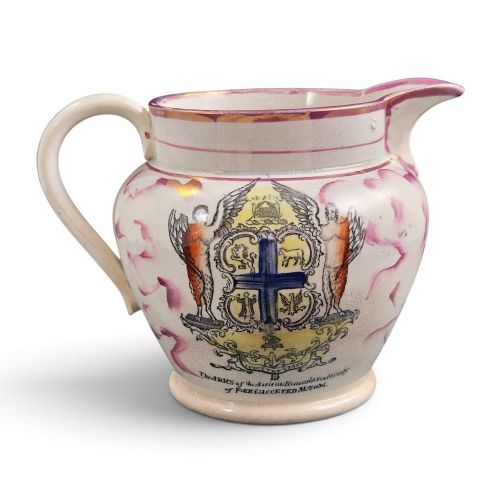
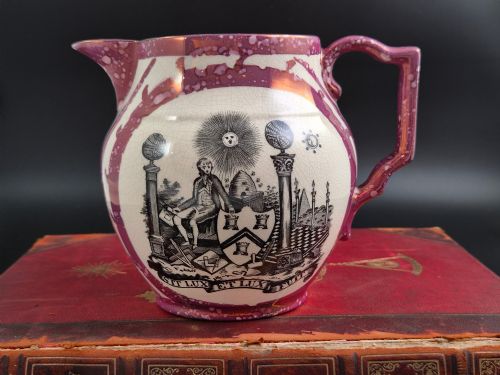
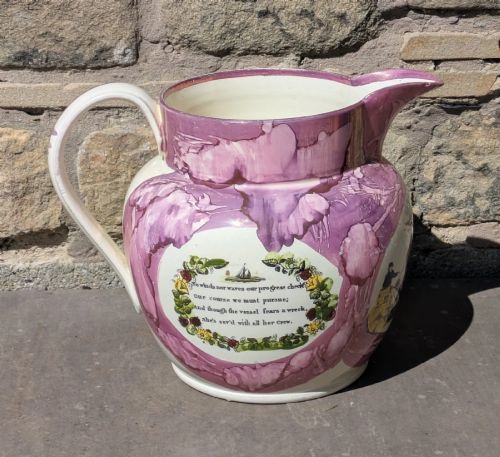
The jugs and bowls on this page range from compact vessels to large decorative pieces decorated with pink metallic glazes. You will most commonly meet mid-nineteenth-century jugs featuring scenes of the Iron Bridge, masonic symbols or tall ships.
Makers utilised earthenware and pearlware as canvases for hand-painted enamels and copper lustre techniques. The output spans the Georgian and Victorian eras, capturing both commercial shipping scenes and sentimental verses directed at sailors.
How they were made
Potters shaped these vessels from local earthenware and refined pearlware bodies before applying transfer prints to the surface. These black or brown outlines were then hand-coloured using bright enamel pigments.
The characteristic pink splash or marbled effect results from metallic oxides applied over a white glaze and fired to create a mottled finish. Artisans layered these metallic glazes around the rims and handles to frame the central printed panels.
Object forms on this page are dominated by jugs and pitchers alongside occasional large decorative bowls bearing commemorative inscriptions.
What varies in quality
Quality rests in the crispness of the transfer print and the richness of the pink metallic glaze. Stronger examples display deep, even distribution of the splash effect alongside careful hand-applied enamel colouring.
The complexity of the subject matter dictates the standing of a piece within the range. Vessels featuring named subjects, detailed maritime vessels or masonic iconography command greater visual weight than plain pink lustre examples.
Garrison Pottery
The Antique Sunderland Lustre Glossary
- Lustre Glaze
- A metallic film applied to pottery to create a reflective, iridescent surface. This technique uses gold, silver or copper oxides to achieve metallic sheens.
- Pearlware
- A refined earthenware body developed in the late eighteenth century featuring a subtle bluish glaze. It bridged the gap between creamware and white earthenware.
- Transfer Printing
- A method of applying engraved paper designs to ceramic surfaces using metallic oxides. This technique allowed intricate topographical and maritime scenes to be reproduced efficiently.
- Splash Lustre
- A mottled pink or purple finish created by flicking metallic solution onto the glazed surface before firing. It produces a distinctive speckled pattern unique to North East potteries.
- Earthenware
- Porous pottery fired at lower temperatures than stoneware or porcelain. It forms the structural body for the vast majority of these regional wares.
Antique Sunderland Lustre: Frequently Asked Questions
What is sunderland lustre?
Sunderland lustre refers to earthenware and pearlware pottery produced along the River Wear in North East England, characterised by pink metallic glazes.
These pieces typically feature transfer-printed maritime scenes, poetic panels, and local landmarks such as the Iron Bridge.
How old are these pieces?
The pieces available range from the Georgian period around eighteen hundred through the Victorian era up to eighteen sixty.
Most surviving examples date from the first half of the nineteenth century when the regional potteries reached their peak production.
What themes appear on them?
Common subjects include tall ships, naval engagements, masonic symbols, and sentimental verses addressed to sailors and travellers.
Potters also commemorated local industrial achievements, most notably the iron bridge spanning the River Wear.
How do I display a jug?
These decorative jugs sit well on open shelving or within glazed cabinets where adequate lighting highlights the metallic pink glaze.
Because the earthenware bodies are heavy, place them on stable, level surfaces away from heavy foot traffic.