



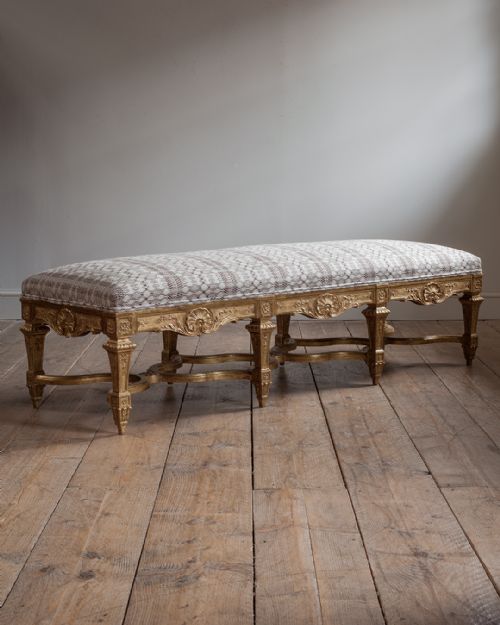
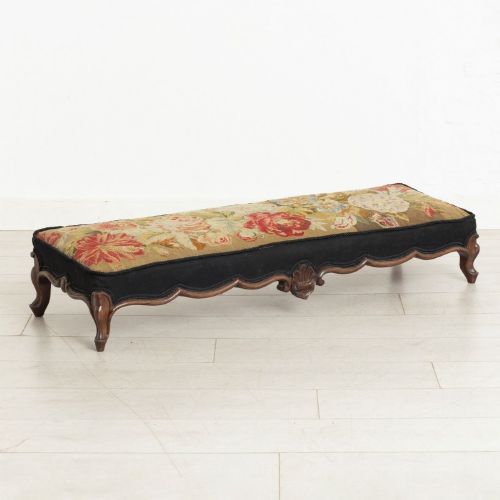


Antique Style Long Footstool
These antique style long footstool pieces offer extended seating and support, combining period frames with traditional upholstery for home interiors.
Antique Style Long Footstool
An antique style long footstool provides extended proportions designed for resting feet across multiple seats or serving as a low bench. Pieces matching this search phrase encompass long stools, window seats, and benches originating from the 19th century through the Edwardian period.
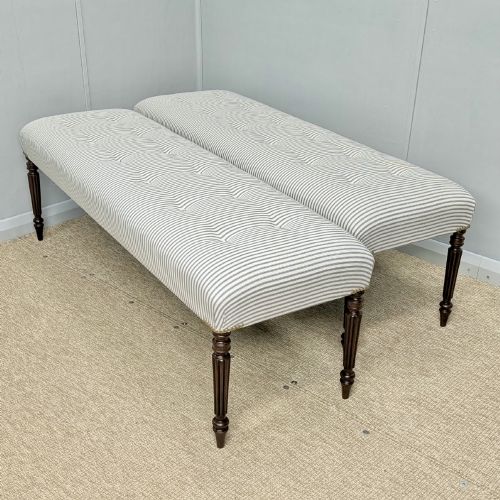
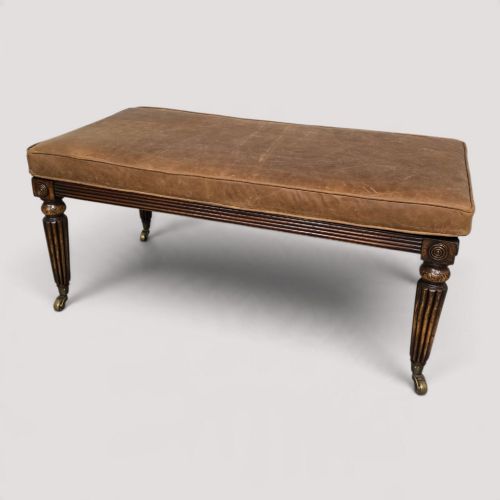
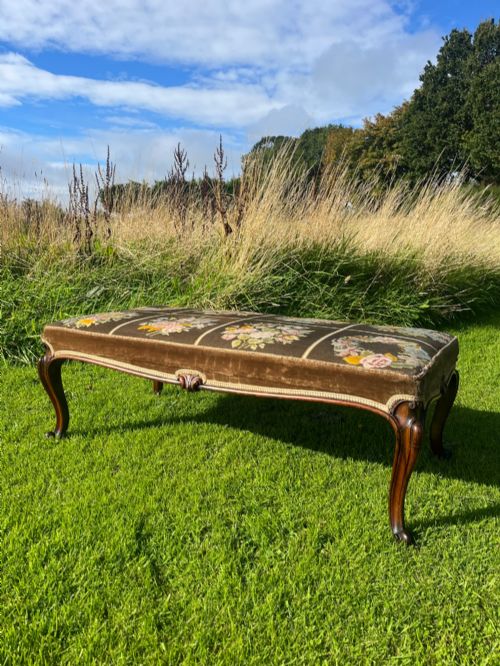
The forms span simple mahogany frames, walnut cabriole leg designs, and giltwood frames reflecting Georgian, Victorian, and French revival influences. Buyers encounter buttoned ticking, leather, velvet, and cane upholstery across these elongated seating formats.
Materials and construction methods
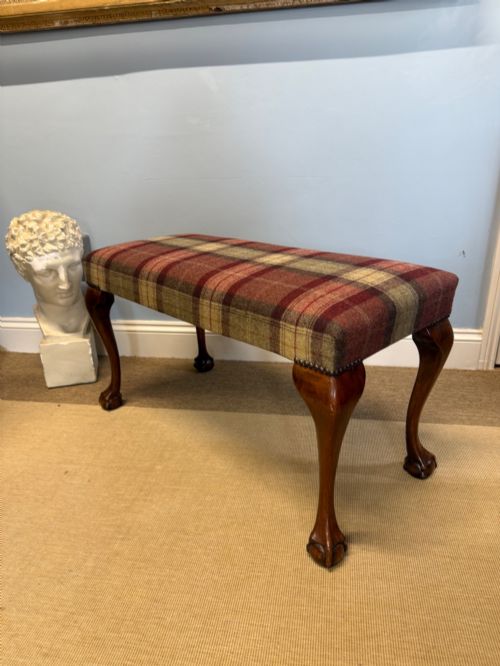
Frames rely on hardwoods such as mahogany, walnut, oak, and rosewood, alongside gilded or painted finishes. Joinery and carved details include ball and claw feet and cabriole legs.
Upholstery incorporates buttoning, ticking, wool, linen, leather, and velvet textiles, sometimes featuring specific maker fabrics such as Morris and Co. or Liberty William Morris designs.
Antique Style Long Footstool Retail Price Guide 2026
Typical asking prices for style long footstool among the pieces listed under this phrase on Sellingantiques today, from the lower quarter to the upper quarter. They describe what is for sale here now, not the wider market.
Some pieces manage to combine buttoned ticking with Georgian legs, satisfying both the orderly and the eccentric in one piece of furniture.
Distinctions in quality and execution
Quality rests upon the integrity of the timber frame, the crispness of any hand-carved elements like ball and claw feet or cabriole shaping, and the fidelity of revival styles such as Louis XIV or Carolean.
Upholstery execution separates standard pieces from those utilising specialist historic textiles, traditional buttoning techniques, and well-preserved frame structures.
The Antique Style Long Footstool Glossary
- Cabriole leg
- A furniture leg that curves outward and then tapers inward, finishing in a pad or foot, common in 18th century and revival seating.
- Bergere
- An enclosed upholstered armchair or stool featuring an exposed wooden frame and cane panels.
- Giltwood
- Wood that has been coated with a thin layer of gold leaf or gilt powder, frequently seen on French revival frames.
- Ticking
- A closely woven, durable cotton or linen fabric traditionally used for mattress and cushion covers.
Antique Style Long Footstool: Frequently Asked Questions
Where do people place a long footstool?
These pieces fit comfortably at the foot of a bed, beneath a window as a low seat, or in front of a sofa for extended leg support.
Their elongated proportions make them versatile additions to hallways, living rooms, and large dressing spaces.
How do I identify a Victorian footstool?
Victorian examples often feature walnut or mahogany frames supported by cabriole legs, frequently paired with buttoned upholstery or original fabric.
Looking closely at the timber turnings and joinery helps distinguish mid-to-late nineteenth-century work from later Edwardian or twentieth-century revivals.
What is a window stool used for?
A window stool provides a low seating option designed to sit at bay window height without obstructing natural light or views.
They function as narrow benches that accommodate multiple people or serve as a surface for decorative textiles.
How do I care for antique upholstery?
Preserving vintage textiles requires gentle vacuuming with a soft brush attachment and keeping pieces away from direct sunlight to prevent fabric fading.
Leather surfaces benefit from appropriate conditioning balms, while cane panels should be kept dry and free from excessive weight.