

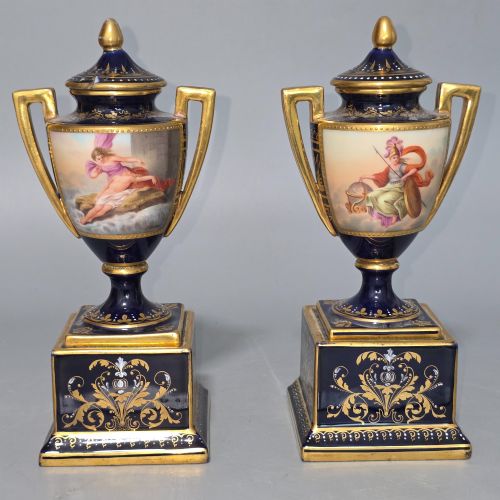


Antique Style Amphora
These antique style amphora pieces bring classical form and timeless presence to a room, offering the decorative weight of antiquity.
Antique Style Amphora
An antique style amphora draws upon classical antiquity, taking the traditional two-handled storage vessel and reimagining it for nineteenth-century and Edwardian interiors. When searching for an antique style amphora, you encounter grand vases, decorative urns, ewers, and occasional related ornaments shaped by revivalist tastes.
The pieces on this page span the nineteenth century, including specific dates from the 1820s through to 1900, alongside Edwardian examples. Makers drew inspiration from diverse aesthetics such as French Empire, Art Nouveau, Classical Revival, and Grand Tour souvenirs.
Forms range from large terracotta oil jars and marble cassolettes to porcelain vases and bronze tripod stands with glass vessels. These objects served primarily as decorative focal points for stately homes, conservatories, and drawing rooms rather than utilitarian storage.
Materials and construction
Makers utilised traditional earth-based and stone materials, shaping terracotta, earthenware, ceramic, porcelain, and clay into fluid vessel contours. Many pieces incorporate fired clay or terracotta, sometimes left in a rustic state or finished with painted enamel and gilt highlights.
Stone and metal components also feature prominently, with artisans carving solid marble into classical urns or casting bronze for tripod stands and mounts. Porcelain pieces frequently demand delicate kiln-firing and hand-painted details, often signed by the artist.
Decorative surfaces often reflect specific regional traditions, from French Empire porcelain to Austrian pottery and Italian Grand Tour souvenir casting. The integration of metalwork, glass, and ceramic highlights the diverse craft techniques employed across the nineteenth century.
Antique Style Amphora Retail Price Guide 2026
Typical asking prices for style amphora among the pieces listed under this phrase on Sellingantiques today, from the lower quarter to the upper quarter. They describe what is for sale here now, not the wider market.
Someone once slipped a pair of gold earrings into an amphora search, proving that classical revival vessels and jewellery share the same grand nineteenth-century stage.
Judging quality and execution
Quality rests in the fidelity of the classical revival form and the precision of the material execution. Master craftsmen achieved superior balance in the proportions of handles, necks, and pedestals, whereas lesser examples miss the harmonious grace of ancient prototypes.
Surface finish distinguishes standard production from exceptional work. Hand-painted enamel details, crisp gilding, and finely carved marble or cast bronze demonstrate superior workshop standards compared to simpler moulded earthenware.
Provenance and artistic attribution elevate specific pieces, such as signed porcelain or documented Grand Tour souvenirs. The integration of auxiliary elements, like matching covers or bespoke stands, indicates higher initial commission value.
F. Koller
The Antique Style Amphora Glossary
- Amphora
- A two-handled ancient jar used for storage or transport, inspiring later decorative revival vases. These vessels typically feature a narrow neck and a tapering body.
- Cassolette
- A decorative vase or urn with a perforated cover, designed to burn perfumes or serve as an ornamental container. They frequently appear in pairs in nineteenth-century French interiors.
- Ewer
- A large pitcher with a wide spout and a curved handle, used historically for pouring water and adapted as an ornamental vessel. Ewers often complement amphora vases in decorative schemes.
- Grand Tour
- A cultural journey undertaken by wealthy young Europeans to study classical antiquities, resulting in the acquisition of souvenirs like marble urns and bronze tripods. These objects replicate ancient artefacts for domestic display.
- Empire Style
- A neoclassical design movement spanning the late eighteenth and nineteenth centuries, characterised by motifs drawn from ancient Rome and Greece. It heavily influences the gilt and porcelain amphorae of the period.
Antique Style Amphora: Frequently Asked Questions
What is an antique style amphora?
An antique style amphora is a decorative vessel modelled after ancient Greek and Roman storage jars, produced mainly during the nineteenth century and the Edwardian era. These pieces draw on revivalist movements like Classical Revival and French Empire to bring classical dignity to interior spaces.
They function purely as decorative art objects rather than utility items, appearing as porcelain vases, terracotta garden urns, and marble cassolettes.
How were amphora vases used originally?
In antiquity, original amphorae stored wine, oil, and grain, but nineteenth-century revival pieces served decorative roles in grand homes and gardens. They anchored architectural display schemes in hallways, drawing rooms, and conservatories.
Larger terracotta jars stood on terraces or stands, while fine porcelain and marble versions adorned mantelpieces and side tables as centrepieces.
How do I style an antique amphora?
Placing an antique amphora requires a spot where its classical silhouette can command attention without obstruction. Large terracotta jars suit garden rooms or spacious hallways, while smaller porcelain and marble urns anchor tables or cabinets.
Pairing matching pieces, such as cassolettes or twin ewers, creates symmetry on pedestals or sideboards, echoing nineteenth-century interior arrangements.
How do I tell nineteenth-century pieces apart?
Differentiating nineteenth-century pieces involves examining the base materials, manufacturing marks, and stylistic influences. Porcelain works often carry period signatures and gilt motifs typical of French Empire production, while terracotta and earthenware lean towards rustic Mediterranean or classical revival forms.
Grand Tour souvenirs in bronze or marble reflect specific Italian and Austrian workshop techniques from the 1880s and 1890s, distinct from earlier Empire revivals.