





Antique Striped Kilim
These antique striped kilim pieces offer flatweave textiles created by tribal makers across Persia, the Caucasus, and Central Asia.
Antique Striped Kilim
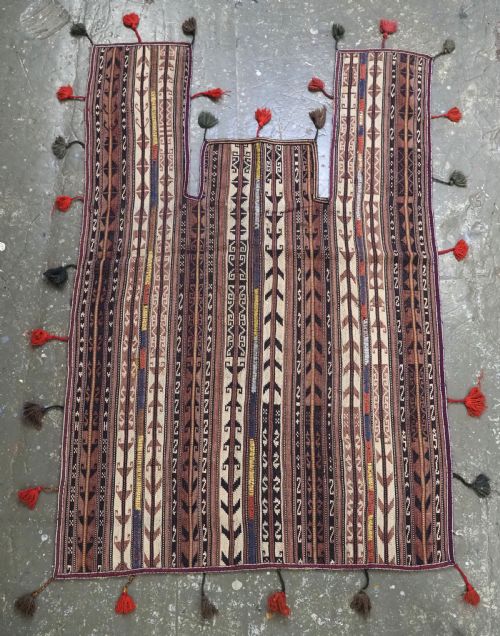
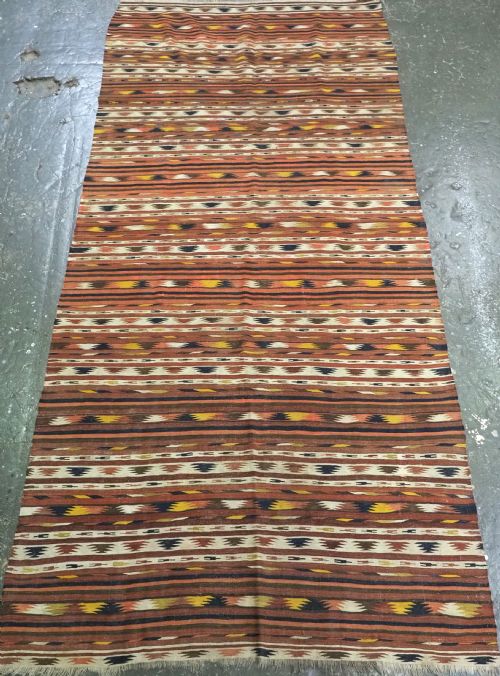
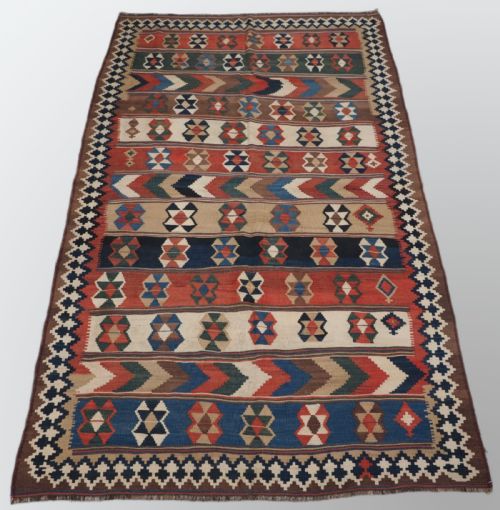
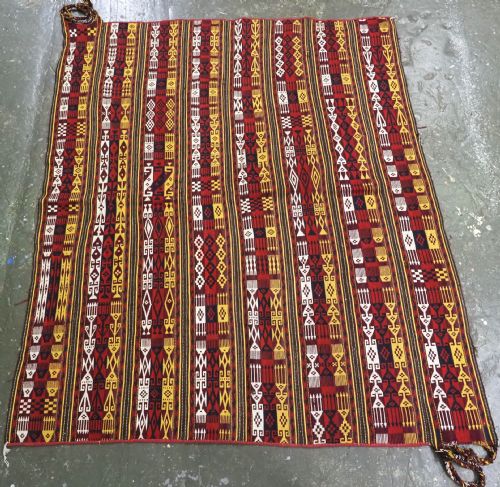
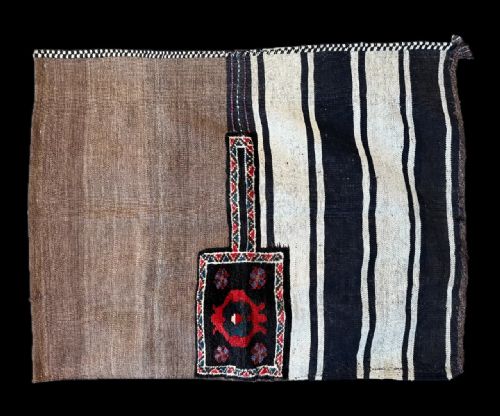
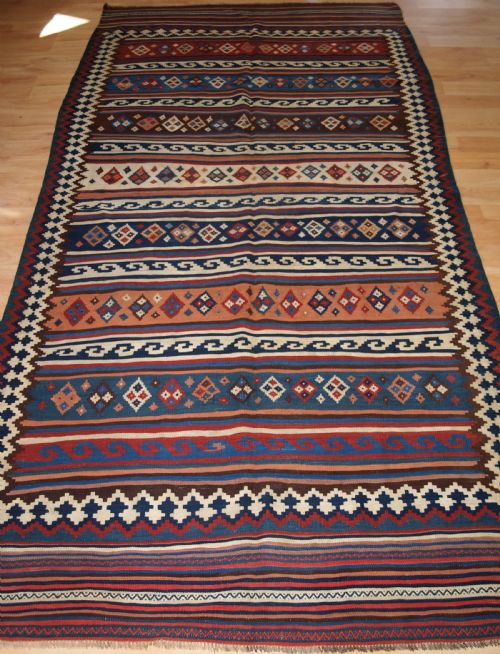
When you search for an antique striped kilim, you encounter flatwoven tribal textiles originating from nomadic and village groups in Persia, the Caucasus, and Central Asia. The pieces available on this page comprise utilitarian items such as grain sacks, bread sofreh, horse blankets, and tent bands repurposed or woven as linear flatweaves. Most examples date from the late nineteenth century through to the early decades of the twentieth century.
The designs rely heavily on horizontal bands, stripes, and graphic linear patterns created through slit-tapestry or banded flatweave techniques. Tribal groups including the Uzbek, Turkmen, Qashqai, and Shahsavan produced these flatweaves for domestic utility, ceremonial use, or transport. Buyers meet various formats, from small fragments and bag faces to larger floor rugs and runner-like panels.
How they were made
Makers utilised hand-spun wool as the primary foundation and surface material, frequently supplemented by cotton, goat hair, and camel hair for structural durability. Natural dyes provided the deep reds, blues, and earth tones characteristic of these regional flatweaves. Leather and metal details appear occasionally on utilitarian items such as saddle bags and storage sacks.
The construction relies on slit-tapestry weaving and banded flatweave techniques, where horizontal colour changes create the distinct stripes without knotting. Expert weavers executed extremely fine weaves, particularly on Turkmen Dali kilims and Uzbek Gajeri panels. The absence of a pile distinguishes these textiles from conventional carpets, resulting in a crisp, graphic surface structure.
Antique Striped Kilim Retail Price Guide 2026
Typical asking prices for striped kilim among the pieces listed under this phrase on Sellingantiques today, from the lower quarter to the upper quarter. They describe what is for sale here now, not the wider market.
Listings feature flatweaves spanning the late nineteenth century to the early twentieth century, originating from Persian, Caucasian, and Central Asian tribal groups.
What varies in quality
The precision of the weave and the tightness of the flatweave structure dictate the calibre of an individual piece. Fine weaves, such as those found on Turkmen Dali examples, demand greater technical skill and time from the weaver than coarser utility sacks. The crispness of the graphic banding and the complexity of the geometric layout separate standard utility items from exceptional workshop or ceremonial pieces.
The depth and consistency of the natural dyes influence the visual impact of the surface design. Pieces retaining vibrant, evenly saturated hues without muddy colour mixing hold higher visual distinction. Additionally, the integrity of the original format - whether a complete sofreh, an intact horse blanket, or a well-preserved tent band - affects the overall character of the textile.
The Antique Striped Kilim Glossary
- Kilim
- A flatwoven textile produced without a pile by tightly interweaving warp and weft strands. This technique creates a lightweight, reversible cloth with sharp geometric designs.
- Sofreh
- A flatwoven spread or cloth used for sharing meals, kneading dough, or storing bread within nomadic households. These rectangular textiles frequently display strong linear banding.
- Mafrash
- A large rectangular storage bag or chest panel used by nomadic tribes for bedding and household goods during migration. They are often constructed in sections and later separated into flat panels.
- Tacheh
- A traditional wheat sack or grain container woven by tribal groups such as the Luri and Bakhtiari. They feature durable flatweave structures designed for heavy agricultural use.
- Cicim
- A supplementary weft-float technique where decorative patterns are brocaded onto the plain-weave foundation. This method adds raised textural details to the surface of the textile.
Antique Striped Kilim: Frequently Asked Questions
How were antique striped kilims used?
Nomadic and village communities utilised these flatweaves for practical daily tasks such as carrying grain, serving meals, storing bedding, and outfitting horses. Items like sofreh and wheat sacks served specific domestic functions within the tribal tent.
Over time, many of these utilitarian textiles found new appreciation as decorative floor coverings, wall hangings, and collectible fragments due to their striking graphic patterns.
How do I distinguish regional styles?
Regional attribution relies on the specific weave structure, colour palette, and geometric vocabulary employed by different tribal confederations. Turkmen and Uzbek groups in Central Asia frequently favoured fine banded Gajeri and Dali designs.
Persian tribes such as the Qashqai, Shahsavan, and Luri-Bakhtiari incorporated distinct regional motifs, border arrangements, and structural formats like the saddle bag or dining sofreh.
Are these textiles fragile to live with?
Most flatweaves constructed from hand-spun wool and natural dyes possess robust structural integrity suited for moderate foot traffic or wall display. Using a quality underlay helps protect the flatweave structure from premature wear on hard floors.
Gentle cleaning methods and protection from direct sunlight preserve the wool fibres and natural dye colours over years of domestic enjoyment.
What defines a gajeri kilim?
A gajeri kilim is a specific flatweave type associated with Uzbek makers in Central Asia, characterised by bold banded designs and fine execution. These pieces often utilise striking linear contrasts across the surface.
They appear in various formats, ranging from small panels derived from tent bands to larger rugs created for domestic utility.