




Antique String Box
An antique string box is a desktop necessity from the past, designed to keep twine tidy and accessible in the study or parlour.
Antique String Box
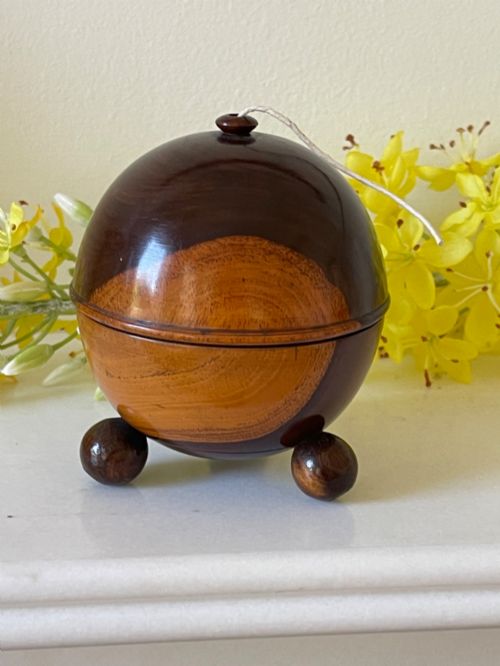
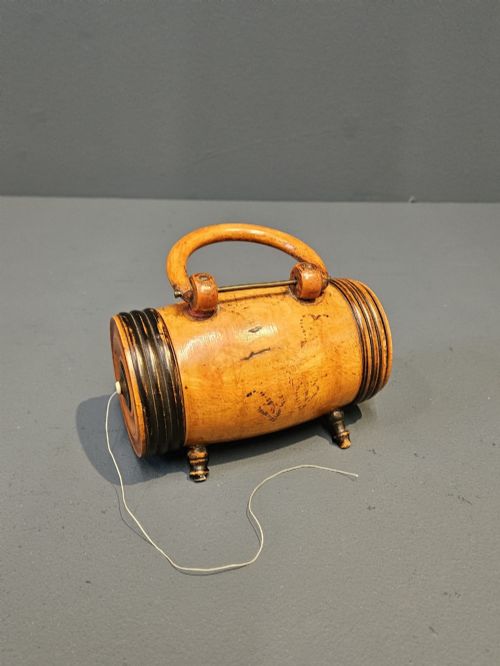
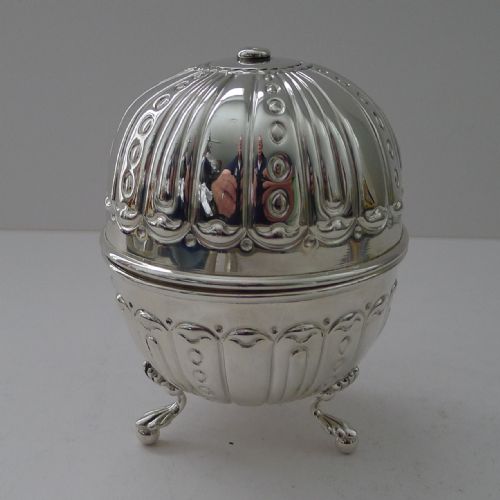
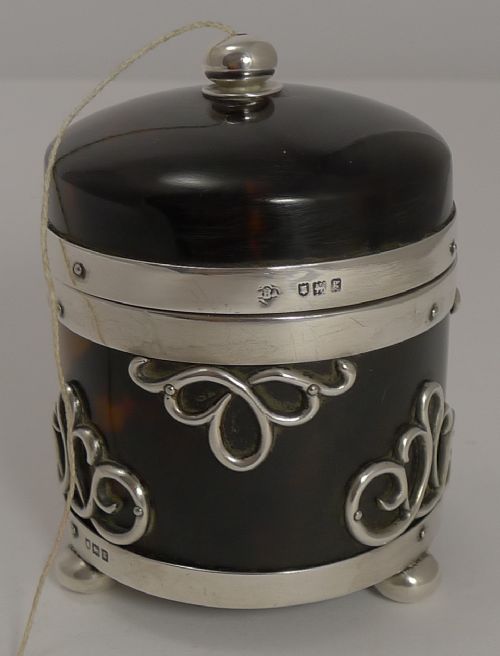
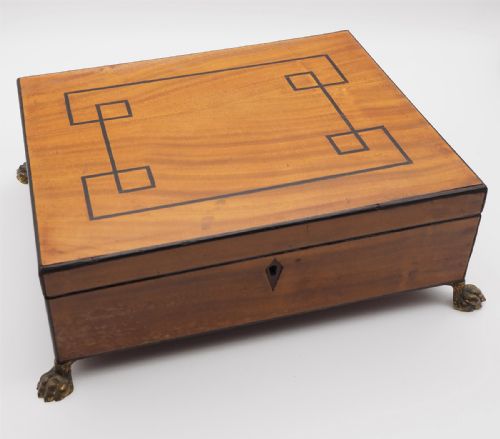
An antique string box serves as a functional receptacle for dispensing twine on a desk or table, commonly taking spherical, barrel, or novelty forms. These desk accessories appear in various periods ranging from the Georgian era through the Victorian and Edwardian decades to the Art Deco movement.
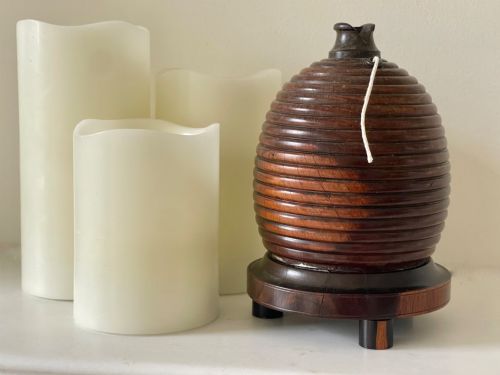
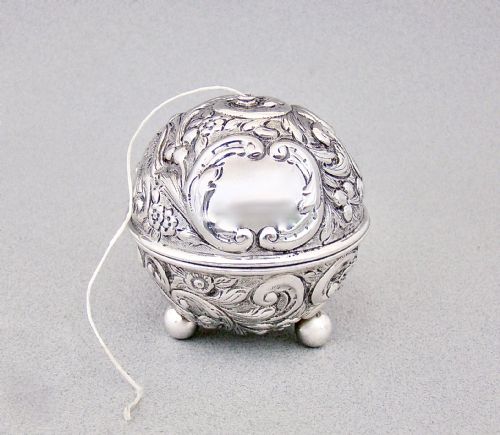
The most frequent examples encountered on this page include turned treen containers, silver-mounted jars, and novelty shapes such as beehives or apples. They reflect the domestic organisation and stationery habits of past centuries, combining utility with decorative craftsmanship.
How they were made
Makers utilised dense timbers such as lignum vitae, boxwood, and mahogany, turning them on a lathe to create spherical bodies and tight-fitting lids with central dispensing holes. Other versions combine cut glass jars with sterling silver mounts and fitted cutter blades for shearing the twine cleanly.
Decorative techniques involve Tunbridge ware mosaics, Mauchline ware transfers, tortoiseshell panelling, and intricate bone or mother-of-pearl inlay. These methods demonstrate the high standard of small-scale cabinetmaking and metalworking applied to everyday utilitarian objects.
Victorian households apparently needed spherical treen barrels designed precisely to dispense cord while looking like beehives.
What varies in quality
Quality rests upon the crispness of the turning, the weight and density of the wood, and the presence of original operating parts like matching silver cutter blades and functioning lids. Heavier treen with rich natural grain patterns commands greater interest than lighter, plain-timber alternatives.
In silver and glass examples, the gauge of the metal and the hallmarks dictate the standard of execution. Novelty shapes that retain their structural integrity and surface polish without splits or replacements represent the finer end of the surviving range.
The Antique String Box Glossary
- Treen
- Small domestic wooden objects made by turning or carving. This term covers everything from kitchen utensils to desk barrels.
- Tunbridge Ware
- Woodware decorated with tiny mosaic tiles arranged to form geometric or pictorial patterns. Named after the town in Kent where the craft flourished.
- Mauchline Ware
- Scottish wooden souvenirs and small goods decorated with photographic prints or tartan patterns. They often utilise sycamore or maple woods.
- Lignum Vitae
- A dense and heavy wood derived from trees of the genus Guaiacum. It resists splitting and takes a high polish, making it ideal for turned containers.
- Teapoy
- A small stand or table fitted with caddies for holding tea. These occasionally relate in construction and period to luxury desk accessories.
Antique String Box: Frequently Asked Questions
What is an antique string box used for?
These containers held balls of twine or string securely on desks, writing tables, and packing counters. The user pulled the cord through a central aperture in the lid, allowing smooth dispensing without tangles.
Many versions included an integrated metal cutter blade to snip the twine cleanly to length. They were essential tools for correspondence, parcel wrapping, and needlework before the advent of modern adhesive tape.
How do I date an antique string box?
Dating relies on material combinations, hallmarked silver mounts, and turning styles characteristic of specific eras. Georgian and Regency examples often feature plain mahogany or tortoiseshell, while Victorian and Edwardian pieces frequently incorporate sterling silver or novelty shapes.
Stamped hallmarks on silver collars provide exact calendar years. For treen examples, the timber choice and wear patterns offer reliable clues to their manufacturing decade.
Are wooden string boxes prone to splitting?
Dense hardwoods like lignum vitae and boxwood are remarkably stable, but extreme changes in humidity can cause timber to move. Keeping wooden containers away from direct heat sources prevents shrinkage and cracking.
Applying a light application of appropriate wax maintains the moisture balance in the wood and preserves the original surface sheen.