


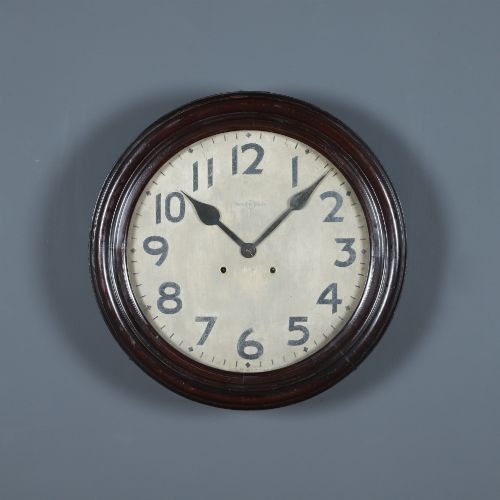


Antique Striking Timepiece
An antique striking timepiece keeps the hours with a bell or gong while bringing brass, mahogany, and glass into the room.
Antique Striking Timepiece
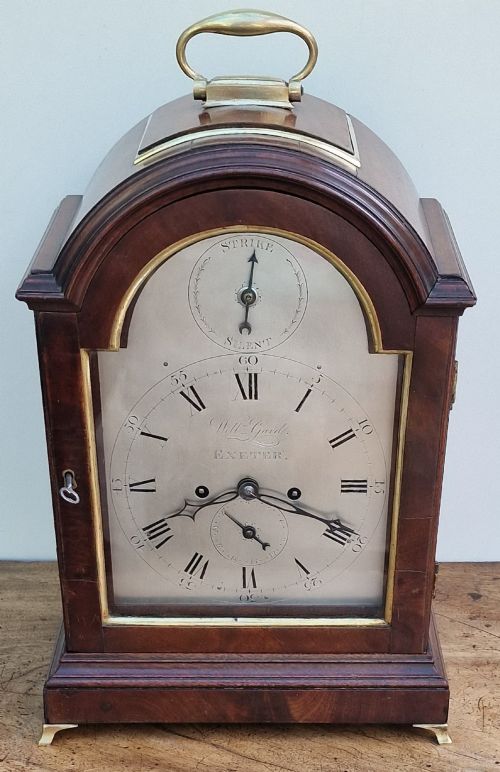
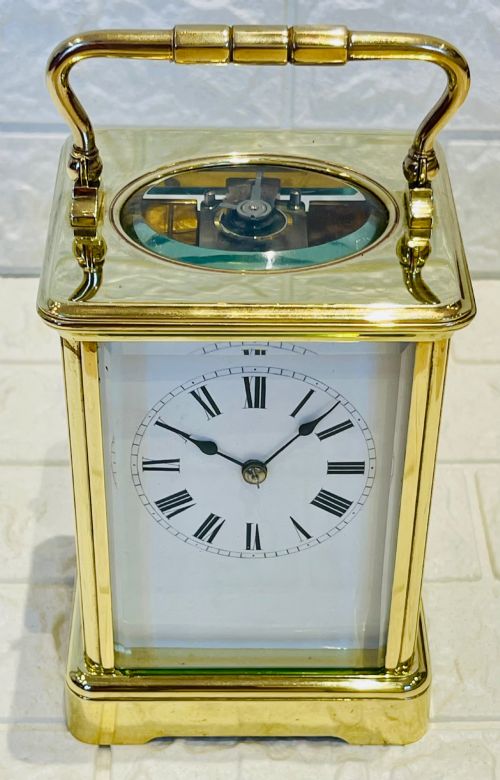
When you search for an antique striking timepiece, you meet domestic clocks designed to sound the hours and sometimes the quarters alongside telling the time. The versions most likely to appear on this page take the form of French carriage clocks in brass and glass, English bracket clocks in mahogany, and wall dials placed in schools and stations.
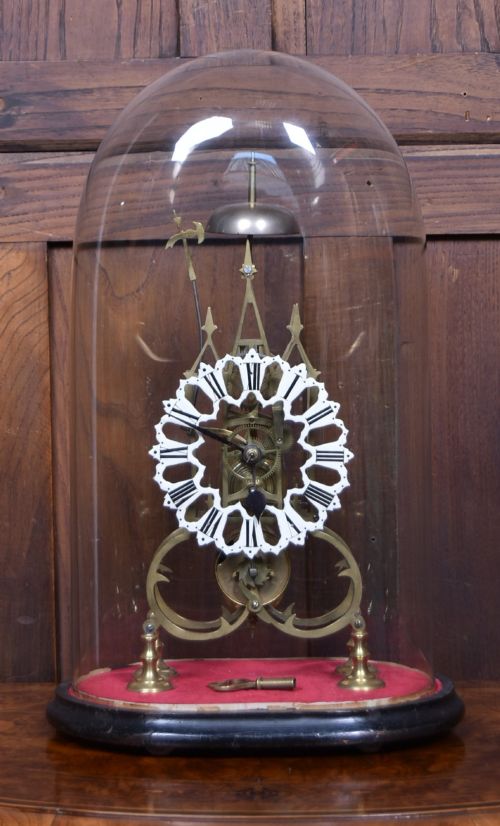
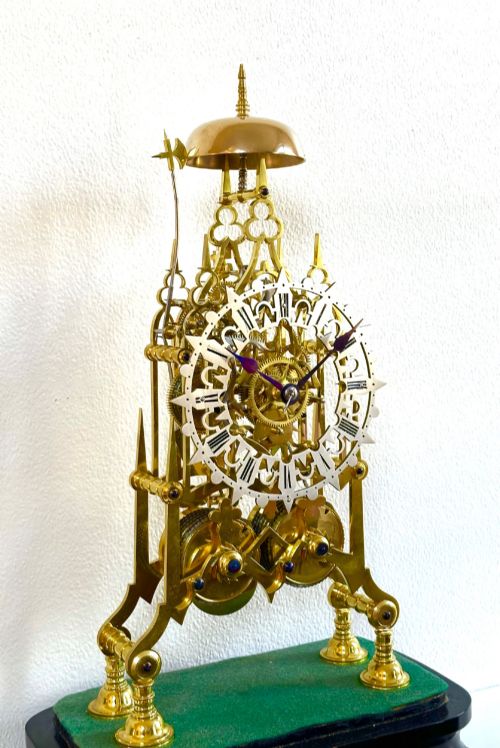
The objects span multiple centuries, reaching from Georgian bracket models through Victorian carriage designs to Edwardian and later mantel pieces. Makers housed these mechanisms inside ebonised wood, marble, or ormolu cases, often protecting delicate skeleton movements beneath glass domes.
How they were made
Maker workshops built these movements using brass and steel, pairing wheel trains with platforms, verge escapements, or twin fusee configurations to drive the striking action. Cases combine cast or gilded brass with timber foundations in mahogany, walnut, and ebonised wood.
Enamel dials carry the numerals, while bevelled glass panels in carriage clocks expose the interior mechanics from four sides. Ormolu and bronze enrich the architectural mounts on select French Empire models.
Several clocks wear serial numbers like old friends waiting to catch the train.
What varies in quality
The distinction between ordinary and superior examples lies in the complexity of the striking train and the finish of the case work. Simple passing strike mechanisms sit below repeating carriage clocks and grand sonnerie movements that chime hours and quarters automatically.
Heavy gilding, crisp engraving on brass plates, and original glass domes lift specific bracket and skeleton clocks into a higher tier. The presence of a named maker on the dial or movement backplate separates workshop output from anonymous production.
William Gard·T. Martin and Co·C. Detouche·Pons de Paul·Dwerrihouse and Bell·Ad Mougin·Agar of Malton·Winterhalder and Hofmeier·John Fletcher·J.W. Benson·Alfred Drocourt
The Antique Striking Timepiece Glossary
- Striking timepiece
- A clock that sounds the hours or fractions of hours on a bell, gong, or wire.
- Carriage clock
- A portable spring-driven timepiece with a handle and glass sides designed for travel.
- Bracket clock
- A table or shelf clock, typically housed in wood with brass mounts.
- Fusee
- A conical pulley used in spring-driven clocks to ensure even power delivery as the mainspring unwinds.
- Grand sonnerie
- A striking mechanism that sounds both the hours and the quarters automatically on every passing quarter-hour.
Antique Striking Timepiece: Frequently Asked Questions
How do carriage clocks strike?
Carriage clocks use an internal spring-driven mechanism connected to a bell or gong mounted inside the case. When the hands reach the hour, the striking train releases a hammer to sound the count.
Many examples include a repeating button on top which sounds the last hour on demand without waiting for the mechanism to trip naturally.
What is a double fusee movement?
A double fusee movement employs two conical pulleys and separate gear trains for the timekeeping and the striking functions. This system maintains equal tension on the springs to keep the clock accurate.
Such movements appear frequently in better quality bracket and skeleton clocks from the nineteenth century.
Where should I place a bracket clock?
Bracket clocks suit sturdy wooden sideboards, mantelpieces, or dedicated wall shelves where the heavy timber and brass cases remain secure. The flat base allows the movement to rest level so the pendulum or platform escapement beats evenly.
Keep them away from direct sunlight and damp environments to protect the wood polish and internal steel components.
How do I identify a grand sonnerie?
A grand sonnerie movement chimes the current hour as well as the quarters every fifteen minutes without human intervention. This complex striking arrangement requires extra gear trains and multiple hammers within the clock case.
Listings often distinguish these pieces from standard hour-strikers by noting the petite or grand sonnerie capability.