





Antique Stitching Sampler
An antique stitching sampler records alphabets, verses and names in thread, offering a direct view into the domestic education of young makers.
Antique Stitching Sampler
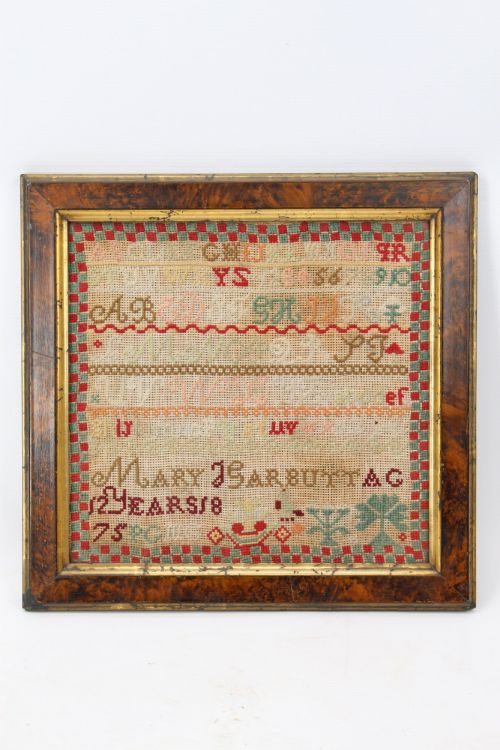
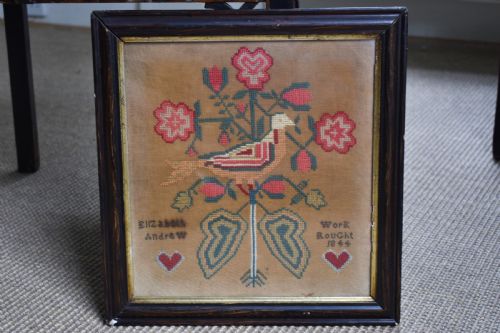
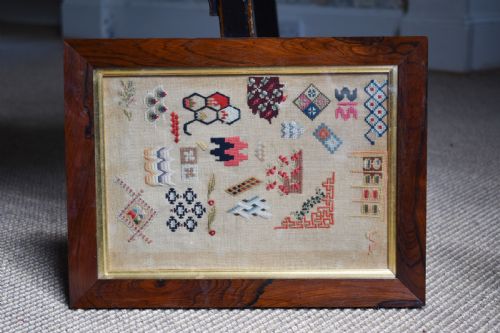
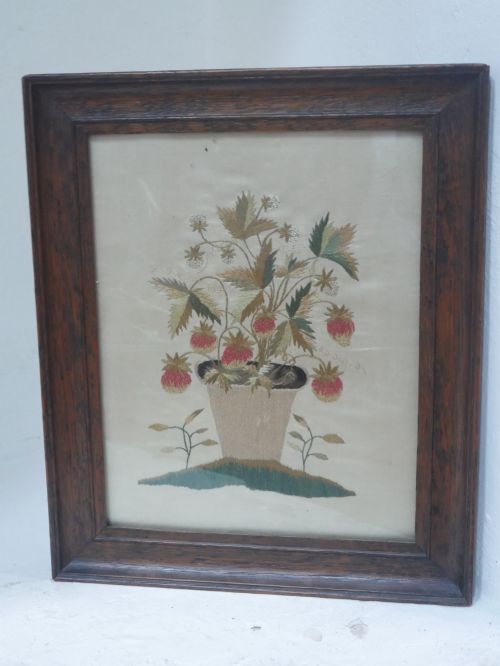
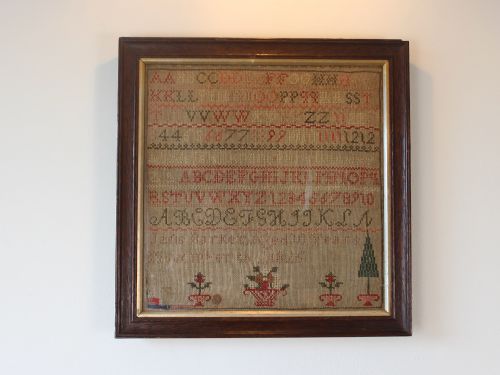
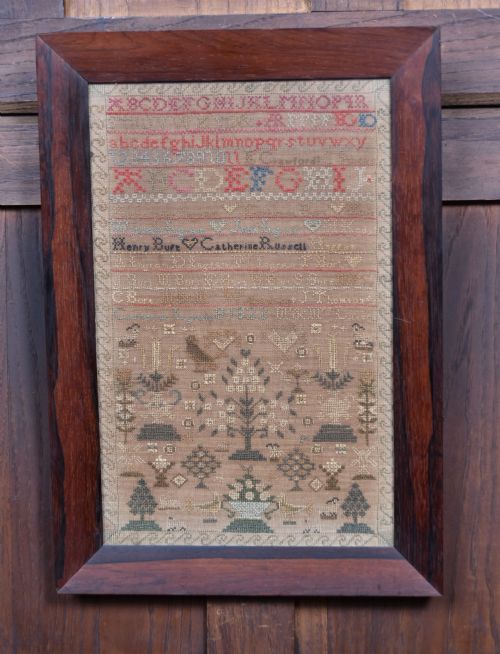
An antique stitching sampler takes the form of framed textile wall art, needlework pictures and embroidered panels created to display proficiency in various stitches. These pieces range from simple alphabet exercises to complex pictorial panels incorporating text, numerals and motifs.
The selections here span the eighteenth, nineteenth and early twentieth centuries, with Victorian and Georgian examples appearing most frequently. Work comes from English and Scottish hands, often bearing the name, age and date of the young maker alongside pious verses or family trees.
How they were made
Makers stitched onto woven linen or wool grounds using silk, wool and linen thread to form alphabets, numbers, floral motifs and figures. Many panels employ gros point and petit point techniques, executed with counted thread stitches that create dense pictorial surfaces.
Surviving examples frequently retain their original wooden frames, sometimes glazed to protect the delicate textiles from dust and handling.
Antique Stitching Sampler Retail Price Guide 2026
Typical asking prices for stitching sampler among the pieces listed under this phrase on Sellingantiques today, from the lower quarter to the upper quarter. They describe what is for sale here now, not the wider market.
One young maker recorded a stitch error directly into her Scottish sampler, immortalising a momentary slip with needle and thread.
What varies in quality
Quality rests upon the regularity of the stitching, the complexity of the design and the preservation of the thread colours. Tightly worked geometric alphabets and detailed pictorial scenes demonstrate greater dexterity than basic practice panels.
The inclusion of specific details such as the maker's full name, age, location and date elevates the historical interest of a piece. Condition also plays a role, with stable linen grounds and unfaded threads marking the superior examples.
The Antique Stitching Sampler Glossary
- Alphabet sampler
- A textile piece focused primarily on rows of letters in various scripts and sizes. These were the fundamental exercise for learning proportion and spacing.
- Gros point
- A counted thread needlepoint stitch worked on coarse canvas to create bold backgrounds and geometric patterns. It provides durability and texture to the composition.
- Linen ground
- The woven fabric foundation used to support the embroidered threads. Most early examples utilise a plain weave linen substrate.
Antique Stitching Sampler: Frequently Asked Questions
What do the dates and ages mean?
Makers usually stitched their name, age and the date into the fabric upon completion of the work. This provides a clear record of the child's age, often between ten and fourteen years old, and the year the piece was finished.
Such details help place the textile within a specific decade and sometimes connect the maker to historical census records.
How were samplers originally displayed?
Families framed these textile works to hang in domestic interiors as evidence of a young woman's accomplishments. They served both decorative and moral purposes within the home.
Many retain period wooden frames, occasionally with original glass and backing boards that protect the delicate stitching.
What subjects appear besides alphabets?
Makers stitched moral verses, biblical passages such as the Lord's Prayer or the Commandments, and educational texts about subjects like education. Pictorial elements often include flora, fauna, houses and figures.
Alphabet grids frequently sit alongside these motifs to demonstrate both literacy and needle skills.
How do I care for an antique sampler?
Keep textile works away from direct sunlight to prevent the silk and wool threads from fading. Maintaining stable indoor humidity prevents the linen ground and wooden frames from degrading.
Leave the piece within its frame to protect the fragile fibres from physical wear and environmental pollutants.