




Antique Stitched Picture
These antique stitched picture examples are textile artworks worked in silk, wool, and linen, prized for their needlework skill and historical domestic record.
Antique Stitched Picture
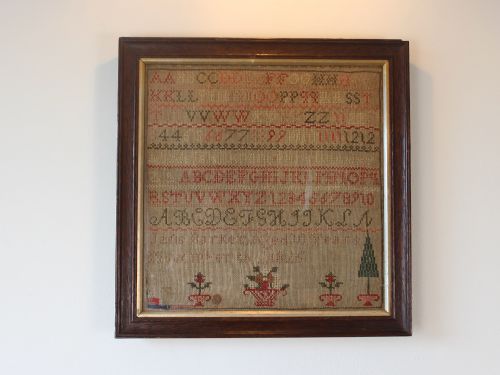
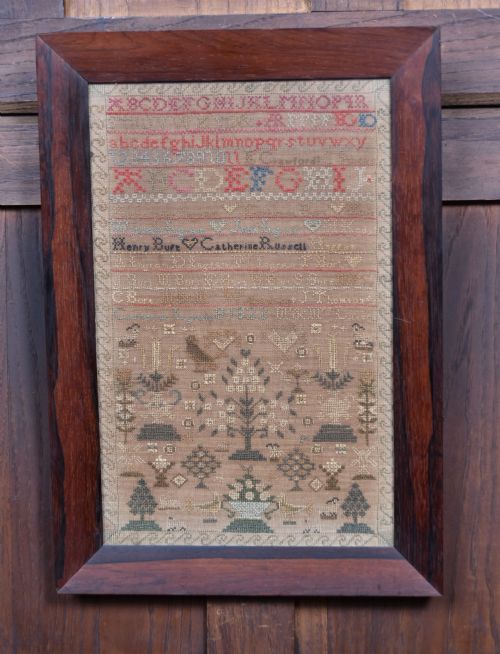
When you search for an antique stitched picture, you are looking at textile artworks that range from simple alphabet exercises to detailed pictorial wool work and silk pictures. The most common examples on this page date from the nineteenth and eighteenth centuries, reflecting domestic education, needlepoint display, and folk art traditions.
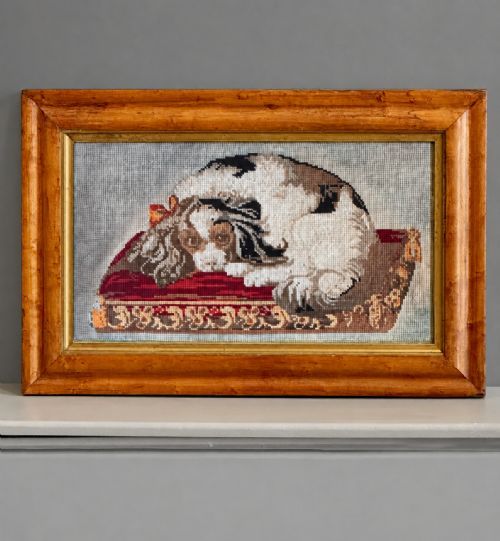
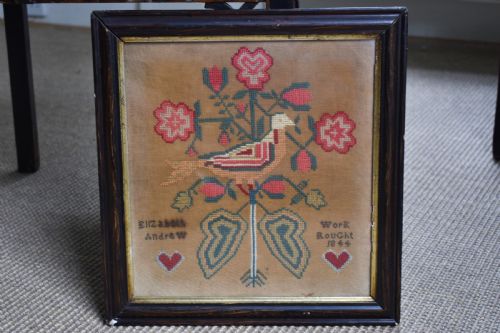
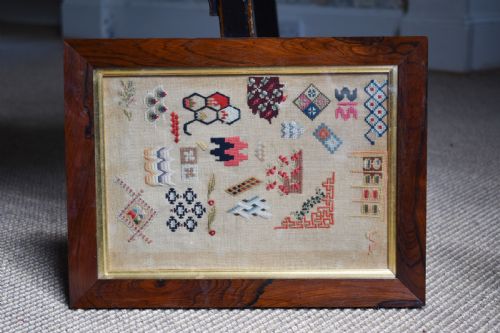
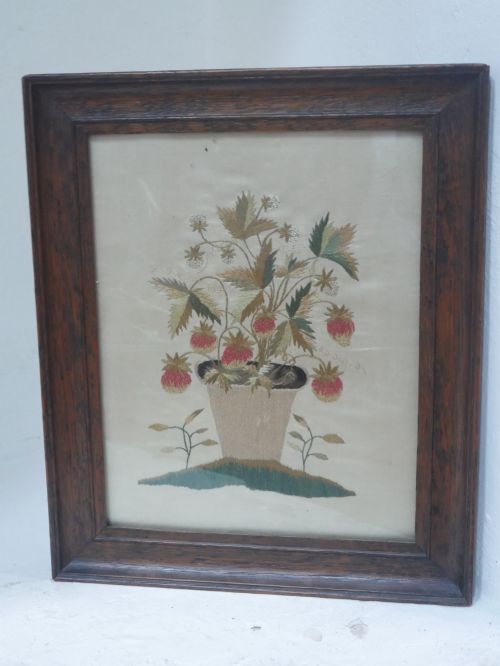
The formats vary from single framed samplers bearing names and dates to pairs of long stitch silk pictures and portraits. Many retain their original timber surrounds, such as burr maple or rosewood frames, which protect the linen and canvas grounds beneath glass.
Makers recorded on these pieces are frequently young girls who worked alphabets or decorative motifs, alongside named artisans creating larger pictorial scenes. The origins span English regional workshops, Scottish domestic output, and Italian needlepoint portraits.
Materials and construction
The foundation grounds rely on natural textiles, predominantly linen, canvas, and plain woven cloth stretched across wooden frames. Silk thread and wool provide the coloured yarns for the stitches, offering varied textures from flat satin surfaces to raised gros point and petit point.
Needlework techniques include long stitch, cross stitch, and various tapestry methods executed by hand. Glazing protects the delicate silk and wool threads from atmospheric dust and handling.
Antique Stitched Picture Retail Price Guide 2026
Typical asking prices for stitched picture among the pieces listed under this phrase on Sellingantiques today, from the lower quarter to the upper quarter. They describe what is for sale here now, not the wider market.
Current listings feature eighteenth and nineteenth century samplers, silk pictures, and wool work executed on linen and canvas grounds.
Factors of distinction
The distinction between ordinary and superior pieces rests on the complexity of the design, the precision of the stitching, and the preservation of the original ground. Finer works employ varied stitches and shaded wools to create depth in portraits and botanical subjects.
Original framing significantly elevates a piece, particularly when protected behind glass in period burr maple or rosewood surrounds. Documentation such as a clear maker name, date, and age adds historical context to the textile.
The Antique Stitched Picture Glossary
- Sampler
- A piece of needlework produced as a demonstration or test of skill in various stitches and patterns. These often include alphabets, numbers, and the maker name with a date.
- Berlin Work
- A style of needlepoint popular in the nineteenth century that used brightly coloured wools charted on grid paper. It allowed makers to produce complex pictorial scenes of animals and figures.
- Gros Point
- A coarse needlepoint stitch worked on canvas that creates a durable, textured surface. It frequently appears alongside finer petit point details in nineteenth century wool work.
- Long Stitch
- An embroidery technique where stitches span a greater distance across the canvas to form smooth pictorial lines. Pairs of these pictures often depict figurative or landscape subjects.
- Rosewood
- A dense, dark timber commonly utilised for framing fine nineteenth century textiles. Its rich grain complements the muted tones of aged wool and silk thread.
Antique Stitched Picture: Frequently Asked Questions
How do I date an antique sampler?
Many samplers include embroidered dates and the age of the maker, providing a direct reference point for their creation. Stylistic elements such as alphabet letterforms, framing materials, and the type of canvas offer additional clues to the period.
Examining the reverse of the frame can reveal older backing papers, mounting techniques, and timber age that support the textile date.
What is the difference between a sampler and a picture?
A sampler primarily serves as a collection of practicing stitches, alphabets, numbers, and motifs compiled by a maker to demonstrate skill. A picture focuses entirely on a central pictorial subject, such as a portrait, animal, or landscape scene.
While some samplers incorporate pictorial elements, dedicated needlework pictures aim for a cohesive framed artwork rather than a technical display.
How should I care for a framed textile?
Keep framed needlework away from direct sunlight to prevent the silk and wool threads from fading over time. Maintain a stable indoor environment with minimal humidity fluctuations to protect the antique linen and canvas grounds.
Avoid hanging pieces near heat sources and ensure the glass remains sealed to keep dust and insects away from the delicate fibres.