


Antique Sterling Tazza
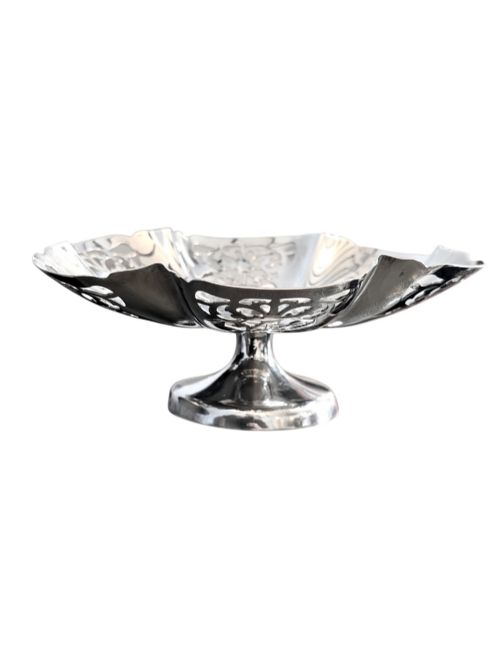
An antique sterling tazza is a raised pedestal dish designed for display, bringing architectural height and gleaming silver to a dining table.
Antique Sterling Tazza
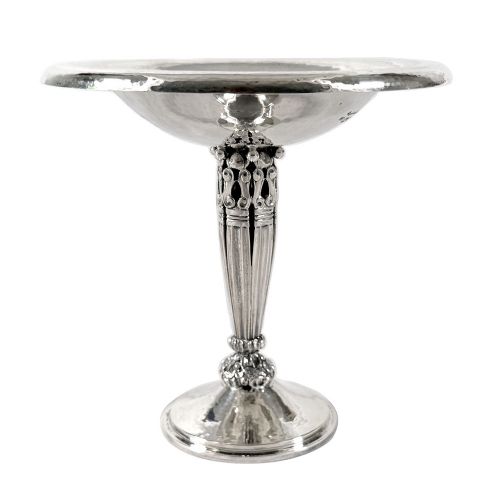
An antique sterling tazza stands on a central foot or pedestal, elevating bowls and dishes above the surface of a table. These pieces serve as decorative centerpieces, fruit bowls, or comports, originating from Georgian times through to the Art Deco era.
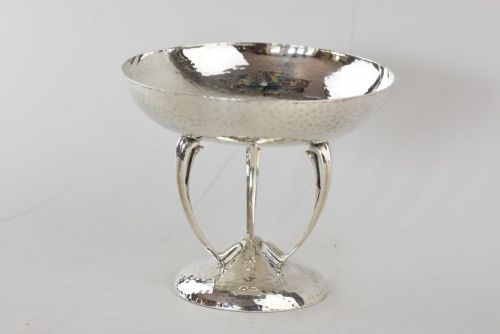
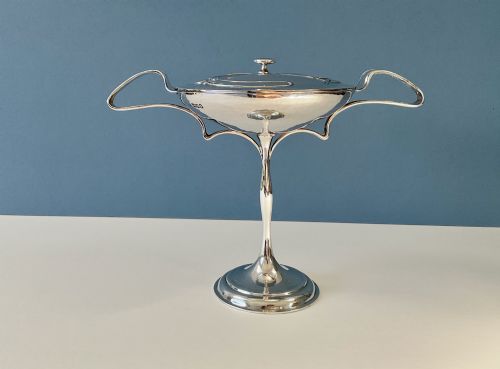
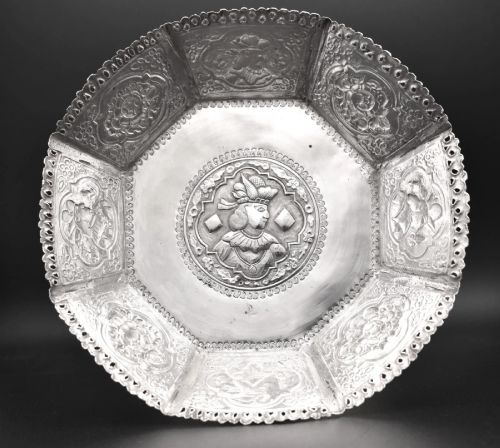
The pieces on this page span several distinct periods, including Edwardian, Victorian nineteenth century, and eighteenth century Georgian work. Makers produced them in various stylistic interpretations such as Arts and Crafts, Art Nouveau, and Anglo-Indian designs.
Forms range from simple circular pedestal dishes to covered bowls and heavily chased footed vessels. Collectors encounter both single examples and matched pairs created in sterling silver and vermeil.
How they were made
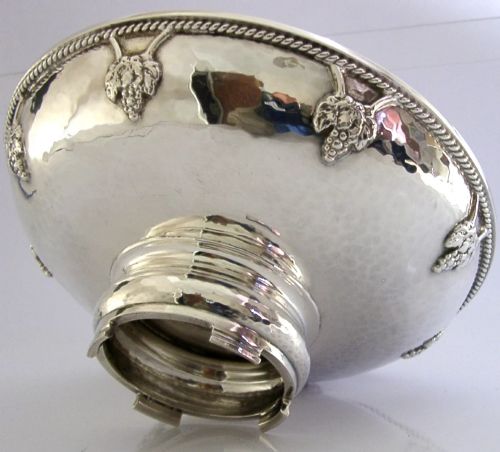
Silversmiths shaped sterling silver and silver through hammering, casting, and piercing techniques to create the structural pedestals and decorative bowls. Workshops employed repoussé methods to push the metal from behind, producing high-relief ornamentation.
Surface decoration frequently includes lattice detail, gilding on the interior, and Persian-inspired patterns executed by hand. Makers such as Goldsmiths and Silversmiths Company and Walker & Hall applied traditional British silversmithing methods in cities like London, Sheffield, and Edinburgh.
The selection includes regional British hallmarks from London, Sheffield, and Edinburgh, alongside imported Anglo-Indian Burmese repoussé work.
What varies in quality
The quality of an antique sterling tazza rests upon the crispness of the hand-hammered texture and the depth of the repoussé work. Pieces featuring intricate pierced details or fire-gilt interiors demonstrate higher levels of artisanal skill.
Proportion between the upper bowl and the supporting foot dictates visual balance. Weight and gauge of the sterling silver also distinguish standard production items from substantial presentation pieces.
Goldsmiths and Silversmiths Company·Charles Boyton·Walker & Hall·James Dixon & Sons
The Antique Sterling Tazza Glossary
- Tazza
- An Italian term for a shallow bowl or cup mounted on a stem and foot. In British silver, it denotes a formal pedestal dish used for presentation or service.
- Repoussé
- A metalworking technique where the silversmith hammers the metal from the reverse side to create a raised design in relief. This creates tactile, three-dimensional surface patterns.
- Comport
- A decorative dish raised on a foot, used for serving fruit or sweets at the table. The term is often used interchangeably with tazza.
- Vermeil
- Sterling silver that has been plated with a thin layer of gold. This finish provides a warm, two-tone appearance, particularly on the interior of bowls.
- Pierced
- Metalwork that has been cut through to create openwork patterns such as lattices or borders. This technique lightens the visual weight of the silver object.
Antique Sterling Tazza: Frequently Asked Questions
What is an antique sterling tazza used for?
These elevated vessels primarily functioned as decorative centerpieces on formal dining tables, often holding fruit, sweets, or flowers.
Today, collectors use them for display on sideboards or mantelpieces to showcase period craftsmanship and catch the light.
How do I identify an Edwardian tazza?
Edwardian examples usually date from the early twentieth century and frequently incorporate Arts and Crafts, Art Nouveau, or neoclassical revival motifs.
Checking the hallmarks for London, Sheffield, or Edinburgh assay offices alongside the date letter confirms the exact year of manufacture.
How should I clean antique sterling silver?
Antique silver benefits from gentle washing with warm water and mild soap, followed by drying with a soft cotton cloth.
Harsh abrasive dips should be avoided to preserve the original patina, hand-hammered textures, and any gilt interiors.