



Antique Sterling Strainer
An antique sterling strainer brings precision and tactile weight to your table, whether you are pouring vintage wine or brewing loose-leaf tea.
Antique Sterling Strainer
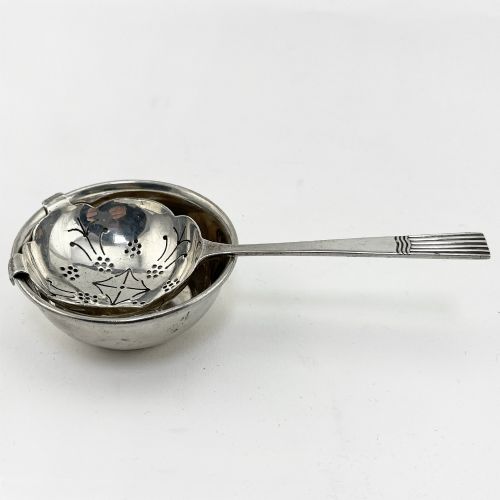
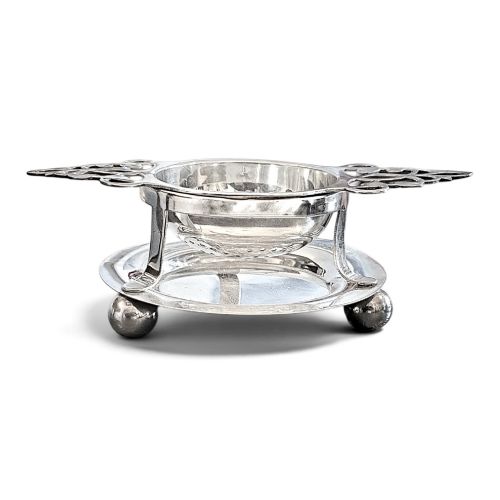
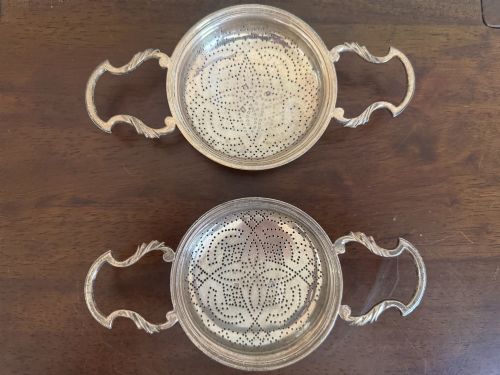
When you search for an antique sterling strainer, you encounter a specialised range of silver tableware designed for separating solids from liquids during the preparation and service of tea, wine, and gravy. The pieces gathered here span from the eighteenth century through to the mid-twentieth century, capturing domestic rituals across the Georgian, Victorian, Edwardian, and Art Deco eras.
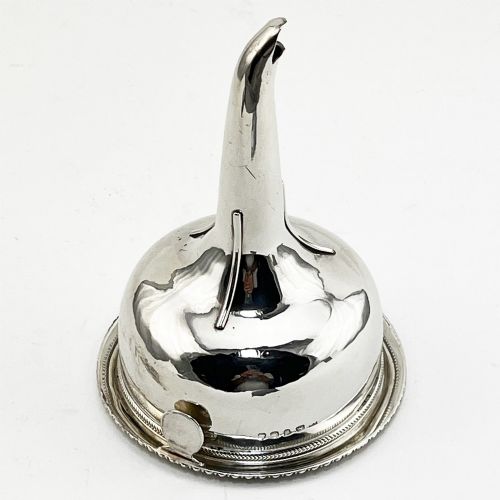
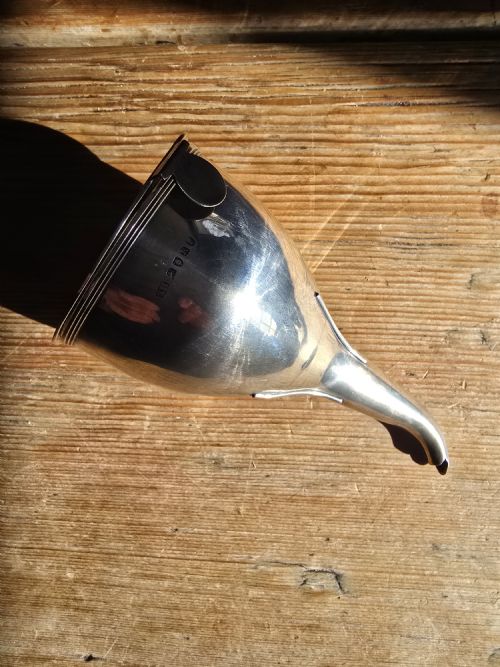
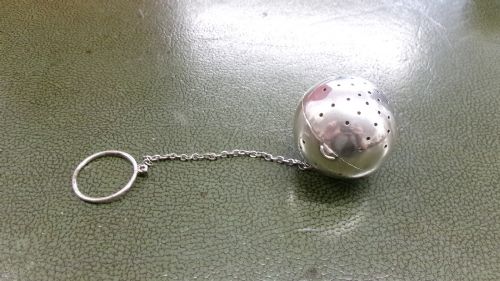
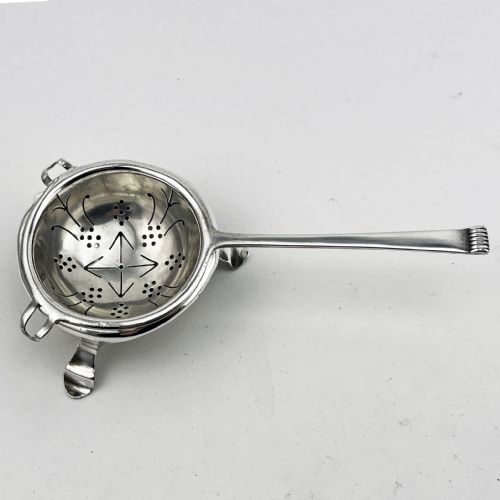
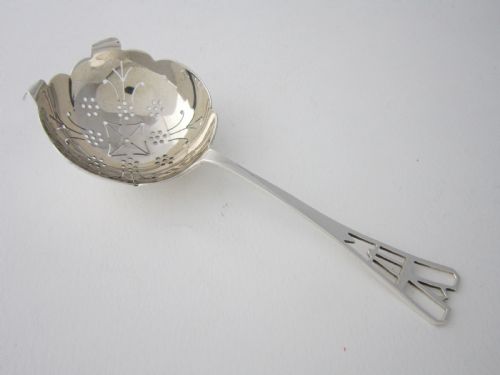
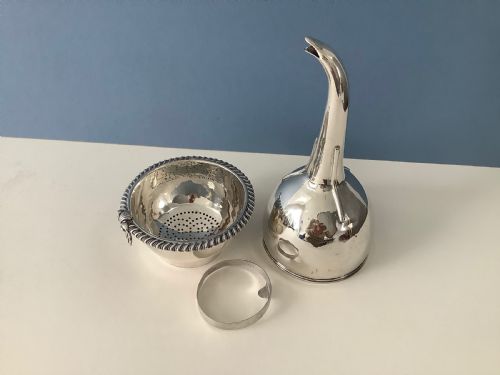
The primary forms on this page include tea strainers, tea infusers on chains, mote spoons, wine funnels, straining spoons, and straining ladles. Tea strainers often arrive with matching stands, whilst wine funnels appear in both single-piece and multi-part configurations meant to seat snugly inside decanter necks.
Geographic origins and stylistic markers vary widely, encompassing English provincial and London work alongside Irish, Scottish, and Danish production. You will find items categorised broadly under teaware and barware, reflecting how these functional silver implements crossed between the dining room and the parlour.
How they were made
Silversmiths constructed these strainers primarily using sterling silver, solid silver, and traditional silver alloys, shaping bowls and funnels through hammering, piercing, and soldering techniques. Pierced work defines the functional surfaces, requiring steady hand-cutting of intricate holes, slots, and decorative patterns to permit liquid flow whilst trapping leaves or sediment.
Handles and stands demonstrate specialist fabrication methods, including cast elements soldered to pierced bowls and fine chains attached securely to infusers. Hallmarking stamps applied directly to the silver record assay office locations, date letters, and maker marks, providing tangible evidence of the metal's purity and origin.
Antique Sterling Strainer Retail Price Guide 2026
Typical asking prices for sterling strainer among the pieces listed under this phrase on Sellingantiques today, from the lower quarter to the upper quarter. They describe what is for sale here now, not the wider market.
What varies in quality
The calibre of an antique sterling strainer rests on the thickness of the silver gauge and the crispness of its pierced decoration. Substantial weight in the hand indicates a superior grade of metal that resists bending during everyday domestic use.
Attention to detail in the piercing and the integrity of soldered joins separate utilitarian production from master silversmith work. Well-defined assay marks and maker stamps further elevate an object's documentary interest.
Hammond, Turner And Sons·David Hennell·Solomon Hougham·Jeremiah Lee
The Antique Sterling Strainer Glossary
- Sterling silver
- A silver alloy containing ninety-two point five percent pure silver by mass, with the remainder consisting of other metals like copper. This standard composition provides the durability required for functional tableware.
- Mote spoon
- A specialised eighteenth-century spoon featuring a pierced bowl used for skimming tea leaves from cups and a tapered, pointed stem used for clearing tea kettle spouts. They represent a fascinating intersection of tea utility and dining etiquette.
- Wine funnel
- A conical vessel designed to channel wine into decanters while a removable mesh or strainer catches bottle sediment and cork fragments. Georgian examples often feature two or three interlocking parts.
- Assay mark
- A stamp or group of stamps struck onto silver objects by an official assay office to guarantee the fineness of the precious metal. These marks frequently include a leopard's head, lion passant, and annual date letter.
- Silver plate
- A base metal object coated with a thin layer of silver through electroplating or older fusion methods. It offers the visual appeal of silver at a different material tier.
Antique Sterling Strainer: Frequently Asked Questions
What is a wine funnel used for?
A wine funnel guides older vintages safely from bottle to decanter while catching sediment and cork residue. The internal mesh or strainer insert ensures only clear liquid enters the vessel.
These pieces served a practical function at formal dining tables where decanting was essential before serving aged port or claret. Today, they remain functional barware for wine enthusiasts.
How do I use an antique tea strainer?
Place the strainer directly over your teacup or use one equipped with resting arms or a dedicated stand. Pour brewed tea through the pierced bowl to catch loose leaves.
Matching stands catch any residual drips once the strainer is removed from the cup. This keeps table linens clean during afternoon tea service.
What is the difference between a strainer and an infuser?
A strainer catches leaves as the liquid pours through from a separate teapot into a cup. An infuser holds loose leaves inside its own perforated container submerged directly in hot water.
Infusers often feature chains to secure them to the rim of a pot or cup for easy retrieval. Both items fulfilled the Victorian and Edwardian demand for clear tea.
How can I tell the date of a silver strainer?
Examine the piece for hallmarks, which typically include a date letter corresponding to specific assay office records. Maker marks and duty marks also point to active working periods of individual silversmiths.
Stylistic cues such as Regency shapes or Art Deco geometric piercing provide additional dating context when hallmarks are rubbed or absent.