





Antique Sterling Shoe
These antique sterling shoe pieces bring miniature whimsy and Georgian utility to a desk or vanity, offering silver work to handle every day.
Antique Sterling Shoe
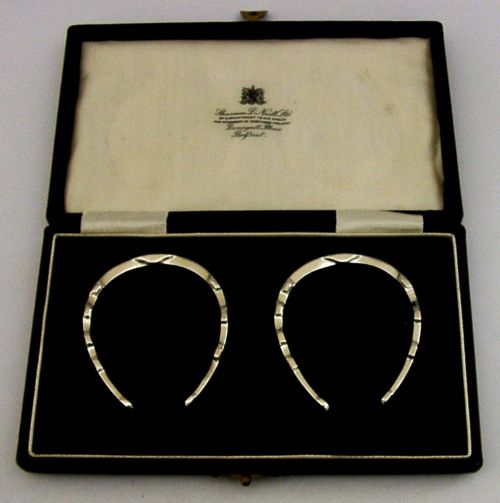
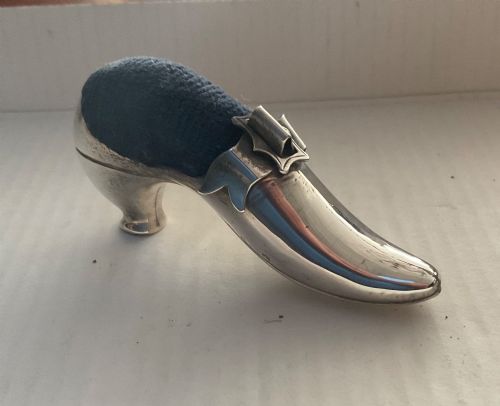
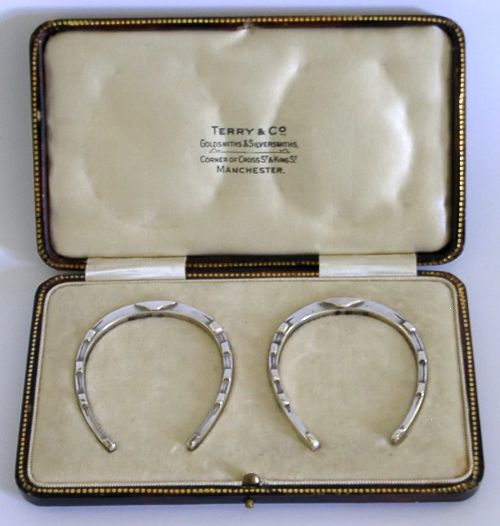
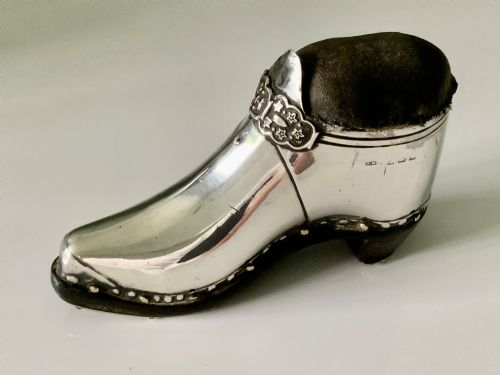
When you search for antique sterling shoe items, you encounter a varied group of small silver objects shaped as footwear or incorporating shoe and equestrian themes. The selection spans Georgian buckles through to Edwardian pin cushions and 1930s napkin rings.
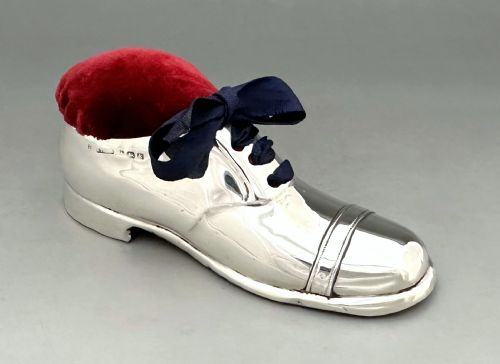
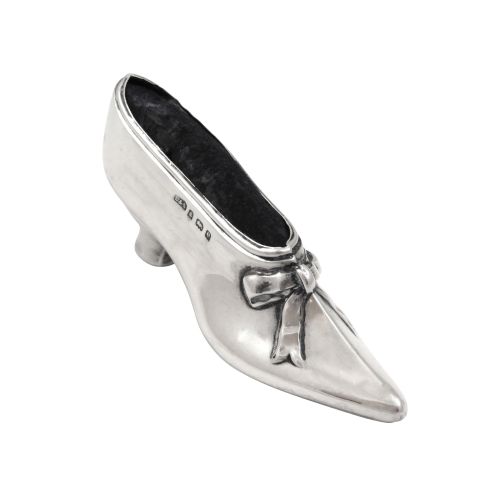
Pin cushions take the form of miniature shoes, clogs, roller skates, and boots, whilst other examples include napkin rings, buckles, button hooks, and boot pulls. Most pieces date from the Edwardian period, though earlier Georgian buckles represent the 18th century.
Makers such as Adie & Lovekin produced charming novelty pieces designed for the dressing table and desk. These items combine practical uses like button hooks and pin storage with sculptural silver forms.
How antique sterling shoe pieces were made
The construction of these items relies on solid sterling silver, often shaped through stamping, casting, and hand-chasing to create detailed textures on buckles, shoes, and hooks. Many pin cushion forms combine the silver shell with internal stuffing covered in velvet, satin, silk, or leatherette.
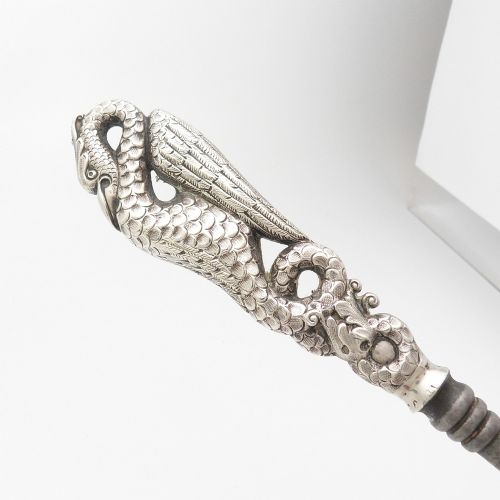
Makers utilised steel for the functional prongs of button hooks and the tines of boot pulls, joining the metal securely to decorated silver handles. Hallmarks are typically stamped directly into the silver surface to record the assay office, date letter, and sterling standard.
Antique Sterling Shoe Retail Price Guide 2026
Typical asking prices for sterling shoe among the pieces listed under this phrase on Sellingantiques today, from the lower quarter to the upper quarter. They describe what is for sale here now, not the wider market.
The selection includes equestrian accessories such as lucky horse shoe napkin rings alongside novelty footwear pin cushions.
What varies in quality in antique sterling shoe pieces
Quality in these small silver objects rests upon the crispness of the chased detail and the proportional accuracy of the miniature footwear. Pieces by known makers display finer definition in elements such as laces, buckles, and textured uppers.
The survival of the original velvet, silk, or satin lining inside pin cushions affects the desirability of the piece. Additionally, sturdy construction where silver meets steel in button hooks distinguishes superior examples from standard production.
Adie & Lovekin
The Antique Sterling Shoe Glossary
- Sterling silver
- A silver alloy containing 92.5 percent pure silver and 7.5 percent other metals, usually copper, ensuring durability for small decorative items.
- Pin cushion
- A small padded object used to hold pins, which in this category is frequently formed as a novelty shoe, clog, or roller skate.
- Button hook
- A tool with a small metal hook used for fastening buttons on boots and clothing, featuring decorative silver handles in these examples.
- Hallmark
- A series of official marks stamped onto silver items indicating the standard of purity, the maker, and the year of assay.
Antique Sterling Shoe: Frequently Asked Questions
What were silver shoe pin cushions used for?
These novelty pin cushions sat upon dressing tables and desks to keep sewing pins tidy and close at hand during daily grooming or needlework.
Craftsmen modelled them as miniature boots, shoes, clogs, and roller skates to add a touch of playful charm to functional accessories.
How do I date an Edwardian silver shoe?
You can determine the date by examining the hallmark stamped into the silver, which includes a specific letter code corresponding to the year of assay. Maker marks and the lion passant sterling standard provide further verification for pieces made between 1901 and 1910.
Stylistic details such as the shape of the toe and the type of pin cushion material also align with Edwardian manufacturing conventions.
Are shoe buckles from the 18th century wearable?
Georgian shoe buckles were originally designed to fasten large historical footwear styles using steel prongs and frames that fit over a shoe tongue. Modern collectors typically display them as cabinet pieces or study examples of 18th-century metalwork rather than wearing them on contemporary shoes.
The substantial weight and construction reflect the formal fashion requirements of the Georgian era.
How should I clean antique silver shoe items?
Maintenance requires gentle dusting with a soft microfiber cloth to remove surface grime without disturbing the aged patina or the internal fabric lining. Avoid harsh liquid dips, particularly on pin cushions containing velvet, silk, or satin, as moisture can damage the delicate interior materials.
Store the pieces in dry conditions away from direct sunlight to preserve both the silver and the antique textiles.