





Antique Sterling Scissors
These antique sterling scissors span Georgian dining rooms to Edwardian writing desks, bringing solid silver weight and historic utility to daily tasks.
Antique Sterling Scissors
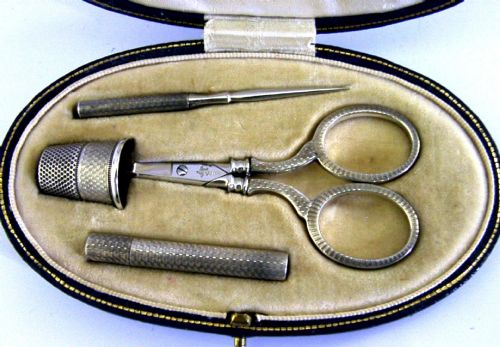
When you search for antique sterling scissors, you encounter specialised implements created for dining, sewing, and grooming across the eighteenth, nineteenth, and twentieth centuries. The selection ranges from domestic grape shears and sugar nips to cased sewing kits and vanity sets.
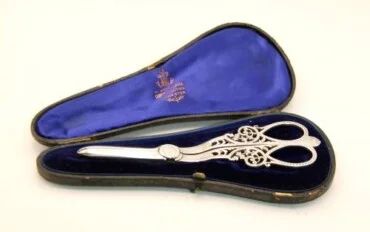
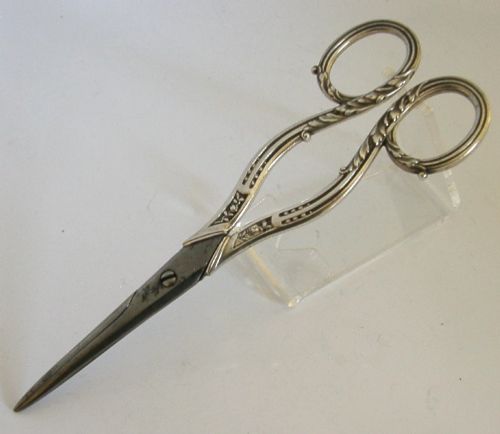
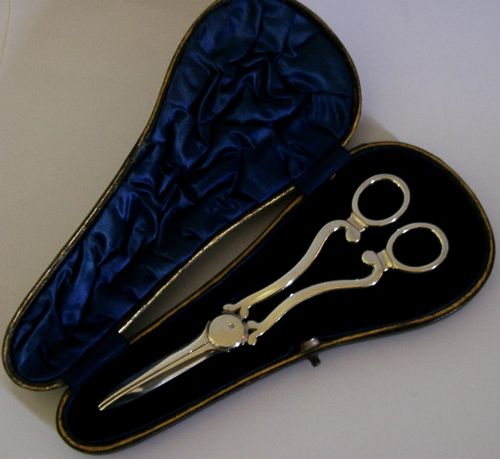
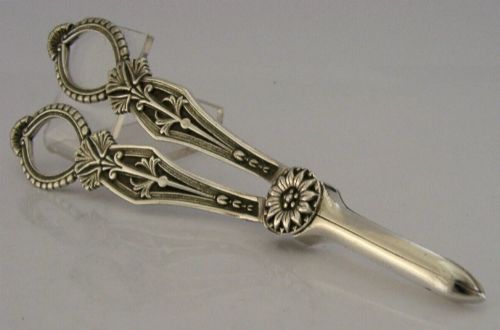
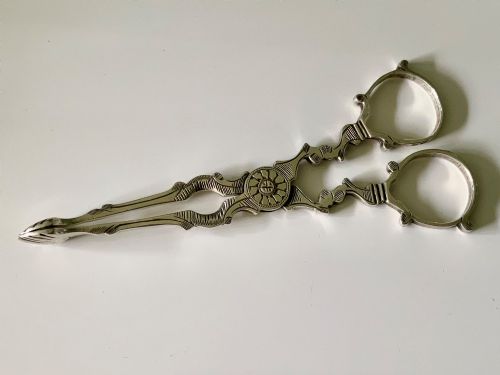
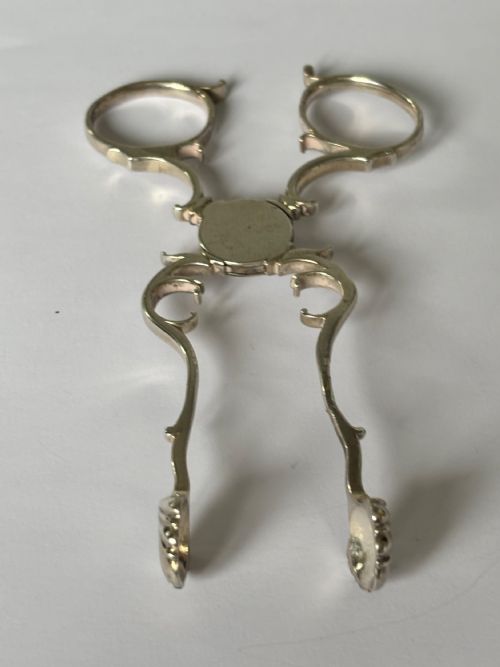
Grape scissors and shears dominate the listings, frequently featuring naturalistic vine decoration, cast handles, and fitted presentation cases. Sugar tongs and nips appear alongside sewing implements, candle snuffers, and grooming tools, demonstrating the broad domestic application of sterling silver in past centuries.
The pieces emerge from various eras including the Georgian, Victorian, Edwardian, and mid-twentieth-century periods. British provincial and London hallmarks appear frequently alongside French work and specialised barware adaptations.
Materials and construction
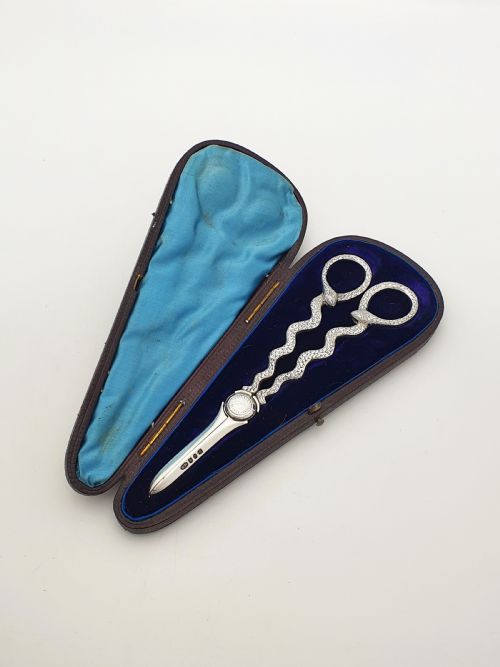
Makers utilised sterling silver for handles, mounts, and structural components, often pairing the precious metal with steel blades to ensure a functional cutting edge. Some examples incorporate silver gilt finishes or detailed cast work depicting serpents and foliate motifs.
Fitted cases lined with velvet, silk, or satin protect many of the surviving sets, accompanied by leather or leatherette outer coverings. These textiles and secondary materials complement the substantial weight of cast silver and hand-forged steel.
Antique Sterling Scissors Retail Price Guide 2026
Typical asking prices for sterling scissors among the pieces listed under this phrase on Sellingantiques today, from the lower quarter to the upper quarter. They describe what is for sale here now, not the wider market.
Listings feature sterling silver, velvet, leather, and silk across periods spanning the Georgian era to the 1960s.
Distinctions in quality
Quality rests in the crispness of the casting and the balance of the implement in the hand, particularly on grape shears with intricate vine handles. Heavy gauge silver and well-defined maker marks indicate superior workshops.
The presence of an original fitted case or complete travel set elevates the piece, especially when the interior velvet or satin lining remains intact alongside the silver components.
Thomas Tookey·Charles Reily and George Storer·Paul Storr·Chawner and Co·Francis Higgins·C.J. Vander
The Antique Sterling Scissors Glossary
- Sterling silver
- An alloy containing 92.5 percent silver by mass, with other metals constituting the remainder. This standard ensures durability while maintaining precious metal purity.
- Hallmark
- An official stamp applied to precious metals indicating the standard of purity, the assay office, and the date of manufacture. These marks provide a secure method of dating the item.
- Grape shears
- Specialised scissors designed for cutting clusters of fruit at the dining table. They frequently feature decorative vine motifs on the handles.
- Sugar nips
- Spring-action or scissor-type implements utilised for breaking pieces from a larger sugar loaf. They predate modern granulated sugar packaging.
- Gilt
- A thin layer of gold applied to the surface of silver, creating a contrasting two-tone appearance often seen on interior bowls and specific functional areas.
Antique Sterling Scissors: Frequently Asked Questions
What were grape scissors used for?
Victorian and Edwardian diners utilised grape scissors at the table to sever small clusters of fruit without bruising the skin. The curved blades allowed guests to serve themselves neatly during formal dessert courses.
Such implements often featured ornate vine or snake handles, matching the botanical theme of the dining ritual. They remain popular today as decorative serving pieces.
How do I identify a Georgian pair?
Georgian examples, including sugar nips and candle snuffers, typically exhibit crisp hand-engraved details and clear sterling hallmarks from London or provincial assay offices. The construction methods reflect eighteenth-century silversmithing techniques before mass production.
Examine the pivot joints and the style of the maker mark stamps to confirm the period. Many earlier pieces possess a lighter, more delicate feel than their Victorian successors.
Are fitted cases original to the scissors?
Many Victorian and Edwardian sets survive with velvet or silk-lined presentation cases designed specifically for the implements. These cases protect the silver and often bear retailer stamps on the inner lid.
Checking the fit of the scissors within the velvet mouldings helps confirm whether the case and the silver were paired together originally.
Can I use antique silver scissors today?
While many pairs retain steel cutting edges and functional spring actions, antique silver requires careful handling and hand washing. Proper maintenance preserves the soft patina and delicate casting details accumulated over the centuries.
Storing them in dry conditions or within their original lined cases prevents unnecessary tarnishing and protects the steel components from moisture.