





Antique Sterling Salver
When you search for an antique sterling salver, you enter a field of distinguished silver serving vessels shaped by centuries of changing domestic ritual.
Antique Sterling Salver
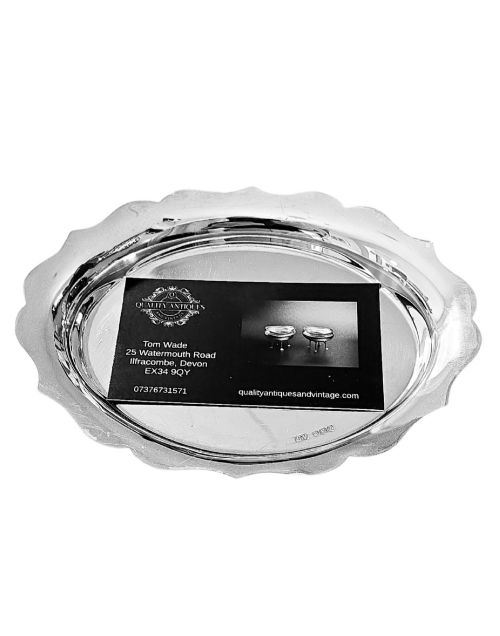
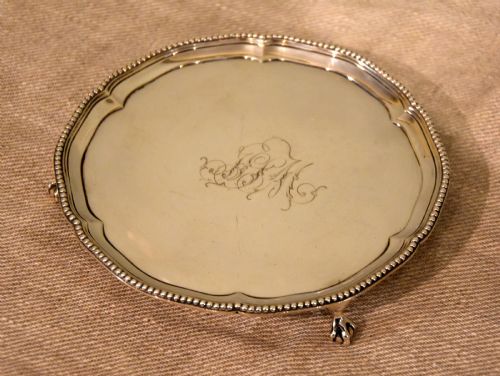
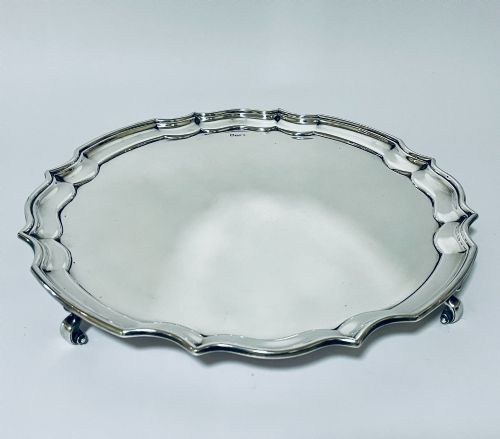
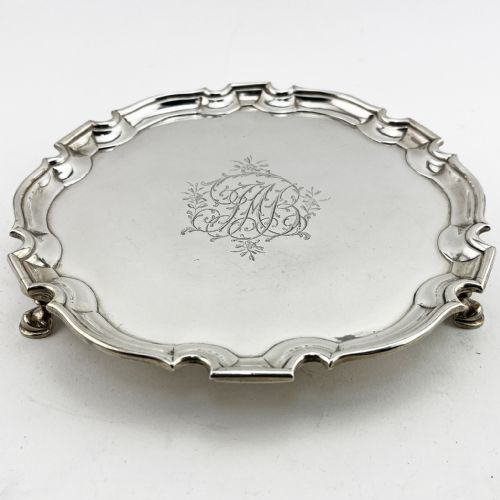
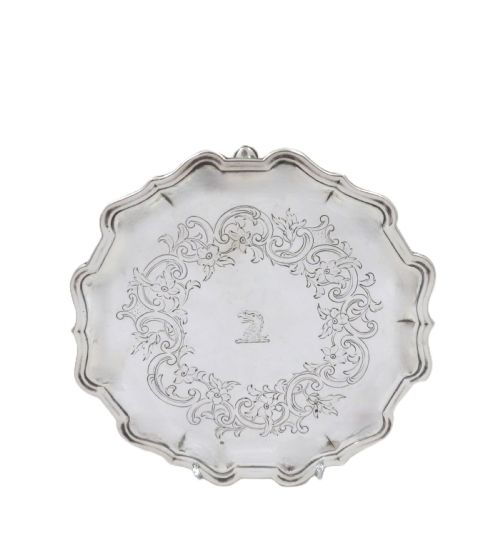
An antique sterling salver is a flat, raised serving vessel designed for presenting glasses, letters, or calling cards in domestic interiors. The phrase encompasses everything from small eighteenth-century card trays to large twentieth-century drinks trays.
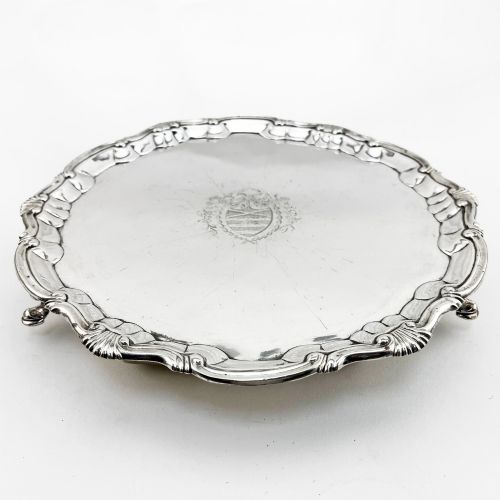
You meet examples spanning the Georgian, Victorian, and Edwardian periods, often featuring circular or oval shapes supported by small feet. These pieces functioned as centerpieces of hospitality in affluent households across Britain and Ireland.
The form developed from simple circular silver dishes into heavily decorated platters with cast borders and engraved surfaces. Surviving pieces demonstrate the changing social demands placed on silver service over three hundred years.
How they were made
Silversmiths hammered sterling silver ingots into sheets before raising the metal to form the shallow tray body. Borders and feet were frequently cast separately and soldered onto the main plate.
Craftsmen applied surface decoration through hand engraving, chasing, and piercing, utilising steel tools to cut intricate floral or geometric patterns into the metal. Assay office marks were then stamped to guarantee the standard of the silver.
Antique Sterling Salver Retail Price Guide 2026
Typical asking prices for sterling salver among the pieces listed under this phrase on Sellingantiques today, from the lower quarter to the upper quarter. They describe what is for sale here now, not the wider market.
Listings feature sterling silver items spanning the Georgian, Victorian, Edwardian, and Art Deco periods, formed as circular and oval salvers, platters, and card trays.
What varies in quality
Quality rests upon the weight of the sterling silver utilised and the crispness of the chased or engraved ornament. Heavier plate provides greater rigidity and indicates a higher standard of manufacture.
The complexity of the border work and the presence of cast feet rather than stamped sheet supports distinguish finer items. Master silversmiths achieved a balance of proportion and structural integrity that elevates specific pieces above standard domestic wares.
S.C. Younge & Co.·Harrison Bros·William Garrard·Charles Boyton·Elkington & Co.·Paul Storr·Tiffany & Co.·James Fray·John Carter
The Antique Sterling Salver Glossary
- Salver
- A flat tray, typically made of silver and raised on feet, used for serving food or drinks. These vessels evolved from seventeenth-century standing cups and dishes.
- Sterling silver
- An alloy consisting of ninety-two point five percent silver and seven point five percent other metals, usually copper. This standard has been enforced by British assay offices for centuries.
- Chasing
- A metalworking technique where the silversmith indents patterns from the front using hammers and punches. This method raises the design in relief without removing metal.
- Assay mark
- A stamp applied to precious metals by an official body to indicate the purity of the metal, the maker, and the year of testing. These marks provide definitive evidence of origin.
- Paten
- A small plate, usually of silver, used for liturgical purposes or as a small serving dish. Early examples frequently share forms with domestic salvers.
Antique Sterling Salver: Frequently Asked Questions
What is the difference between a salver and a tray?
Salvers traditionally stand upon small feet and serve formal roles for presenting cards or small drinks, whereas trays are often larger and fitted with handles for carrying.
Many antique listings use the terms interchangeably, but traditional salvers emphasise display on furniture rather than heavy transport.
How do I know the date of my silver salver?
British sterling pieces carry hallmarks that include a date letter corresponding to the specific year and assay office of testing.
Matching the stamped letter against official assay office registers reveals the exact year of manufacture and the city where the piece was registered.
Were all antique salvers made in London?
While London was the primary centre of silversmithing, many notable pieces originated from regional assay offices such as Sheffield, Birmingham, Chester, York, and Dublin, as well as Scottish cities like Edinburgh and Glasgow.
Provincial marks provide additional regional character and history to individual items.
How should I clean an antique silver salver?
Cleaning requires a soft cloth and a specialised silver polish formulated to remove tarnish without abrading the metal or softening engraved details.
Frequent gentle cleaning preserves the patina accumulated over centuries of use better than aggressive scrubbing.