



Antique Sterling Platter
An antique sterling platter brings weight, grace and centuries of craft to the table.
Antique Sterling Platter
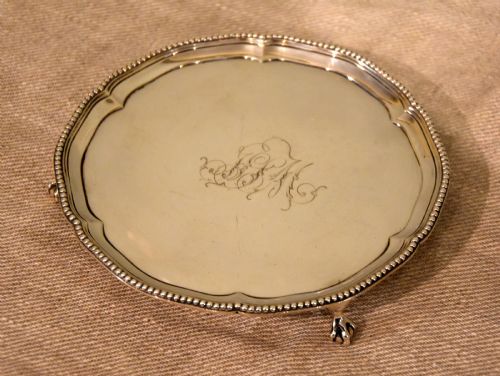
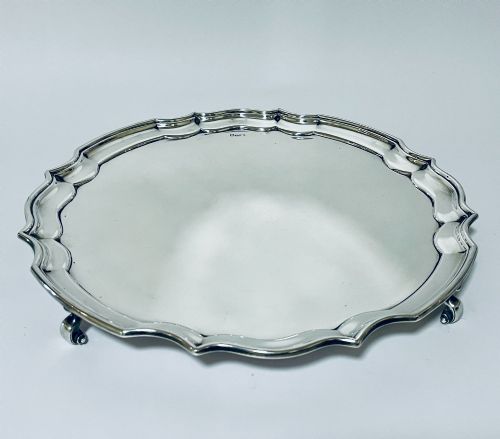
An antique sterling platter is a heavy serving piece designed to hold food, drinks or small objects with dignity. The examples appearing on this page span the eighteenth, nineteenth and early twentieth centuries, covering periods from Georgian and Victorian to Edwardian and Art Deco.
Buyers seeking an antique sterling platter most often encounter English forms in silver, alongside occasional Irish, Scottish and colonial pieces. These items range from plain circular salvers on feet to grand engraved trays and footed bowls.
Originating primarily from London, Sheffield and regional assay offices, these pieces reflect the shifting aesthetic tastes of their eras. One meets austere eighteenth-century surfaces as well as ornate repoussé work from later decades.
How they were made
Silversmiths hammered and shaped sterling silver from ingots into substantial sheets before raising or casting the borders and feet. Many pieces rely on meticulous hand engraving to decorate the central field with scrolls, crests and foliage.
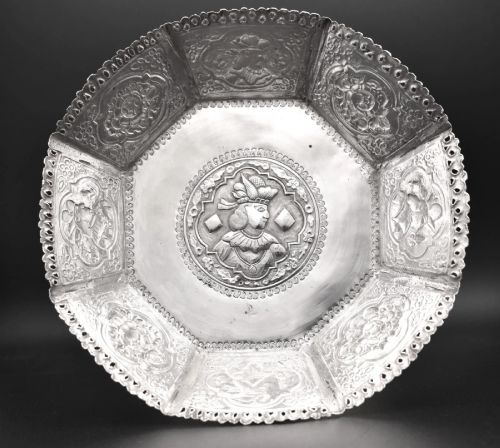
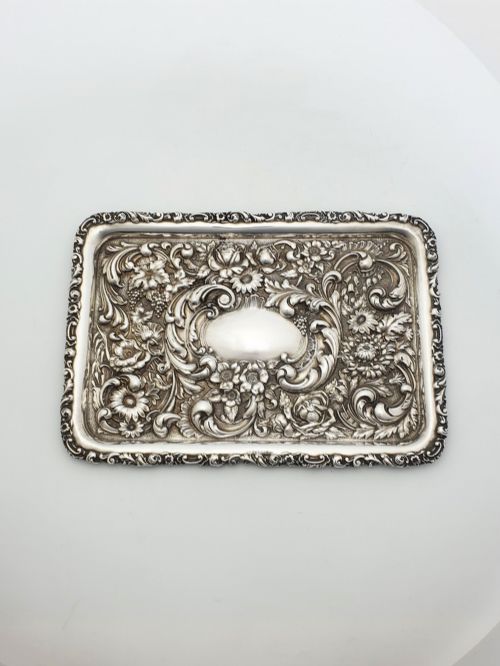
Repoussé and chasing techniques allowed artisans to push and shape the metal from the reverse side to create raised floral and figurative scenes, particularly on Edwardian and colonial items. Hallmarks stamped directly into the silver recorded the maker, assay office and year of creation.
The selection includes pieces originating from London, Sheffield, York, Ireland and colonial workshops.
What varies in quality
The weight and thickness of the silver dictate the primary sense of substance, as heavier gauge metal resists bending and feels correct in the hand. Master silversmiths achieved crispness in cast borders and deep, precise engraving that remains sharp despite centuries of polishing.
Provenance and maker reputation elevate certain pieces, particularly those bearing the marks of celebrated workshops like Paul Storr or Tiffany and Co. The harmony of design between the central plate and the applied handles, feet or rim reveals the maker's eye for proportion.
John Schofield·S.C. Younge and Co.·Harrison Bros·Elkington and Co.·Tiffany and Co.·James Fray·Paul Storr·Robert Breading
The Antique Sterling Platter Glossary
- Sterling silver
- An alloy consisting of 92.5 percent silver and 7.5 percent other metals, usually copper, chosen for durability.
- Salver
- A footed tray used for serving food or drinks, or for presenting cards and letters.
- Repoussé
- A metalworking technique where the artisan hammers the design from the reverse side to form a raised relief on the front.
- Hallmark
- A series of official marks stamped on precious metals to guarantee their purity, origin and year of assay.
- Tazza
- A shallow saucer-like dish mounted on a stem and foot, often used for display or serving small portions.
Antique Sterling Platter: Frequently Asked Questions
How do I clean an antique sterling platter?
Clean the silver using a soft cloth and a reputable silver polish formulated to protect the metal. Avoid harsh abrasive pads that wear down delicate hand engraving and remove centuries of character.
Wash the platter in warm, soapy water after polishing to remove chemical residue, then dry it thoroughly with a lint-free cloth. Store the piece in a dry environment away from direct sunlight to slow down tarnishing.
What do the hallmarks tell me?
British hallmarks provide a reliable biography of the object, showing the standard of silver, the town where it was tested and the year of manufacture. Additional marks often reveal the maker's initials or the reigning monarch's profile.
Learning to read these tiny stamps helps verify the age and origin of the piece. Reference books and online registers map out the specific variations used by assay offices over the centuries.
How do I know if a tray is Georgian or Victorian?
Georgian pieces from the eighteenth and early nineteenth centuries often favour cleaner lines, bright-cut engraving and simpler cast borders. Victorian items tend to introduce heavier floral decoration, complex repoussé work and wider stylistic revivals.
Examining the shape of the maker's mark and the style of the script provides further clues to the decade of creation. Comparing the weight and construction methods also helps distinguish between the restraint of the Georgian era and the industrial techniques of the later nineteenth century.