



Antique Sterling Pin Dish
An antique sterling pin dish offers a small touch of metalwork grace for a dressing table or desk, holding everyday keepsakes.
Antique Sterling Pin Dish
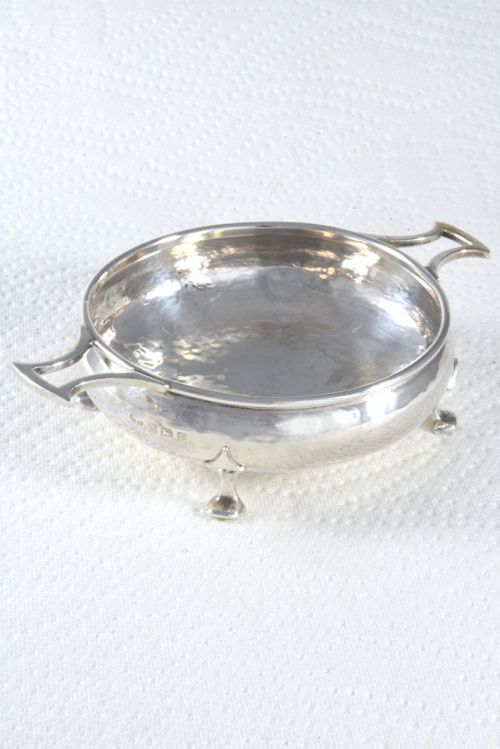
An antique sterling pin dish is a small receptacle designed for dressing tables, desks, and sideboards to hold small loose items like pins, rings, and coins. The selection spans the Victorian and Edwardian eras, reaching into the Art Deco period, with English provincial and London assay marks appearing frequently across the inventory.
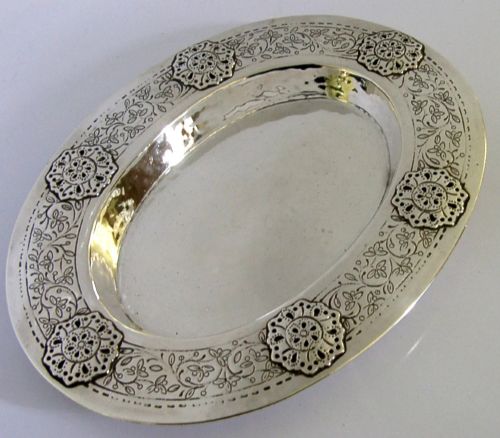
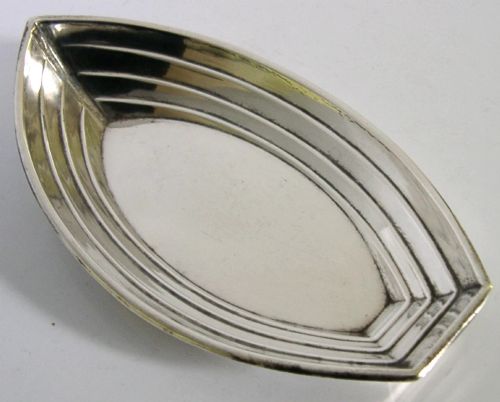
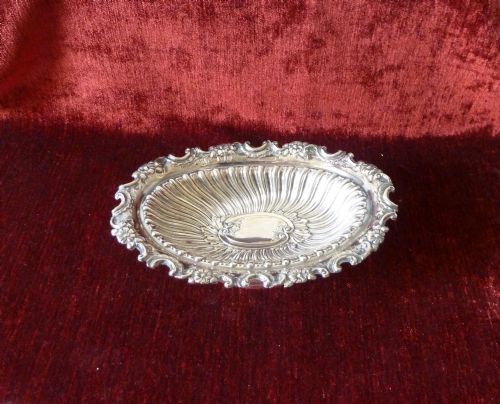
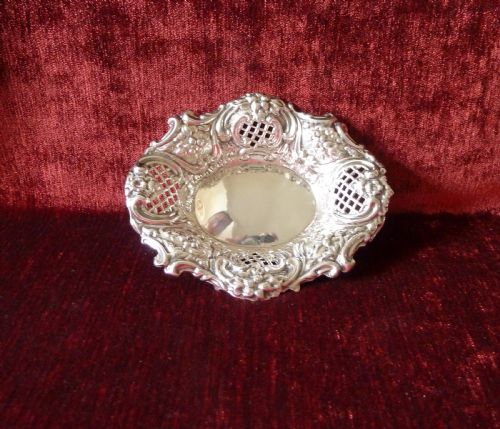
Most examples take shallow forms intended to display decorative detail rather than contain large volumes. Buyers encounter circular, oval, heart-shaped, and novelty silhouettes, sometimes accompanied by fitted presentation cases for gifting.
How these pieces were made
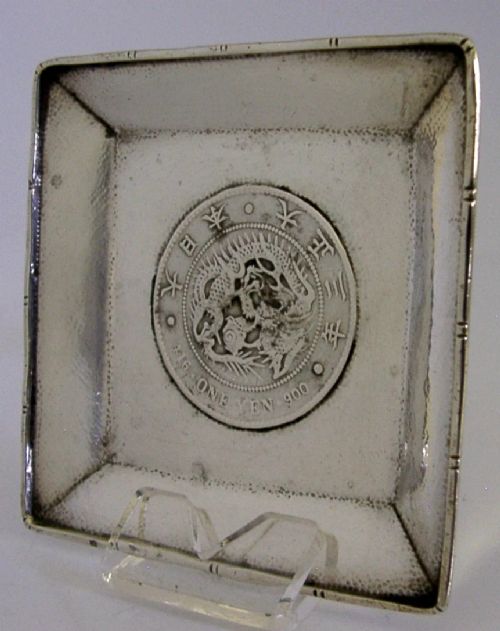
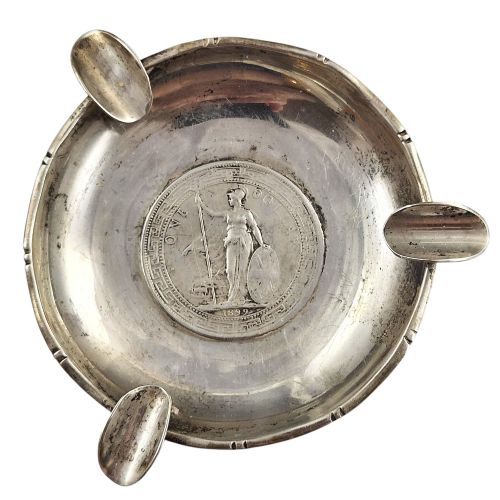
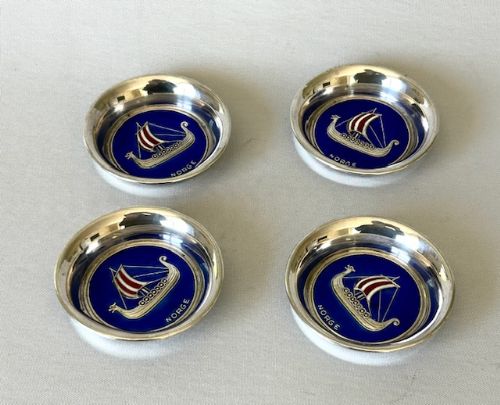
Certain specialty pieces incorporate foreign coinage, such as Japanese yen or British trade dollars, mounted directly into the centre of the silver bowl. Enamel work also appears on select items, fusing powdered glass to the metal base under high heat for bright colour accents.
Several vintage dishes incorporate novelty forms, featuring miniature rowing boats, Japanese coins, and even comic figures like Mr Punch.
What varies in quality
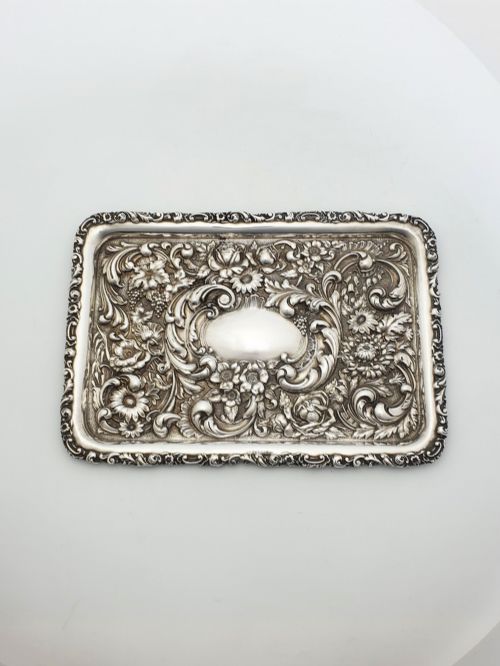
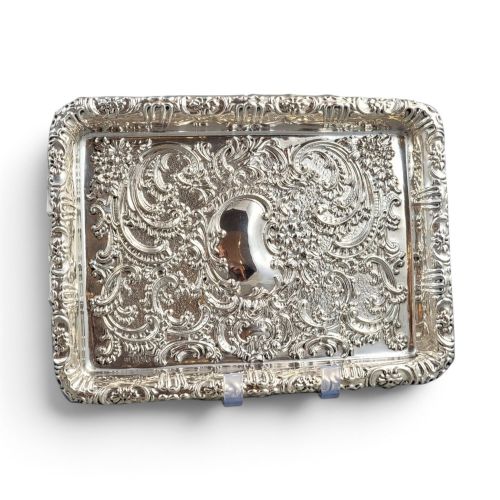
Quality rests primarily on the depth and crispness of the hand-worked decoration, distinguishing sharp repoussé chasing from flat or worn pressings. Heavier gauge silver provides a more substantial feel in the hand and resists bending around the delicate rims.
The distinction also lies in the renown of the silversmith or retailer involved, with pieces bearing marks from notable makers commanding stronger interest from collectors.
William Neale·Liberty and Co·Wallace·Lee Yee Hing·Robert Pringle and Sons·William Comyns·Peter and Anne Bateman·John Grinsell and Sons·James Hennell·Taylor and Perry·Mappin and Webb
The Antique Sterling Pin Dish Glossary
- Repoussé
- A metalworking technique where the silversmith hammers the design from the reverse side to create a raised relief on the front. This method defines the ornamented borders of many dressing table trays.
- Sterling silver
- An alloy consisting of pure silver and other metals, usually copper, standardised at a specific high purity level. British pieces typically show a lion passant mark to verify this standard.
- Assay office
- An official body responsible for testing the purity of precious metals and stamping them with hallmark symbols. Towns like London, Birmingham, and Sheffield operated distinct offices.
- Guilloche
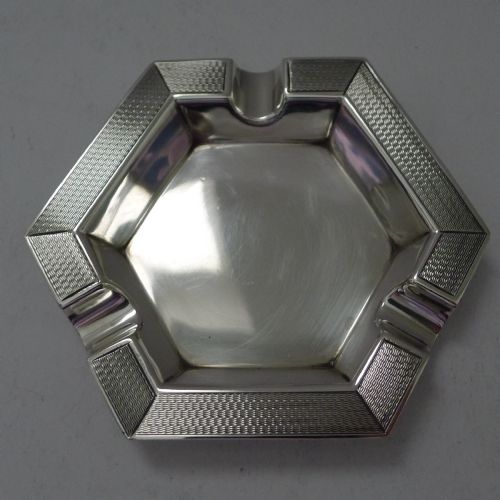
- A decorative engineering technique where a precise, intricate pattern is mechanically engraved into a metal surface beneath translucent enamel. It appears on select twentieth-century trinket trays.
- Novelty dish
- A piece shaped into a specific recognisable object or character, such as a rowing boat or a comic figure. These items served both decorative and humorous purposes.
Antique Sterling Pin Dish: Frequently Asked Questions
What were antique sterling pin dishes used for?
These small receptacles sat on dressing tables, bedside cabinets, and hallway desks to collect loose pins, tie tacks, and pocket coins at the end of the day. They kept small valuables from rolling away.
Victorians and Edwardians also used them during afternoon tea or card games to hold small sweets, bonbons, or calling cards.
How do I identify the date of a silver dish?
British silver typically carries a series of hallmarks stamped directly into the metal, including a date letter that corresponds to a specific assay year. Additional marks indicate the city of testing and the silversmith's registered sponsor mark.
Matching these symbols against standard silver reference tables reveals the exact year of manufacture and the maker responsible for the piece.
How should I clean my silver dish?
Maintenance requires gentle washing with warm water and mild soap, followed by drying with a soft cloth to prevent water spots. Avoid abrasive cloths that strip away the fine details of repoussé work.
Traditional silver polish should be used sparingly and only when necessary, keeping it out of deeply recessed crevices where dark patina highlights the design.
Can I use an antique pin dish daily?
Sterling silver resists normal daily handling well, making these small trays suitable for holding modern rings, keys, or cufflinks on a bedside table. Their shallow depths make them ideal change trays.
Enamelled or tortoiseshell variants require extra care to avoid accidental drops or exposure to harsh cosmetics and perfumes.