





Antique Steel Pocket Firearm
An antique steel pocket firearm offers a compact piece of defensive history, spanning eighteenth-century flintlocks to mid-nineteenth-century percussion and pinfire designs.
Antique Steel Pocket Firearm
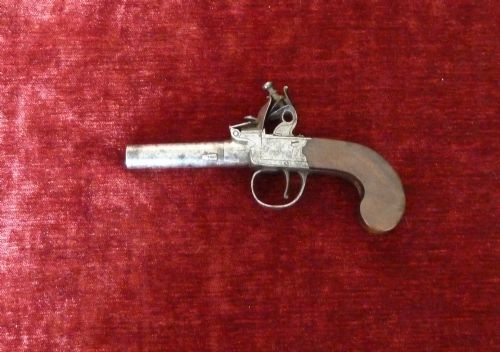
An antique steel pocket firearm encompasses small-scale defensive weapons designed to be carried discretely in pockets, muffs, or coats during the eighteenth and nineteenth centuries. These pieces emerge from periods such as the Georgian, Regency, and Victorian eras, reflecting shifts in personal protection and mechanical ingenuity.
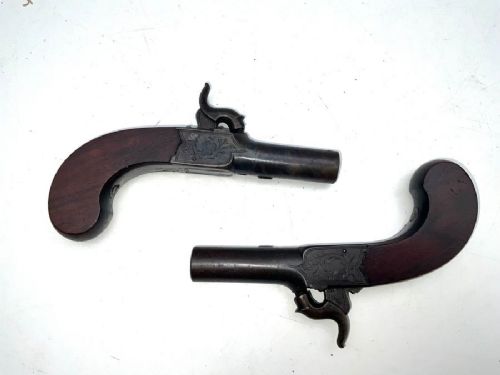
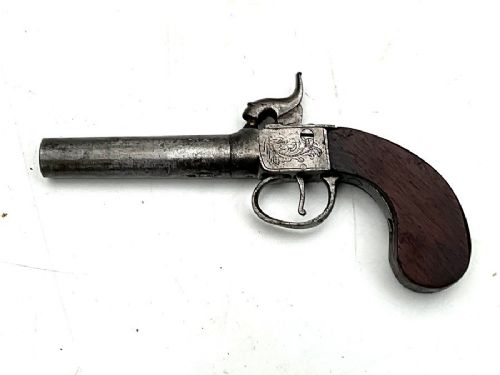
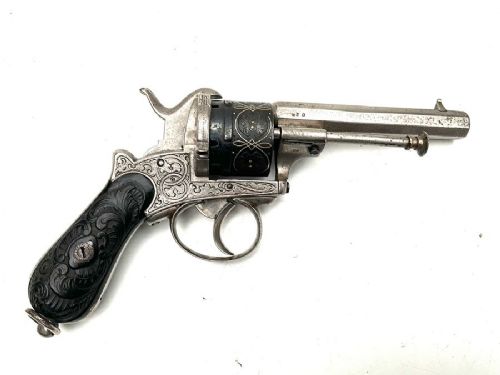
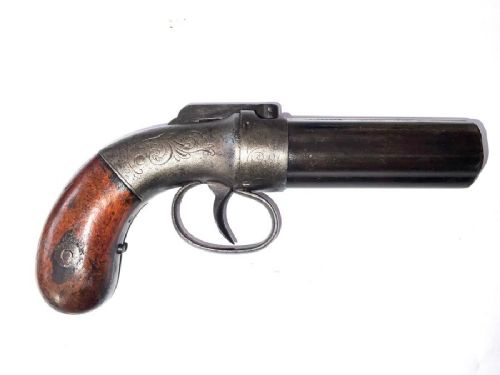
The versions most frequently encountered on this page include flintlock and percussion pocket pistols, often featuring turn-off cannon barrels, box-lock actions, or multi-shot pepperbox configurations. Makers from London, Birmingham, and continental workshops produced these arms for travellers, officers, and civilians requiring easily concealed sidearms.
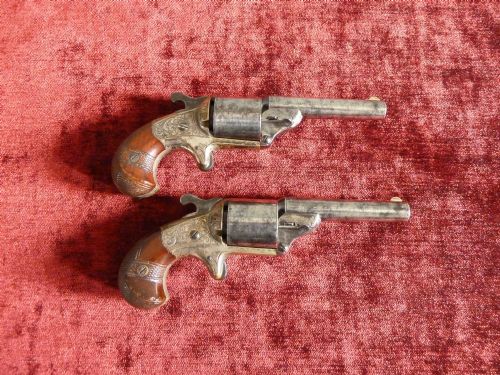
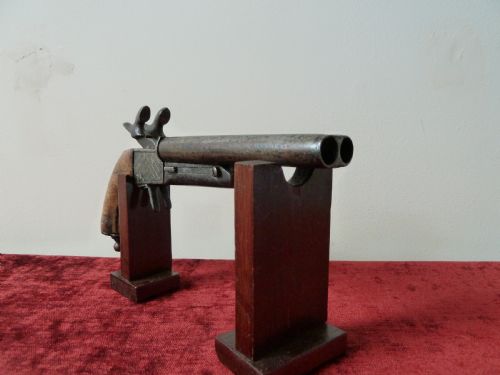
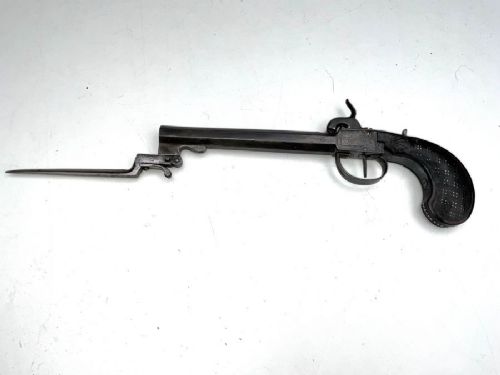
Beyond single-shot variants, the selection includes revolving mechanisms, double-barrelled systems, and pieces equipped with foldaway or flick bayonets. Materials range from basic iron and steel frames to mounted hardwood grips and decorated silver wire inlays.
How They Were Made
The construction of an antique steel pocket firearm relies heavily on forged steel and iron for barrels, frames, and internal lock mechanisms. Blacksmiths and gunsmiths machined and filed these metals to tight tolerances, often applying proof marks to verify the strength of the steel under pressure.
Stocks and grips utilise dense timbers such as walnut, ebony, and assorted hardwoods, shaped to fit comfortably in the hand despite the diminutive scale of the pistol. Metal components frequently integrate brass for trigger guards and frames, while finer examples incorporate intricate silver wire inlay into the wooden grips.
Listings feature defensive arms spanning the eighteenth and nineteenth centuries, constructed from steel, iron, brass, and hardwood.
What Varies In Quality
The standard of an antique steel pocket firearm is determined by the crispness of the mechanical action and the precision of the metal engraving. Superior examples demonstrate smooth rotation in pepperboxes and revolvers, alongside sharp, uncorroded lockwork that responds cleanly to the trigger.
Artisanal touches separate standard utility pieces from high-grade commissions, visible in signed lockplates by established gunsmiths and the integration of complications like sliding rear sights or concealed bayonets. The preservation of original finishes, such as smooth steel surfaces and intact wooden grips with undamaged silver wire inlay, dictates the overall integrity of the piece.
Allen And Thurber·J R Cooper·Twigg·La Motte·James Barber·Thomas Henshaw·Auguste Francotte·I Parr·Meyer And Mortimer·J Robinson·George Sherwood
The Antique Steel Pocket Firearm Glossary
- Flintlock
- An ignition mechanism utilising a piece of flint held in a cock to strike a steel frizzen, creating sparks to ignite the priming powder. This system dominated firearms from the seventeenth through the early nineteenth century.
- Percussion
- A later ignition system employing a small priming cap placed on a nipple, struck directly by the hammer to detonate the powder charge. It superseded the flintlock method during the nineteenth century due to its reliability in wet weather.
- Box-lock
- A firearm design where the lock mechanism is integral with the breech or frame rather than mounted on a separate sideplate. This layout provides a streamlined profile ideal for pocket pistols.
- Turn-off barrel
- A barrel that unscrews from the breech to allow powder and ball to be loaded directly into the chamber from the rear. This design was common on eighteenth-century Queen Anne type pistols.
- Pepperbox
- A multi-barrelled firearm where the entire cluster of barrels rotates around a central axis with each pull of the trigger or cocking of the hammer. It offers multiple shots without requiring a separate revolving cylinder.
Antique Steel Pocket Firearm: Frequently Asked Questions
What is a pocket firearm?
A pocket firearm is a small handgun engineered for personal defence, designed to be stowed easily inside a coat pocket or travelling muff.
These weapons were widely carried by civilians and officers throughout the eighteenth and nineteenth centuries for immediate security.
How do flintlock and percussion pistols differ?
Flintlock pistols rely on a piece of flint striking steel to create sparks that ignite loose gunpowder in an external pan. Percussion pistols use a hammer to strike a sealed copper cap containing fulminate, sending a direct flame into the breech.
The percussion system proved much more reliable in damp conditions and largely replaced the flintlock mechanism by the mid-nineteenth century.
What are Queen Anne type pistols?
Queen Anne type pistols feature a distinct construction where the breech and trigger plate are forged as a single piece, paired with a turn-off barrel.
This style remained popular for decades after the actual reign of Queen Anne due to its clean lines and reliable concealed lock mechanism.
Were these pistols used in combat?
Many pocket firearms served as personal sidearms for military officers, naval personnel, and travellers traversing dangerous roads. Their primary purpose was close-range self-defence rather than open battlefield engagement.