

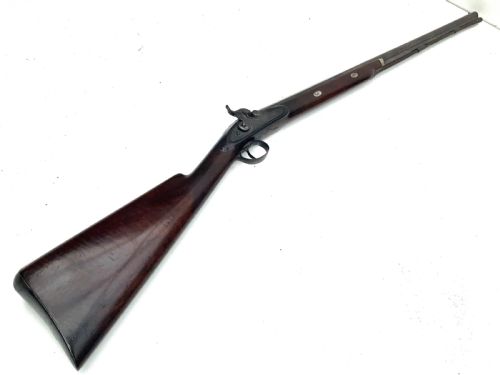


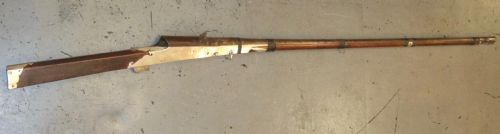

Antique Steel Musket
An antique steel musket carries the weight of past conflicts and craftsmanship, offering collectors a tangible piece of military history.
Antique Steel Musket
When you search for an antique steel musket, you encounter functional military and sporting arms spanning several centuries of development. These pieces range from early matchlock mechanisms to later percussion cap systems used across different global theatres.
The versions most commonly met on this page include British martial arms like the Brown Bess and Enfield, alongside continental European pieces and Indo-Persian matchlocks. They bridge the gap between primitive ignition systems and modern cartridge firearms.
Forms vary from standard infantry muskets and cavalry musketoons to specialised sporting fowlers and blunderbusses. Each design reflects the tactical requirements and technological limits of its specific period.
Origins stretch across the eighteenth and nineteenth centuries, taking in Georgian, Regency, and Victorian military eras alongside Mughal Empire and Indo-Persian traditions. This geographical and temporal spread ensures considerable variety in form and finish.
Materials and construction methods
Construction relies heavily on forged steel and iron for barrels, lockplates, and furniture, paired with dense stocks of walnut, hardwood, or general wood. Metal components were hand-forged, while wooden stocks were shaped manually to house the mechanism and barrel.
Refinement ranges from plain military service finish to elaborate decoration involving brass mounts, bone details, and mother-of-pearl inlay. Ignition systems evolved through matchlock, miquelet, flintlock, and percussion mechanisms, each requiring precise metalworking.
Antique Steel Musket Retail Price Guide 2026
Typical asking prices for steel musket among the pieces listed under this phrase on Sellingantiques today, from the lower quarter to the upper quarter. They describe what is for sale here now, not the wider market.
The inventory encompasses British service patterns alongside French, American, and Indo-Persian regional variants.
Distinctions in quality
Quality rests on the crispness of the lock mechanism, the integrity of the metal components, and the survival of the original stock timber. Maker attribution and the presence of military acceptance marks or regimental engravings elevate certain pieces above standard service issue.
The standard of decorative execution also separates utilitarian weapons from presentation pieces or high-grade sporting arms. Elaborate mother-of-pearl inlay or intricate carving demonstrates superior workshop capability.
John Manton & Son
The Antique Steel Musket Glossary
- Matchlock
- An early firearm ignition system where a slow-burning match is lowered into the priming powder by a lever. This technology preceded flintlock mechanisms.
- Flintlock
- A firearm ignition mechanism using a flint struck against a steel frizzen to create sparks that ignite the powder charge. It dominated military and civilian arms for centuries.
- Percussion
- A later ignition system utilising a small cap struck by a hammer to detonate priming compound inside the nipple. This replaced the flintlock in the nineteenth century.
- Blunderbuss
- A short-range firearm with a flared muzzle designed to scatter lead shot or various projectiles. It saw extensive use by coach guards and naval crews.
Antique Steel Musket: Frequently Asked Questions
What is an antique steel musket?
An antique steel musket is a shoulder-fired smoothbore or rifled long gun produced before the modern cartridge era, utilising various early ignition systems.
These firearms served military, paramilitary, and sporting roles, reflecting the technological standards of the eighteenth and nineteenth centuries.
How do I care for my musket?
Maintenance requires a stable environment with controlled humidity to prevent rust on steel components and drying of the wood.
Light applications of suitable conservation oil help preserve metal surfaces without damaging historic timber or finishes.
How do I date an antique musket?
Dating relies on analyzing the ignition mechanism, barrel markings, proof stamps, and overall style against known military patterns.
Design shifts from matchlock to flintlock and percussion provide clear chronological markers for researchers and collectors.
Were these muskets used in combat?
Many examples on record served active military duties during major conflicts such as the Revolutionary Wars and the Napoleonic era.
Others functioned as civilian sporting fowlers or colonial defence arms, showing varying degrees of wear from actual service.