


Antique Statement Pendant
An antique statement pendant brings notable presence to the neckline, offering striking scale and historic craftsmanship.
Antique Statement Pendant
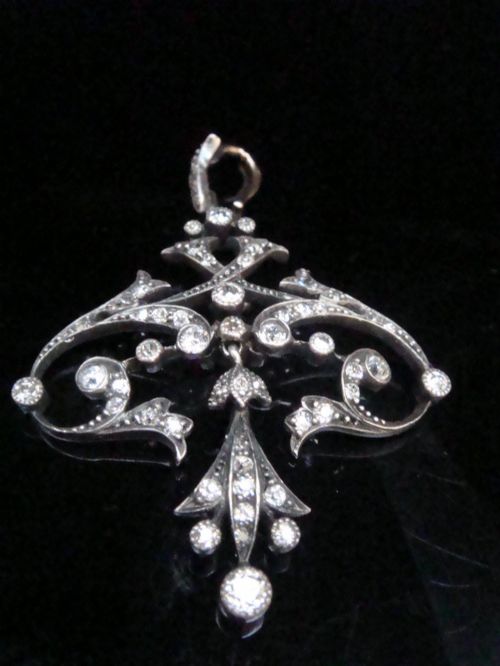
When you search for an antique statement pendant, you find larger, eye-catching jewels designed to draw attention, often featuring substantial gemstone focal points or intricate metalwork. These pieces span from the 19th century through the Edwardian era and the Art Deco period, incorporating diverse forms such as lavalieres, festoons, and large drops.
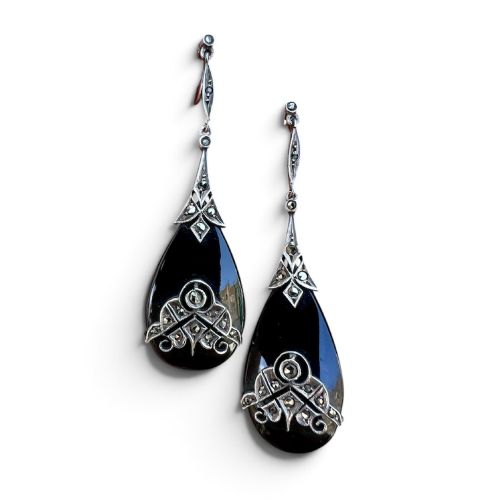
The versions most likely to meet you on this page include diamond and precious stone clusters set in yellow gold or platinum, alongside silver pieces decorated with marcasite, onyx, or turquoise matrix. Alongside traditional necklaces and pendants, the listings also capture broader decorative statements from the same eras, reflecting the varied tastes of past makers.
Materials and Techniques
Makers utilised precious metals such as 18ct yellow gold, platinum, and sterling silver as the structural backbone for these ornaments, frequently combining metals in later periods like the 1920s. Gemstones including diamonds, rubies, amethysts, and aquamarines were shaped with cuts like the old European cut or set as large focal drops.
Techniques relied heavily on hand-fabrication, encompassing detailed bezel and prong settings for stones, intricate wirework in Arts and Crafts designs, and specialised applications of enamel, glass, or bakelite in mid-century and Art Deco examples.
Some pendants double as brooches, offering a versatile Victorian trick for changing your outfit before dinner.
Factors of Quality
Quality rests significantly on the selection and matching of the central gemstones, where clarity, carat weight, and natural colour distribution elevate certain pieces far above standard commercial items. Superior examples display harmonious proportions where the scale of the pendant or drop complements the sturdiness of the surrounding gold, silver, or platinum mount.
The refinement of the handiwork separates top-tier pieces from simpler creations, seen in the precision of the stone settings, the delicacy of pierced metal galleries, and the overall structural integrity of articulated elements like tassels or fringes.
The Antique Statement Pendant Glossary
- Lavaliere
- A pendant featuring a primary drop suspended from a chain, typically popular during the Edwardian period. These designs often incorporate symmetrical or flowing motifs that direct the eye downward.
- Festoon
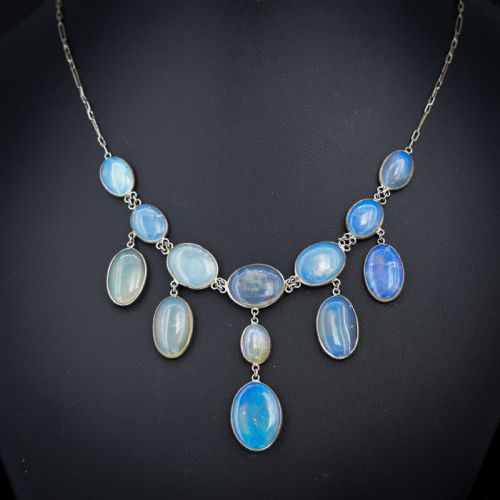
- A necklace style featuring draped chains, swags, or bead strands connected across the neckline. They frequently include suspended fringes or central drop elements.
- Parure
- A matched set of jewellery intended to be worn together, commonly comprising a necklace, earrings, and sometimes a ring or brooch. Such suites share identical materials and stylistic motifs.
- Marcasite
- Small, polished pyrite crystals cut into facets and set closely together in silver mounts to imitate the sparkle of diamonds. This technique enjoyed widespread popularity in Art Deco pieces.
- Old European cut
- An early form of brilliant-cut diamond characterised by a small table, a high crown, and a large culet facet. This cut predates modern round brilliant diamonds and displays distinctive broad facets under candlelight.
Antique Statement Pendant: Frequently Asked Questions
What defines an antique statement pendant?
These pieces are distinguished by their larger physical scale, prominent central gemstones, and bold designs created to be the focal point of an outfit. They capture the aesthetic priorities of eras like the Victorian, Edwardian, and Art Deco periods.
Buyers often select them for their individuality and the presence of hand-cut stones and artisanal metalwork that modern jewellery rarely replicates.
How were these pendants worn historically?
Historically, statement pendants and lavalieres were worn on relatively long chains to sit prominently on the chest, often accompanying evening wear or high-collared daytime garments. They served to signal social status and personal taste during formal gatherings.
Many pieces were also versatile enough to function interchangeably as brooches or to be integrated into elaborate necklace settings depending on the fashion of the decade.
How do I care for antique gemstone pendants?
Proper care involves gentle cleaning with a soft cloth and warm, soapy water, avoiding harsh ultrasonic cleaners that can damage delicate or treated stones like turquoise and amber. Storing each piece separately prevents scratching between different metals and gemstones.
Periodic inspection of the settings by a professional jeweller ensures that older claws and bezels remain secure around heavy stones such as amethysts and aquamarines.
How can I tell the period of a pendant?
Dating relies on identifying the characteristic design styles, such as the fluid floral motifs of the Edwardian era or the geometric symmetry of Art Deco. The choice of materials, such as platinum in the 1920s or yellow gold in Victorian pieces, also provides strong chronological clues.
Examining the manufacturing techniques, clasp types, and any hallmarks stamped on the metal further helps narrow down the decade of creation.