


Antique Standing Shelves
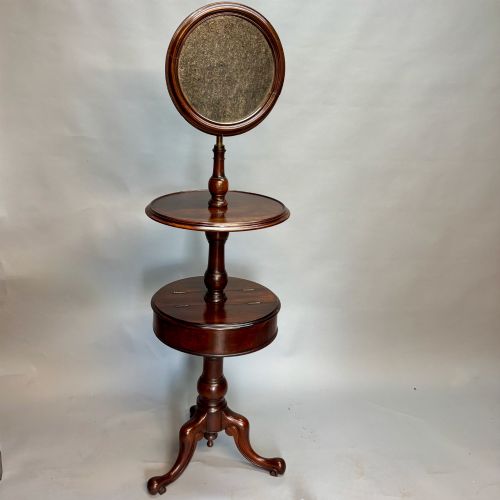
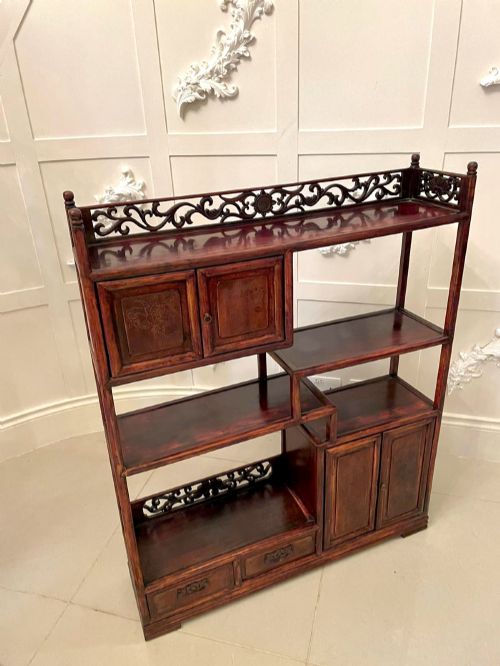
Antique standing shelves bring architectural presence to a room, offering open display or tiered storage across periods from the Georgian era to the early twentieth century.
Antique Standing Shelves
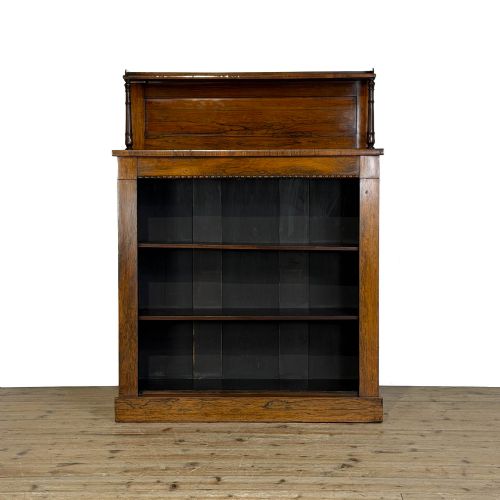
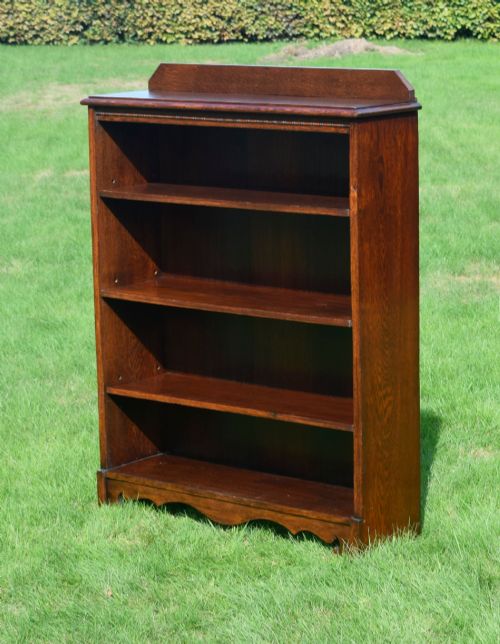
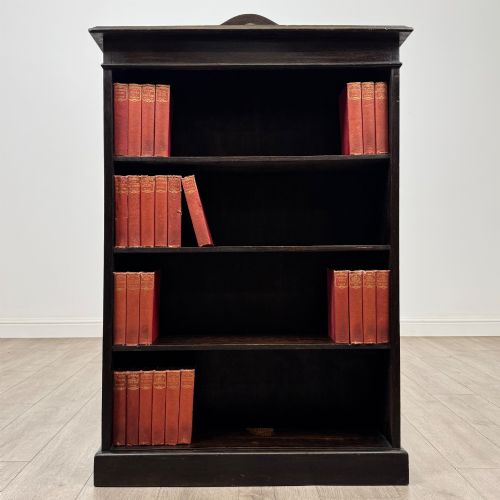
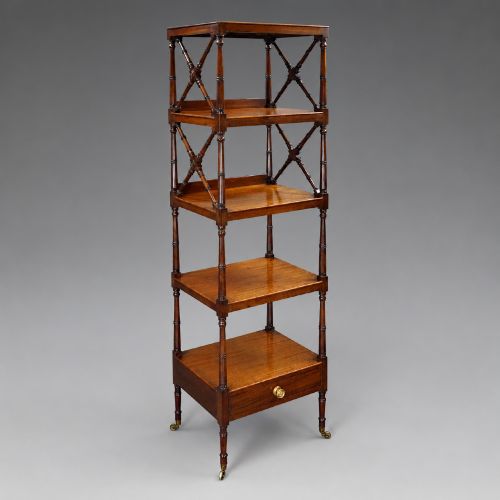
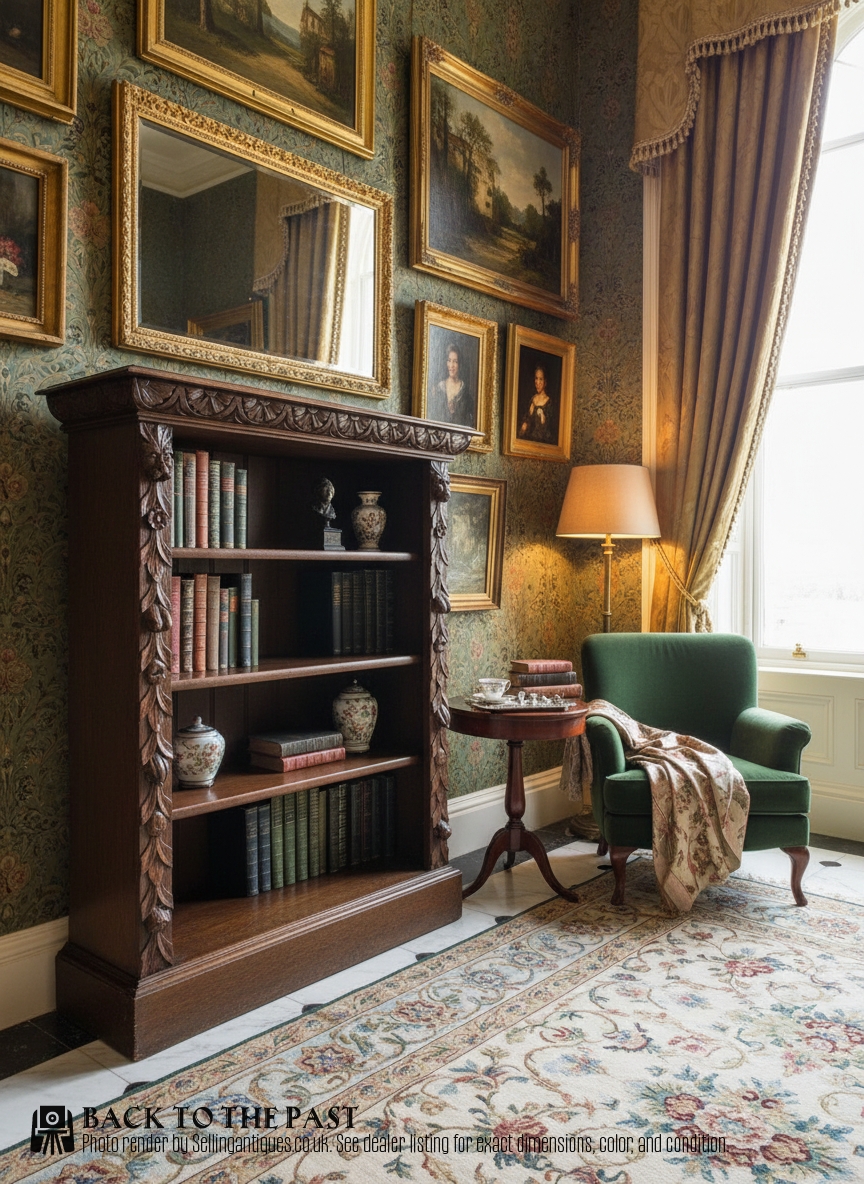
When you search for antique standing shelves, you find a variety of freestanding open formats designed to hold books, ornaments, and papers without built-in wall fixings. The selection spans utilitarian oak bookcases from the early twentieth century to elaborate Victorian burr walnut whatnots and graceful Regency mahogany waterfall bookcases.
The pieces on this page range widely in form, including corner whatnots, multi-tiered etageres, and low open dwarf bookcases. Makers constructed these units to serve specific domestic functions in libraries, drawing rooms, and bedrooms, resulting in configurations that vary from narrow angled bays to wide serpentine cabinets.
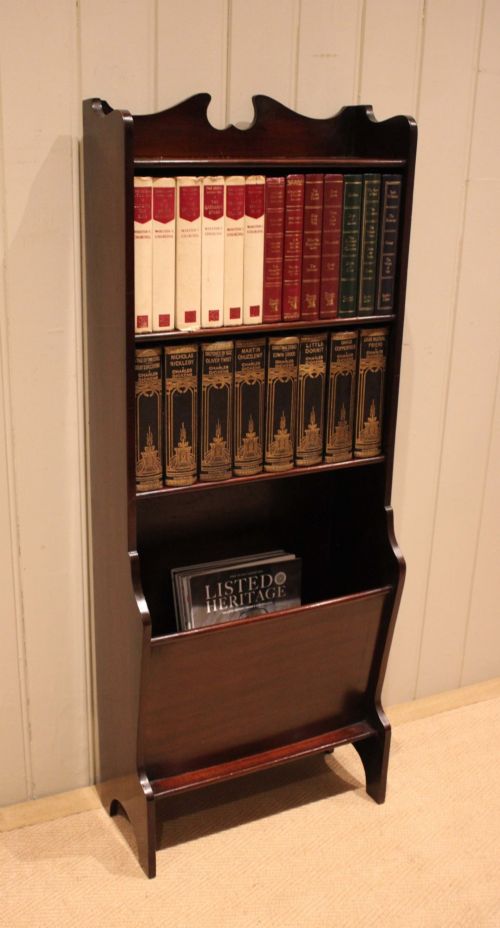
Origins stretch from formal English workshops working in satinwood and rosewood to regional craftsmen utilising pine and rustic country oak. You encounter both simple freestanding shelves and complex combinations featuring integrated magazine racks, brass castors, and adjustable wooden shelving.
How they were made
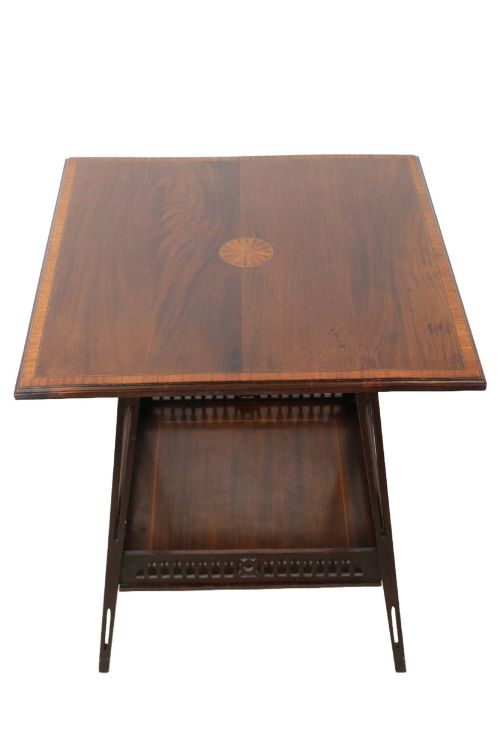
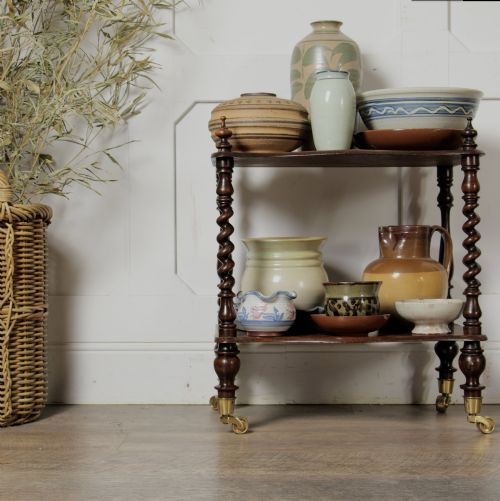
Cabinetmakers built these standing shelves using dense hardwoods such as mahogany, walnut, oak, and rosewood, frequently applying burr walnut veneers or delicate satinwood inlays to decorative surfaces. Structural stability relied on traditional joinery methods, supplemented in some Victorian and Edwardian examples by turned barley twist supports or brass castors.
Makers shaped the timber using hand planes and saws, finishing open edges with beaded mouldings or carved ornamentation. More ambitious pieces incorporated brass fittings, fretwork panels, and tiered platforms that stepped back progressively toward the top.
What varies in quality
Quality in these standing shelves reveals itself in the choice of timber and the precision of the underlying construction. Superior examples display carefully matched wood grains, such as burr walnut or figured mahogany, alongside robust joints that maintain rigidity without modern metal brackets.
Refinement of detail separates standard utility pieces from exceptional items. Hand-carved mouldings, well-turned supports, and functional additions like adjustable shelves or original brass hardware distinguish the work of skilled cabinetmakers from mass-produced output.
Trevor Page & Co·Gabriel Viardot·Waring & Gillow
The Antique Standing Shelves Glossary
- Whatnot
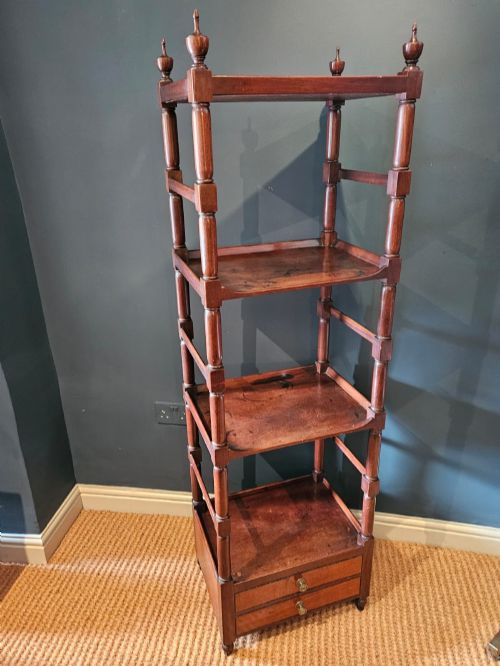
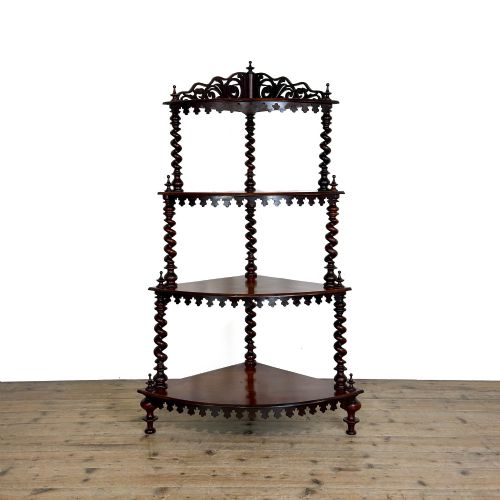
- A piece of freestanding furniture consisting of a set of open shelves for displaying small objects, popular in the Victorian period. These often feature three or more tiers supported by slender columns.
- Etagere
- A French-derived term for a piece of furniture with a series of open shelves for display. They are typically lighter in construction than bookcases and frequently incorporate exotic woods and brass details.
- Waterfall bookcase
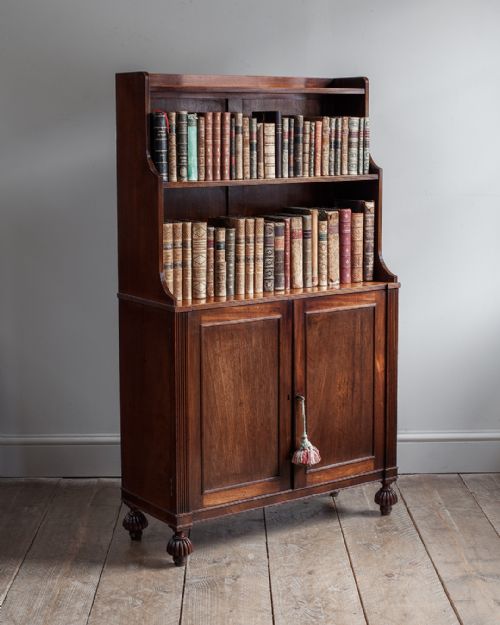
- A tiered shelving unit where each successive shelf is shallower than the one below, creating a cascading profile. This style gained particular favour during the Regency and Victorian eras.
- Barley twist
- A type of furniture turning resembling a twisted rope, commonly found on the vertical supports of Victorian stands and bookcases. This decorative technique added texture and visual movement to upright timber members.
- Padauk
- A heavy, durable tropical hardwood with a reddish hue used in imported furniture such as Anglo-Indian pieces. Craftsmen valued it for its strength and rich natural colour.
Antique Standing Shelves: Frequently Asked Questions
How do I choose the right size?
Measure your available floor space and wall height carefully, keeping in mind that standing shelves range from compact corner units to wide dwarf bookcases.
Consider the depth of the shelves in relation to the items you plan to display, as tiered or waterfall designs narrow progressively toward the top.
Are these shelves sturdy enough for books?
Most solid wood bookcases and open shelving units from the Victorian and Edwardian periods are robust enough to hold heavy volumes.
Lighter etageres and delicate whatnots were originally intended for decorative ornaments and lighter papers rather than dense libraries.
How do I identify a Victorian whatnot?
Victorian whatnots typically feature multiple tiers supported by turned columns, frequently resting on small feet or castors for mobility.
Look for characteristic timber choices like walnut, mahogany, or rosewood, sometimes accented with barley twist supports or carved details.
Can I adjust the shelf heights?
Some period bookcases include functional adaptations such as adjustable wooden shelving supported by peg systems.
Many earlier standing shelves feature fixed tiers, so checking the internal clearance between shelves is essential if you collect oversized volumes.