



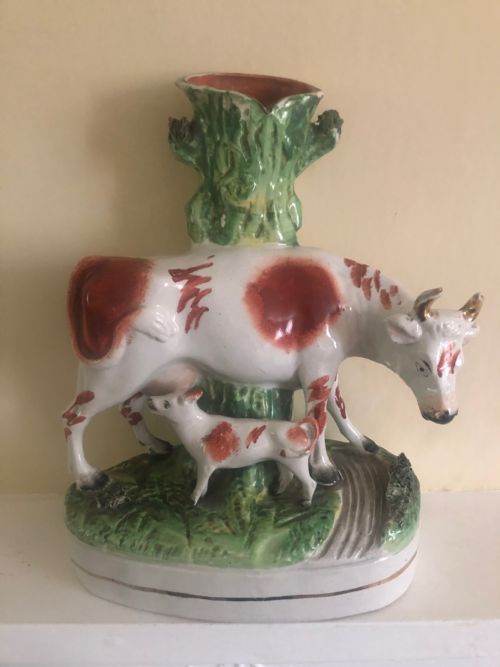

Antique Staffordshire Cow
An antique staffordshire cow brings cheerful rural charm to a room, functioning as a lively earthenware creamer or decorative spill vase.
Antique Staffordshire Cow
The search for an antique staffordshire cow reveals charming earthenware figures produced in both Victorian and Georgian periods. These pieces frequently double as functional milk jugs or cow creamers with lids, while others serve purely as decorative figurines or spill vases.
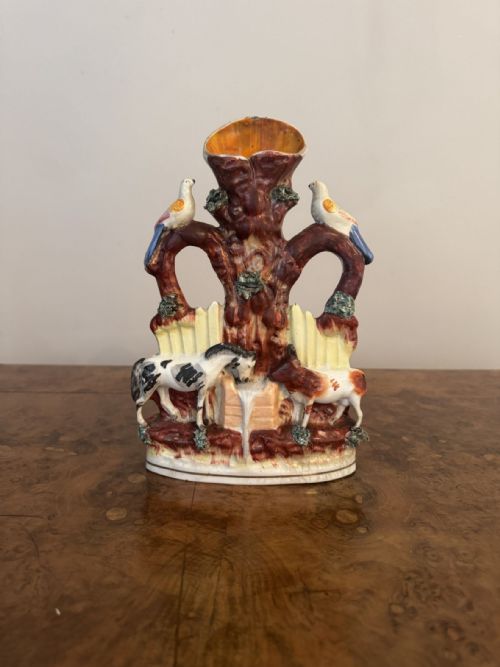
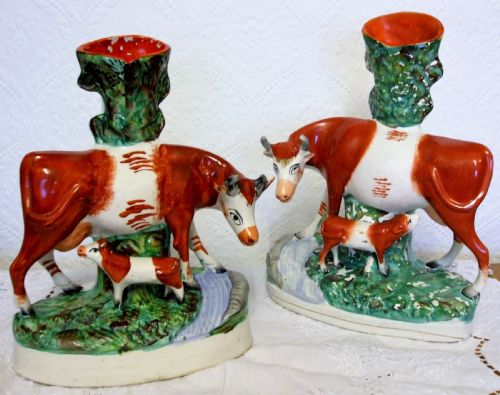
Buyers often encounter single figures alongside matching pairs depicting cows accompanied by calves, milkmaids, or milkmen. The forms range from simple flatback figures designed to stand against a mantelpiece to intricate spill holders intended for hearthside use.
Originating predominantly from English potteries, these ceramic animals display distinct regional styles spanning English folk art and Victorian manufacturing traditions. They capture a romanticized rural aesthetic that remains highly sought after by collectors of historic pottery.
Materials and technique
Potters built these figures using earthenware and pearlware bodies, shaping the ceramic material through moulding techniques before firing. Artisans then applied colourful enamel paints, glazes, and occasional gilt highlights to decorate the surfaces.
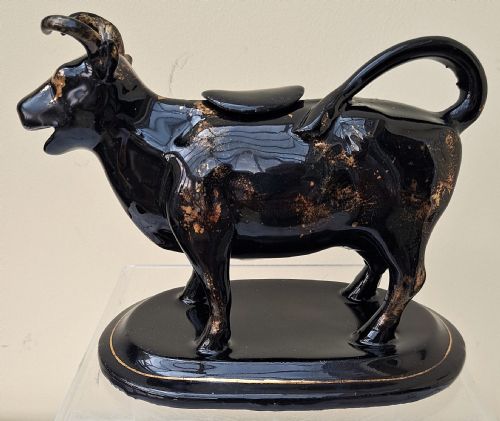
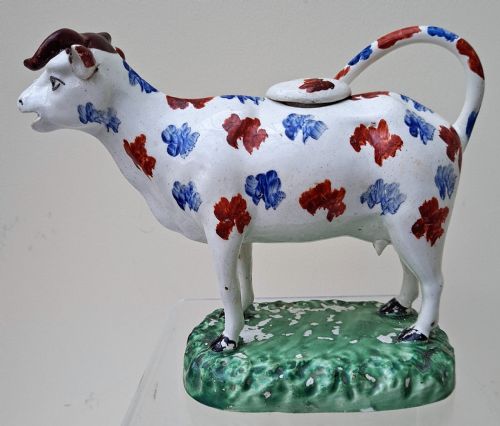
Certain pieces exhibit specialised finishes, including lustrous black Jackfield glazes or spongeware decoration. The combination of ceramic glaze and hand-painted details gives each figure its distinctive nineteenth-century character.
Antique Staffordshire Cow Retail Price Guide 2026
Typical asking prices for staffordshire cow among the pieces listed under this phrase on Sellingantiques today, from the lower quarter to the upper quarter. They describe what is for sale here now, not the wider market.
Some cows wear unexpectedly serene expressions while enduring the cheerful toil of milkmaids and calves.
Evaluating the pieces
Quality rests upon the crispness of the moulding and the skill of the hand-painted enamels, which separate ordinary examples from superior works. Finer pieces retain vibrant, well-applied glazes and delicate facial details on both the animal and accompanying figures.
The presence of original lids on creamers and the survival of matching pairs substantially elevate the desirability of a piece. Condition and the preservation of the delicate gilt or enamel decoration ultimately determine the standing of individual items.
The Antique Staffordshire Cow Glossary
- Cow creamer
- A hollow ceramic vessel modelled as a cow with an opening on the back for pouring milk or cream. These functional items often include a small lid.
- Spill vase
- A hollow ceramic holder designed to keep wooden spills near a fireplace for lighting candles or pipes. They frequently incorporate animal figures alongside the upright tube.
- Pearlware
- A refined earthenware developed in the late eighteenth century featuring a subtle bluish glaze that pools in crevices. It bridges the transition between salt-glazed stoneware and later creamware.
- Flatback
- A figure moulded with a finished front and sides while the back remains unadorned and flat. This construction allowed the ceramic to sit flush against a wall or mantelpiece.
- Jackfield
- A type of earthenware coated in a rich, dark black glaze that yields a metallic sheen. It gained popularity in English potteries during the nineteenth century.
Antique Staffordshire Cow: Frequently Asked Questions
What is an antique staffordshire cow used for?
These ceramic pieces served multiple household purposes in the nineteenth century, functioning either as practical cream jugs on the dining table or as decorative mantel ornaments. Many were specifically designed as cow creamers with removable lids for pouring milk.
Other examples incorporate vertical cylindrical sections known as spill vases or spill holders, intended to hold wooden tapers near a fireplace. Over time, their role shifted entirely from utility to decorative display.
How do you date an antique staffordshire cow?
Dating relies heavily on stylistic markers, manufacturing materials, and body types seen across different eras. Earlier pieces often utilise pearlware bodies and simpler folk art modelling typical of the Georgian period.
Later Victorian examples tend to feature glossier earthenware, brighter enamel colours, and flatback construction designed for mantelpieces. Comparing the modelling style and glaze characteristics helps narrow the decade of production.
Are these figures found in pairs?
Many figures survive today as matched pairs, frequently depicting symmetrical arrangements of cows with calves or milkmaids and milkmen. These paired groups were originally intended for balanced placement on large mantelpieces or sideboard displays.
Single figures also appear frequently in the market, often representing standalone creamers or individual spill vases. Finding a complete pair with matching decoration remains particularly appealing for collectors.
How should I care for ceramic cow creamers?
Display these glazed earthenware figures away from direct sunlight and areas subject to sudden temperature fluctuations to protect the fragile enamel paints. Dust them gently with a dry, soft cloth rather than using liquid cleaners.
If the piece functions as a creamer with a lid, handle the lid with extreme care to avoid chipping the ceramic edges. Keeping them on stable, secure surfaces ensures these historic ceramics survive safely.