







Antique Stacking Shelves
Antique stacking shelves, known here through barrister bookcases and sectional oak cases, offer modular storage with genuine period character.
Antique Stacking Shelves
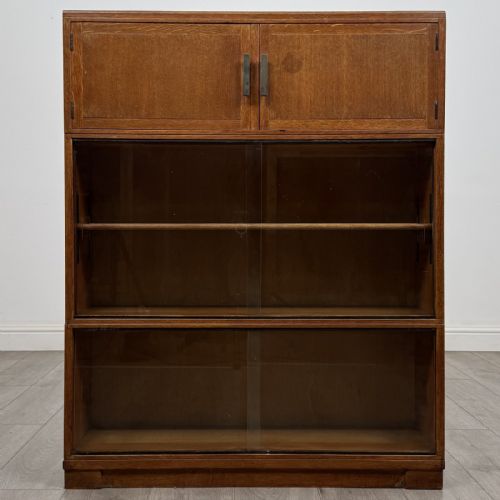
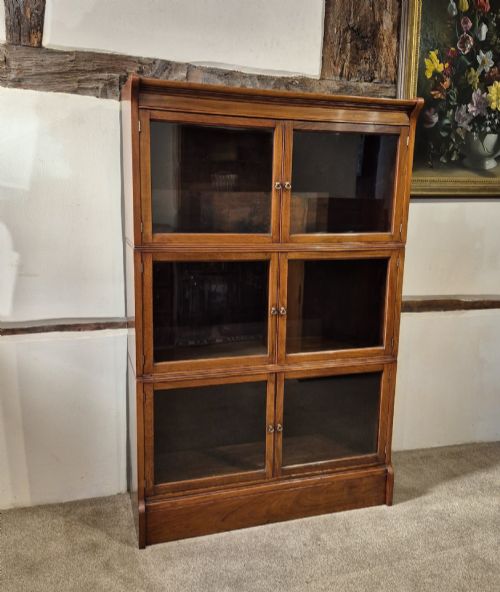
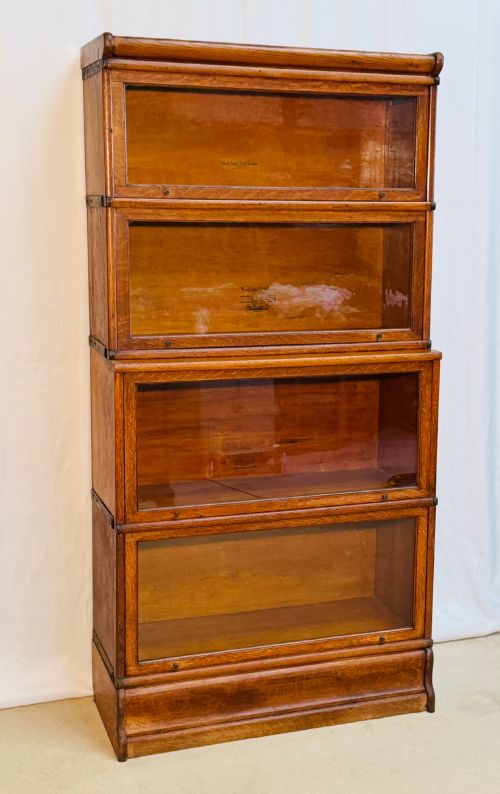
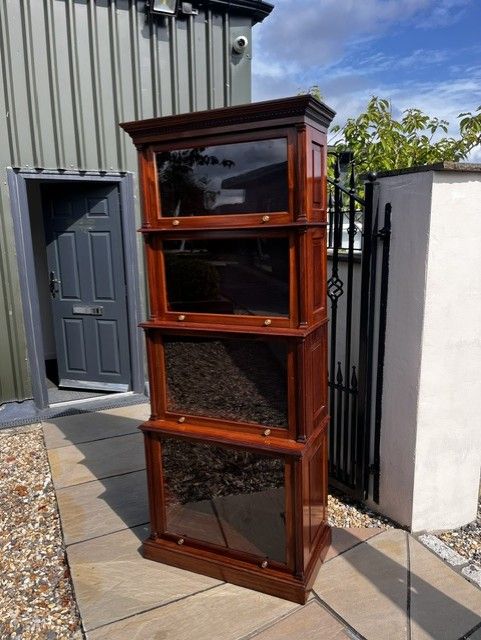
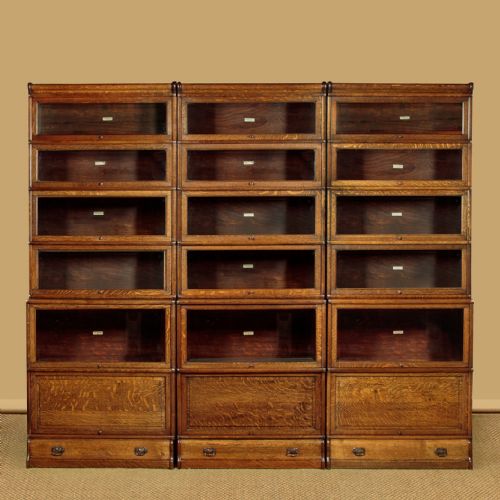
When you search for antique stacking shelves, you encounter modular bookcases designed with separate tiers that stack vertically. The versions most commonly met on this page are oak and mahogany barrister or sectional bookcases dating from the Edwardian period through the nineteen-thirties.
Makers such as Globe-Wernicke and Lebus engineered these modular bookcases for offices and libraries, allowing users to add sections as their book collections grew. You find them in configurations ranging from tall oak stacks to pairs of Edwardian mahogany sectional bookcases.
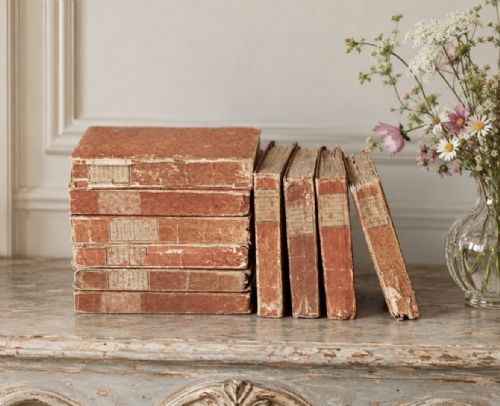
Alongside timber barrister cases, the evidence includes decorative French books constructed from paper and cardboard, demonstrating the variety of formats found within this category.
How they were made
Makers utilised solid mahogany and oak to construct the main carcass and stacking tiers, frequently incorporating glass for the lifting doors that protect the books. Brass fittings and metal mechanisms facilitate the smooth operation of the sectional glass doors.
Paper and cardboard form the materials of the decorative French books listed alongside the timber bookcases.
Antique Stacking Shelves Retail Price Guide 2026
Typical asking prices for stacking shelves among the pieces listed under this phrase on Sellingantiques today, from the lower quarter to the upper quarter. They describe what is for sale here now, not the wider market.
The listings span the Edwardian era through the nineteen-thirties, using oak, mahogany, glass, and brass.
What varies in quality
The distinction between standard commercial production and finer work lies in the choice of timber, such as solid mahogany versus plain oak, and the precision of the sectional joinery. Original condition hardware, including brass pulls and maker stamps, elevates a piece above modified or later examples.
Art Deco interpretations from makers like Heal's demonstrate specific stylistic refinements in proportion and finish that differentiate them from utilitarian office furniture.
Heal's·Globe Wernicke·Lebus
The Antique Stacking Shelves Glossary
- Barrister bookcase
- A sectional bookcase with glass doors that lift and slide inward above each shelf tier, originally designed for lawyers.
- Sectional bookcase
- A modular piece of furniture built in separate stacking tiers that lock or rest one upon another.
- Edwardian
- The period spanning the reign of King Edward VII, characterised by lighter furniture designs often drawing on earlier eighteenth-century motifs.
- Art Deco
- The dominant design style of the nineteen-thirties, favouring streamlined geometric forms and modern materials.
Antique Stacking Shelves: Frequently Asked Questions
What are stacking shelves?
Stacking shelves are modular bookcases built from separate, movable tiers that sit one on top of another. They allow you to build tall shelving units without permanent assembly.
Most examples in this category date from the early twentieth century and feature glass panel doors to protect books from dust.
How do barrister bookcases work?
Barrister bookcases use a patented mechanism where each shelf tier has a glass door that lifts upward and slides into the bookcase above the books.
This design keeps the volumes enclosed and protected while letting you access individual shelves easily without swinging doors taking up room.
Are these cases easy to move?
Because the sections lift apart individually, moving a stacking bookcase is much simpler than transporting a single heavy piece of furniture. You separate the top cornice, the glass tiers, the base, and the plinth before transit.
This modular construction was originally intended to make office relocations straightforward.
How do I date an oak stack?
Dating relies on examining the timber grain, hardware materials, and manufacturing labels stamped by makers like Globe-Wernicke or Lebus. Edwardian and nineteen-twenties pieces display specific construction methods and brass fittings typical of the era.
Art Deco examples from the thirties introduce cleaner lines and different proportions to traditional modular designs.