


Antique Spy Lithographs
Antique spy lithographs capture Victorian and Edwardian society through satirical caricature and brilliant colour.
Antique Spy Lithographs
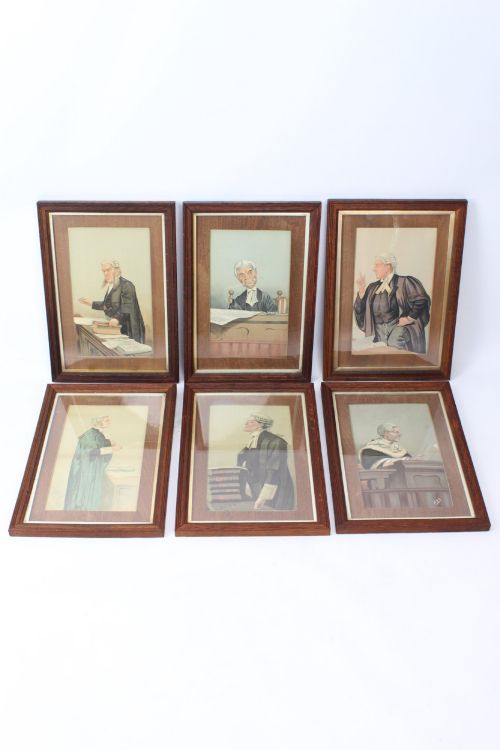
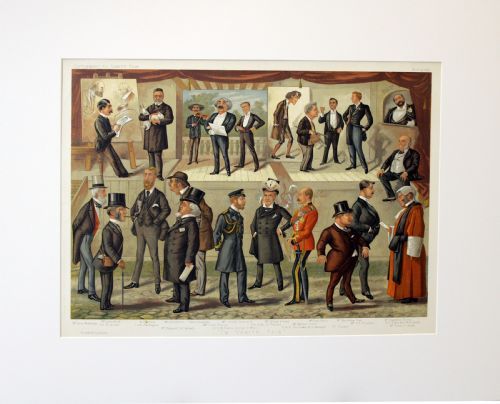
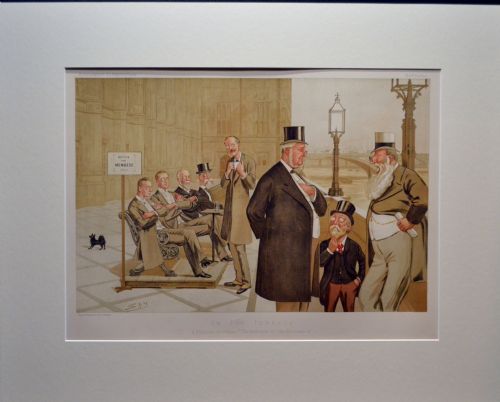
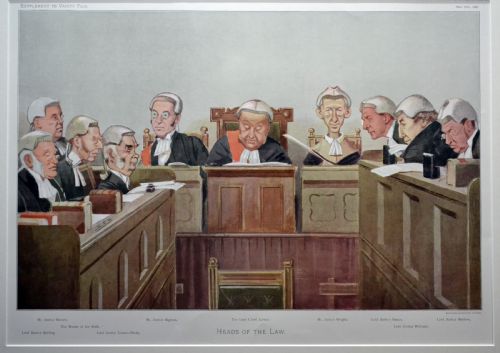
When you search for antique spy lithographs, you are looking at satirical portraits of prominent Victorian and Edwardian figures, predominantly originating from Vanity Fair magazine. These pieces capture statesmen, judges, royals, and sportsmen through the distinctive artistic lens of caricaturists who signed their work with pseudonyms such as Spy.
The selections on this page appear as single sheets, double-page spreads, or sets of varying quantities, framed in wood and glass with card mounts. They reflect the cultural landscape of the nineteenth century and the early twentieth century through distinctive portraiture.
You will encounter these works grouped by themes including politicians, legal figures, military officers, and racing scenes. Each piece serves as a historical document of social standing during the Victorian, Late Victorian, and Edwardian periods.
Materials and production methods
These works utilise ink on paper or cardboard substrates, often processed through chromolithography to achieve vibrant multi-coloured imagery. Publishers printed standard single-page formats alongside unfolded double-page spreads to accommodate larger group compositions.
Framed examples combine wood mouldings with glass panels and mount boards to protect the delicate paper surfaces from environmental degradation. The underlying medium relies on precise ink application to maintain the sharp lines of the original caricature.
Listings feature paper, wood, glass, ink, cardboard, mount board, and metal across the Victorian, Edwardian, and 1920 periods.
Evaluating the range of quality
Quality rests upon the preservation of the paper and the vibrancy of the ink, with unblemished sheets commanding greater visual clarity. Double-page formats and sets maintain distinct collectible appeal due to their scale and thematic cohesion.
The precision of the framing materials, including acid-free mount board and sound wood structures, distinguishes superior presentation from basic preservation. Original unfolded sheets preserve the integrity of the central crease without excessive wear.
The Antique Spy Lithographs Glossary
- Chromolithograph
- A multicoloured print produced through the application of multiple lithographic stones, one for each colour used. This technique creates the rich tones characteristic of nineteenth-century periodical illustrations.
- Spy
- The pseudonym used by the caricaturist Leslie Ward, whose satirical portraits defined the visual identity of Vanity Fair magazine. His signature remains the most recognisable mark on these prints.
- Double page
- An extra-large format sheet designed to unfold across the centre of the magazine, providing a wider composition for group scenes. These pieces require careful handling along the central fold.
- Mount board
- The protective cardboard border surrounding the print inside the frame, designed to keep the paper surface separate from the glass. Quality mounts prevent acid transfer over time.
- Caricature
- A portrait that exaggerates physical characteristics for satirical or humorous effect, forming the core artistic style of these historical prints.
Antique Spy Lithographs: Frequently Asked Questions
What is a spy lithograph?
A spy lithograph is a satirical portrait originally published in Victorian and Edwardian periodicals like Vanity Fair. These prints depict notable public figures with characteristic wit and artistic skill.
The term refers specifically to the caricatures produced by artists signing as Spy, alongside other contributors to the same satirical tradition.
How were these prints originally published?
Publishers issued these works inside weekly periodicals as single sheets or as unfolded double-page spreads. Readers often collected and bound them into volumes or framed them for display.
Today, individual prints survive independently from their original magazine bindings, preserved behind glass and wood frames.
Where should I hang these prints?
These framed artworks suit studies, libraries, and hallways where their historical subjects can be appreciated at close range. They pair well with traditional wooden interiors and period decor.
Ensure you place them away from direct sunlight to protect the ink and paper from fading over time.
How do I identify the period of a print?
The period is determined by the subject's attire, the publication date of the original magazine issue, and the costume conventions of the Victorian or Edwardian eras. Typography and caption styles also provide clues to the printing decade.
Most pieces date from the nineteenth century up to the early twentieth century, reflecting the peak years of satirical magazine illustration.