


Antique Sports Jewellery
Antique sports jewellery captures the spirit of field, pitch and track through brooches, charms and medals fashioned in gold and silver.
Antique Sports Jewellery
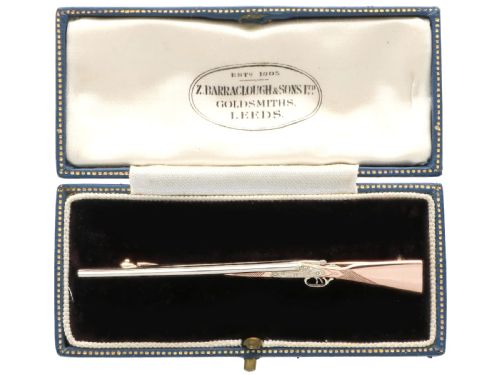
Antique sports jewellery encompasses wearable pieces celebrating pastimes such as tennis, football, cricket, hunting, cycling and curling from the Victorian, Edwardian and Art Deco eras. Buyers searching for antique sports jewellery encounter a rich array of brooches, stick pins, charms, pendants, watch chains, fobs, bracelets and sports medals.
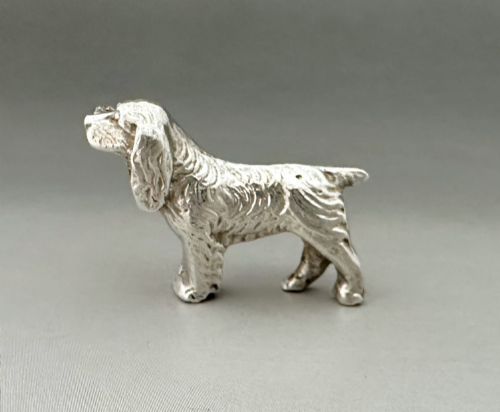
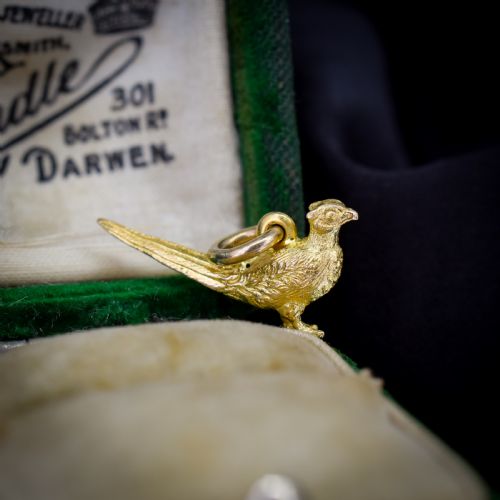
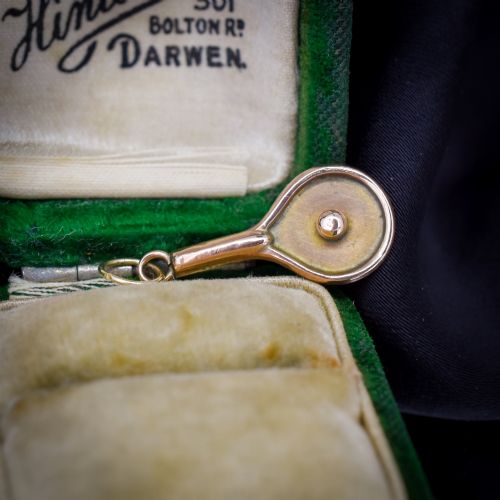
The pieces on this page lean heavily into animal subjects and sporting equipment, including silver spaniel dog brooches, tennis racket charms, and enamel duck or pheasant brooches. These items reflect the leisure pursuits and competitive spirit of the nineteenth and twentieth centuries.
Most items stem from distinct periods such as the Edwardian era and the 1920s, showing how ornamentation intertwined with athletics and country sports. Collectors find everything from pressed brass cycling brooches with working wheels to diamond-accented cockerel bar brooches.
Materials and construction
Makers utilised precious metals including 9ct gold, 15ct gold, sterling silver, and platinum to form the structural foundations of these sporting items. Rose gold detail and yellow gold provide warm backdrops for intricate depictions of fauna and sporting gear.
Enamel work adds vivid colour to animal feathers, game birds, hunting scenes, and football medals, often combined with diamonds, rubies, or pearls. Pressed brass and silver serve in mechanical or novelty pieces like cycling brooches and darts board watch fobs.
Listings feature items spanning the Victorian, Edwardian, Art Deco, and mid-century periods, fashioned in silver, 9ct gold, and enamel.
Factors of distinction
The refinement of the enamel work and the precision of the metal casting distinguish finer examples from standard production. Pieces incorporating precious gems like diamonds and rubies alongside detailed hand-painting demonstrate superior workmanship.
Historical provenance, such as engraved dates on medals or named makers and towns like David McGregor of Perth, elevates individual items. The complexity of the subject matter, such as working wheels on a cycling brooch or multi-coloured hunting scenes on bracelets, sets apart the most accomplished objects.
David McGregor
The Antique Sports Jewellery Glossary
- Stick pin
- A long pin with a decorative head worn upright in a cravat, lapel or tie. These often feature miniature sporting motifs or animals.
- Watch fob
- A short chain or ornament attached to a pocket watch, frequently taking the form of a commemorative sports medal or novelty item.
- Essex crystal
- Reverse-carved and painted rock crystal displaying a three-dimensional animal or subject when viewed from the front. It appears frequently in high-end pins.
- Enamel
- Vitrified glass paste fused to metal under high heat to produce durable, coloured decoration. It brings birds and hunting scenes to life.
- Medal medallion
- A large metallic coin-like award struck or engraved for athletic victories in football, cricket or curling. These often hang from pendants or watch chains.
Antique Sports Jewellery: Frequently Asked Questions
How were sports medals worn?
Sports medals from the Edwardian and Art Deco periods were frequently attached to watch chains and fobs carried by gentlemen in waistcoat pockets. They could also be suspended from neck chains as pendants.
Winners wore these heavy silver and gold medallions to display their prowess in local football leagues, curling matches, and cricket tournaments.
How do I care for enamelled pieces?
Enamelled brooches and watch fobs require gentle handling because the glass paste can chip or crack if struck hard against a surface. Store them separately in padded boxes away from moisture.
Clean them with a soft, dry cloth rather than liquid chemical dips, which can damage the delicate metal settings and coloured surfaces.
How do I identify Edwardian sporting items?
Edwardian sporting pieces often display hallmarks indicating the early 1900s alongside distinct design motifs like flowing naturalism, pastel enamel, and high-carat gold settings. Look for stylistic cues such as hunting bugles and detailed bird brooches.
Engraved dates on medals and fobs from this era provide a clear chronological anchor for the item's manufacture and presentation.