




Antique Sports Brooch
An antique sports brooch captures pursuits of the field and track in precious metals and enamel.
Antique Sports Brooch
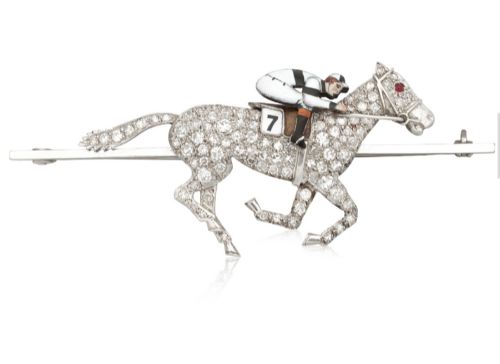
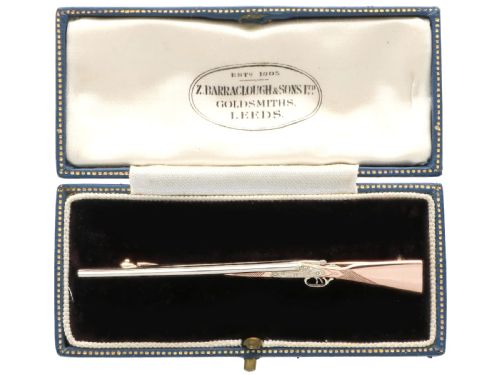
When you search for an antique sports brooch, you look at miniature tributes to field sports, canine companions, and cycling, captured in gold and silver. These pieces date across the Victorian, Edwardian, and mid-century periods, reflecting the sporting passions of their eras.
The versions you meet most frequently on this page take the form of bar brooches and stick pins depicting dogs, birds, and hunting gear. They span the nineteenth century through to the nineteen-fifties, fashioned by makers working in silver, gold, and enamel.
How they were made
Makers shaped these jewels using nine-carat and fifteen-carat gold, sterling silver, and pressed brass, often enhancing the designs with polychrome enamel. Details such as feathers, fur, and working wheels demonstrate precise metalwork and mechanical ingenuity.
Gems including diamonds, rubies, and pearls were set into gold and platinum to highlight subjects like ducks, cockerels, and foxes. Essex crystal also appears, reverse-painted to show animal subjects with remarkable depth.
Antique Sports Brooch Retail Price Guide 2026
Typical asking prices for sports brooch among the pieces listed under this phrase on Sellingantiques today, from the lower quarter to the upper quarter. They describe what is for sale here now, not the wider market.
What varies in quality
The fineness of hand-painted enamel and the cleverness of mechanical elements set the finest examples apart from simpler pressed pieces. Artisans who achieved lifelike plumage and accurate anatomical proportions in creatures created the most desirable items.
Material choice dictates the upper tier of the range, where fifteen-carat gold, platinum, and diamonds replace base metals and brass. Signed or inscribed trophies, such as dated hunting items, carry distinct historical documentation.
The Antique Sports Brooch Glossary
- Bar brooch
- A thin metal rod with a pin mechanism on the back, often serving as a mount for miniature sporting figures.
- Essex crystal
- A convex rock crystal backing a reverse-painted miniature, creating a magnified three-dimensional image.
- Stick pin
- A long pin with a decorative head, worn upright in a lapel, cravat, or tie.
- Hunting bugle
- A horn motif rendered in precious metal, commonly utilised in pins and brooches commemorating the chase.
Antique Sports Brooch: Frequently Asked Questions
What subjects do these brooches show?
These pieces depict hunting horns, bicycles, spaniels, ducks, pheasants, otters, and foxes.
They reflect rural pursuits and country sports popular during the Victorian and Edwardian periods.
Are these pieces made of solid gold?
Many examples are fashioned from nine-carat, fourteen-carat, or fifteen-carat gold, whilst others utilise sterling silver or pressed brass.
Makers frequently combined these metals with enamel and gemstones to render the subjects realistically.
How were stick pins worn historically?
Stick pins were secured vertically into cravats, ties, or the lapels of coats and waistcoats.
The long pin allowed the decorative head to sit prominently against the fabric.
Can I date a piece by its metal?
Metals provide a general guide, with fifteen-carat gold appearing more frequently in earlier Edwardian and Victorian pieces.
Nine-carat gold and silver span the nineteenth century through to mid-century items.