





Antique Spirit Lock
An antique spirit lock secures fine bottles under a rigid metal bar or within a fitted box, keeping precious liquor safe.
Antique Spirit Lock
An antique spirit lock encompasses the various locking mechanisms and fitted cases designed to secure barware, decanters, and bottles from unauthorized pouring. These pieces originate predominantly from the Victorian, Edwardian, and Art Deco periods, spanning the nineteenth and early twentieth centuries.
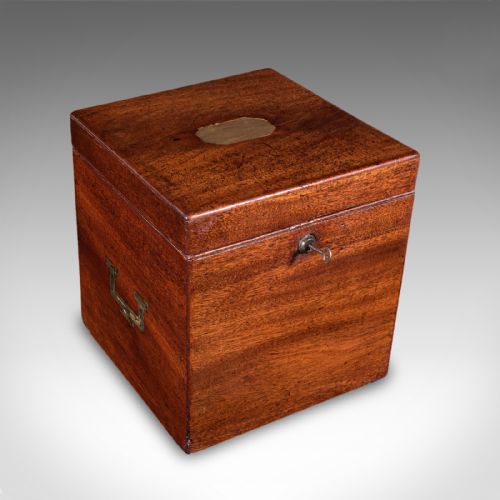
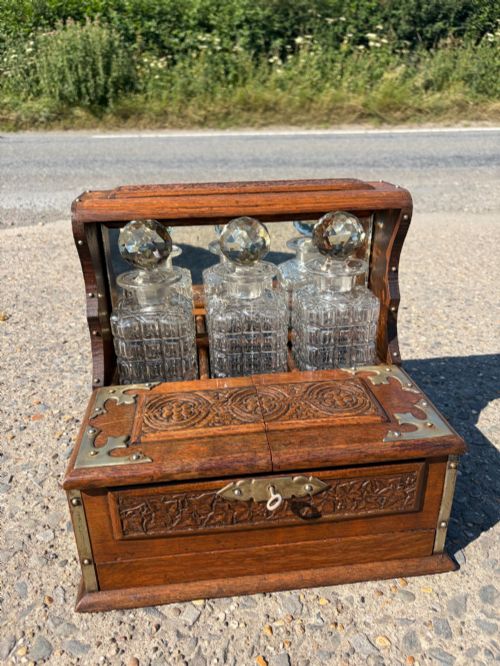
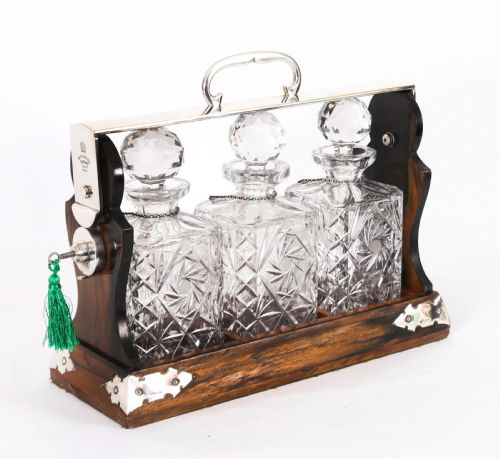
The version most commonly met on this page is the tantalus, a wooden frame fitted with a locking metal bar that holds two or three cut crystal decanters firmly by their stoppers. Alongside these frames appear substantial storage boxes, locking hip flasks, and leather-cased spirit sets.
Makers housed these locking devices in durable woods such as oak, walnut, and coromandel, often mounting them with brass and lining the interiors for games or glasses. Such items served households and travellers who wished to restrict access to expensive spirits while displaying them on sideboard or desk.
Materials and construction
Craftsmen built the primary frames and storage boxes from dense hardwoods, utilising oak, walnut, and coromandel wood for structural integrity and rich grain. These timber housings often featured brass mounts, hinges, and escutcheons to reinforce corners and secure locking mechanisms.
The accompanying vessels consist of cut glass and cut crystal decanters, paired with silver plate or sterling silver hardware and mounts. Specialised locking systems, such as those by Bramah, required precise metalworking to engage the drop bars and prevent bottle removal while unlocked.
Antique Spirit Lock Retail Price Guide 2026
Typical asking prices for spirit lock among the pieces listed under this phrase on Sellingantiques today, from the lower quarter to the upper quarter. They describe what is for sale here now, not the wider market.
Victorian hosts relied on these locking frames so servants could not sample the brandy while dusting the sideboard.
Judging quality and craftsmanship
Quality rests upon the execution of the locking mechanism and the integrity of the housing timbers. Superior examples employ sophisticated locks by noted makers and feature robust frames of figured oak, walnut, or coromandel without warping or clumsy repairs.
The refinement of the glassware and metal fittings distinguishes finer pieces from standard production. Matching sets of cut crystal decanters with original stoppers, substantial silver-plated or sterling mounts, and integrated accessories like games compendiums elevate the overall standard.
J Dixon·Hukin and Heath·Betjemann
The Antique Spirit Lock Glossary
- Tantalus
- A locking drink stand that holds decanters by their necks beneath a metal bar, preventing the removal of bottles when secured. The name derives from the mythological figure punished by eternal thirst.
- Bramah Lock
- A high-security barrel lock invented by Joseph Bramah, frequently found on better-quality nineteenth-century boxes and tantalus frames. It uses small sliding slips rather than traditional levers.
- Coromandel Wood
- A dense, heavily figured exotic timber from Asia with dark brown and black stripes, utilised for luxury Victorian cases and tantalus units. It provides a striking, decorative surface.
- Decanter Set
- A collection of matching glass bottles designed to hold spirits, often housed within a fitted wooden box or secured inside a locking frame. These sets typically include two or three vessels.
Antique Spirit Lock: Frequently Asked Questions
What is an antique spirit lock?
An antique spirit lock is a mechanical device or locking frame designed to secure liquor bottles and decanters against unauthorized access. These items include tantalus frames, locking storage boxes, and secure hip flasks.
Most examples date from the Victorian and Edwardian eras, combining practical security with handsome display. They utilise woods like oak and coromandel alongside cut crystal and metal hardware.
How did a tantalus work?
A tantalus operates by positioning a metal locking bar across the glass stoppers of decanters seated in a wooden base. When the key is turned, the bar lifts or swings open to release the bottles.
While locked, the stoppers cannot be removed, which prevents anyone from pouring the contents without the key. This allowed hosts to leave spirits on sideboard display safely.
How do I date an oak tantalus?
Dating an oak tantalus involves examining the style of the woodwork, the type of lock mechanism, and any accompanying hallmarks. Most pieces on record stem from the late Victorian and Edwardian periods.
Earlier examples often feature heavy brass mounting and Bramah locks, while later twentieth-century pieces show simpler Art Deco lines or standard plated hardware.
What woods were used for spirit cases?
Spirit cases and tantalus frames were constructed using durable hardwoods suited to daily handling and heavy glass weights. Oak is the most frequently encountered timber in both plain and figured varieties.
Finer luxury pieces utilise rich exotic woods such as walnut and coromandel, sometimes enhanced with inlay work or brass detailing to complement formal dining rooms.