






Antique Spirit Kettle
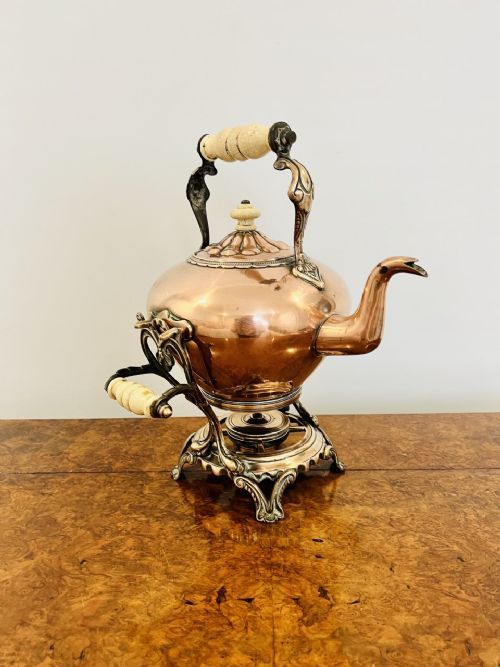
An antique spirit kettle is a hot water vessel mounted on its own chassis with a burner beneath, designed to maintain tea service at table.
Antique Spirit Kettle
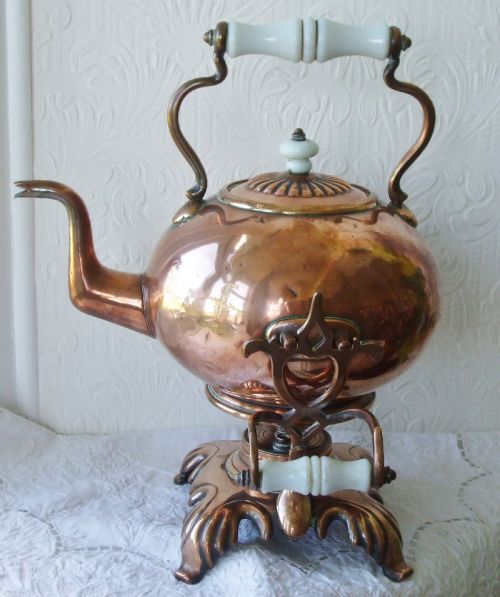
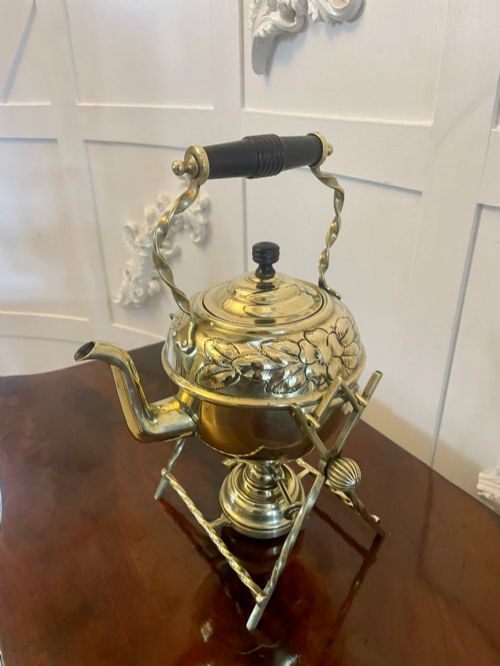
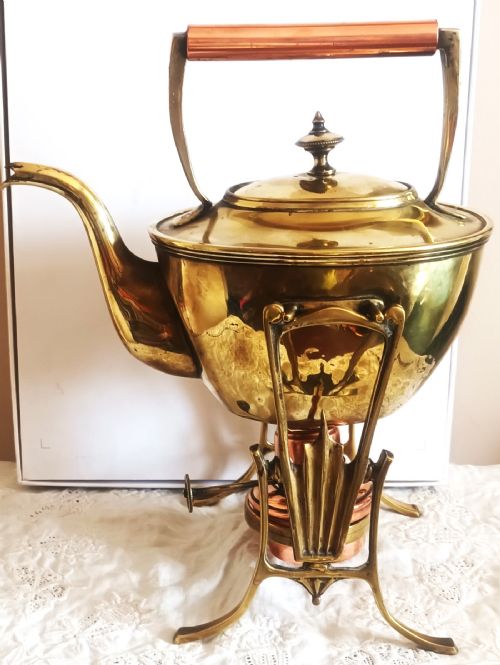
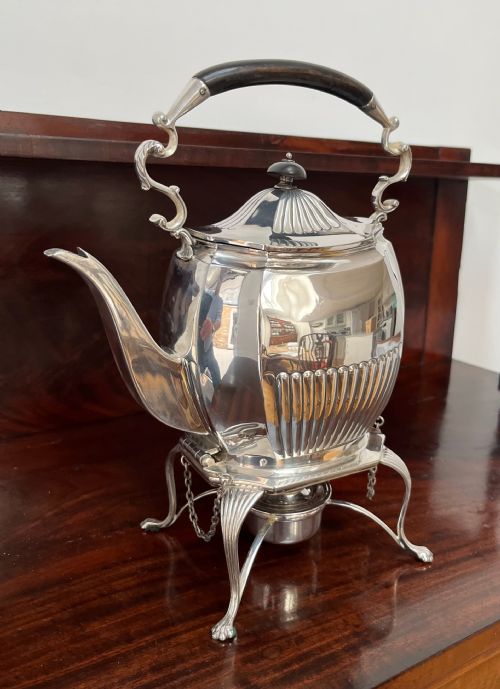
When searching for an antique spirit kettle, you encounter vessels produced across the Victorian, Edwardian, and Arts and Crafts periods, running from the mid nineteenth century into the twentieth. The forms on this page include standard spirit kettles on stands, hanging variants, and tea urns equipped with burners.
Brass, copper, and silver plate dominate the offerings, frequently paired with wood, ebony, bone, or wrought iron on handles and insulators. Most examples date from the late nineteenth century to roughly nineteen thirty, capturing Victorian through Georgian Revival aesthetics.
Materials and construction
Metals such as brass, copper, and silver plate form the primary body of these vessels, shaped through period manufacturing techniques. Makers utilised secondary elements like ebony, bone, and wood to insulate handles against the heat of boiling water.
Stands and burners accompany the kettles, often constructed from matching metals and wrought iron to secure the vessel safely over its flame during tea service.
Antique Spirit Kettle Retail Price Guide 2026
Typical asking prices for spirit kettle among the pieces listed under this phrase on Sellingantiques today, from the lower quarter to the upper quarter. They describe what is for sale here now, not the wider market.
Materials recorded on this page include brass, copper, silver plate, wrought iron, ebony, bone, and wood.
Assessing build and design
The distinction between standard utility items and finer pieces lies in the integration of the stand, the weight of the metal, and the refinement of stylistic details such as Aesthetic Movement or Arts and Crafts motifs. Heavier gauge copper and substantial silver plating indicate superior production standards.
The presence of original burners, matching stands, and functional insulating grips in bone or ebony elevates the integrity of the piece. Simpler dresser style brass models contrast with elaborately styled Georgian Revival or Edwardian specimens.
William Soutter And Sons·Fenton Brothers·Frederik Ellis Tim And Co·Walker And Hall
The Antique Spirit Kettle Glossary
- Spirit kettle
- A water vessel mounted on a metal stand above a small spirit burner designed to keep water hot.
- Spirit burner
- The small fuel container housed beneath the kettle stand to maintain the water temperature.
- Silver plate
- A base metal layer coated with a thin layer of silver, common in Edwardian tea ware.
- Aesthetic Movement
- A late nineteenth century design style emphasising visual beauty over narrative content.
- Samovar
- A large heated metal container traditionally used to boil water for tea.
Antique Spirit Kettle: Frequently Asked Questions
What is an antique spirit kettle used for?
These vessels provided a continuous supply of hot water during formal tea service without requiring trips to the kitchen. The integrated burner kept the contents simmering at the table.
Guests or hosts could top up teapots directly from the kettle while seated, making them central to nineteenth and early twentieth century hospitality.
How do I date an antique spirit kettle?
Dating relies on stylistic markers such as Victorian ornamentation, Edwardian silver plating, or Aesthetic Movement lines. Materials like heavy copper or specific maker marks also help narrow down the period of manufacture.
Most surviving examples date between eighteen fifty and nineteen thirty, reflecting the height of formal tea drinking customs.
Are brass and copper kettles safe to use?
While period kettles were designed for boiling water, many antique vessels are now acquired primarily for display or decorative collections. Modern use requires careful inspection of internal linings, particularly on older brass and copper pieces.
Silver plated versions also need checks to ensure the plating remains intact and clean before any practical application.
What is the difference between a kettle and a samovar?
A spirit kettle typically tilts on a pivoted stand above a burner to pour water into a separate teapot. A samovar is usually a larger, upright urn featuring an internal heating tube or spigot.
Both items served the same fundamental purpose of providing hot water for tea but differed significantly in scale and mechanical setup.