


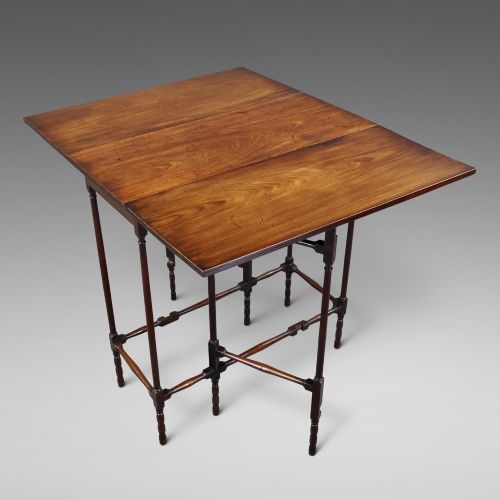
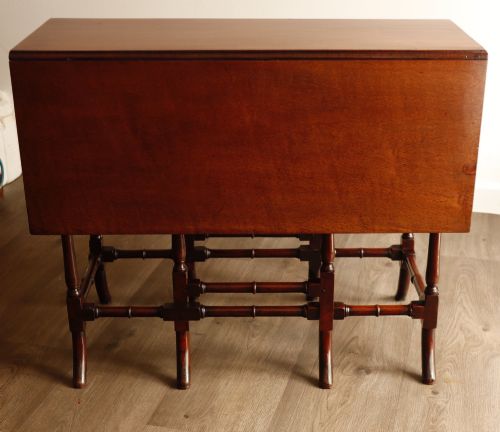


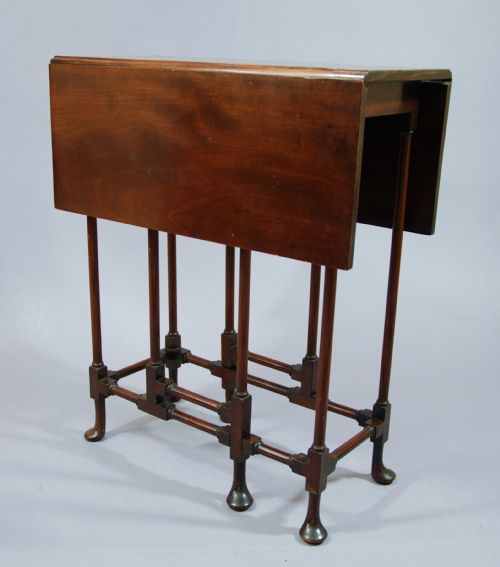

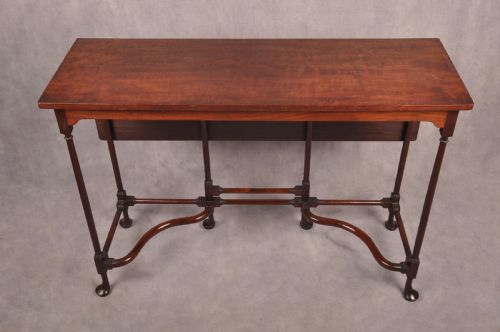
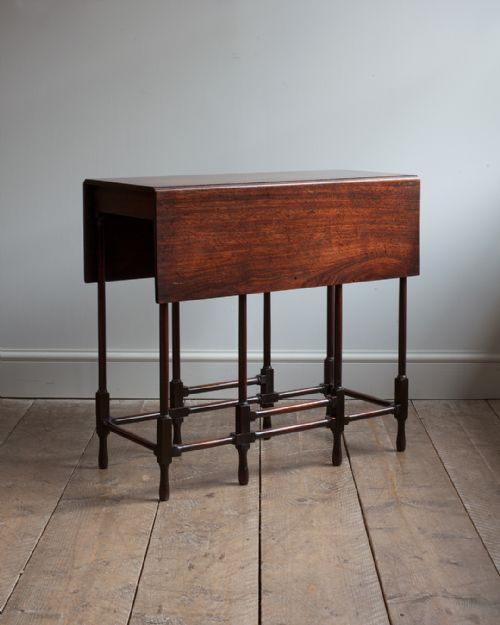


Antique Spider Leg Tea Table
An antique spider leg tea table offers delicate proportions and folding leaves, making it a subtle folding surface for a parlour.
Antique Spider Leg Tea Table
An antique spider leg tea table is a slender, gateleg occasional form designed with extraordinarily thin turned legs linked by fine stretchers. When people search for an antique spider leg tea table, they are looking for light, portable wooden tables that expand via drop leaves to hold tea service or small lamps. The examples met on this page span the eighteenth century, the Georgian period, the nineteenth century, and the Edwardian era.
The dominant material found across these listings is mahogany, complemented by timber and occasional brass fittings or paint finishes. Form variations include drop leaf tables, occasional tables, side tables, and Pembroke tables, frequently associated with Georgian and Chippendale styles. These pieces bridge the gap between functional furniture and decorative woodwork.
Makers and craftsmen from the eighteenth and nineteenth centuries engineered these slim frames to maximise legroom while maintaining structural stability through intricate bracing. The resulting tables suit smaller sitting rooms where heavy furniture overwhelms the floor plan.
How they were made
Makers built these tables primarily from solid mahogany and native timber, turning the slender uprights on a lathe to achieve the characteristic spindly profile. The structural integrity relies entirely on a tight network of delicate wooden stretchers that brace the long, thin legs against lateral movement.
Drop leaves and drop flaps operate on hinged gateleg actions, allowing the surface area to double when extended and fold flat for storage against a wall. Carpenters joined the frame using traditional mortise and tenon joinery scaled down to miniature proportions to fit the narrow members.
Antique Spider Leg Tea Table Retail Price Guide 2026
Typical asking prices for spider leg tea table among the pieces listed under this phrase on Sellingantiques today, from the lower quarter to the upper quarter. They describe what is for sale here now, not the wider market.
Some spiders weave webs to catch flies, but these wooden spider legs simply catch every visitor's eye.
What varies in quality
Quality rests in the crispness of the wood turning on the slender legs and the exactness of the stretcher placement, which determines whether the frame remains rigid over centuries of folding. Superior examples display dense, figured mahogany grain on the top leaves rather than plain timber.
The sophistication of the drop leaf mechanism and the subtlety of the edge moulding distinguish finer workshop output from simpler utilitarian production. Well-balanced proportions ensure the table stands firmly despite the extreme thinness of the structural supports.
The Antique Spider Leg Tea Table Glossary
- Spider leg
- A descriptor for furniture featuring exceptionally thin, turned vertical supports linked by multiple low stretchers. This design minimises visual weight in compact rooms.
- Gateleg table
- A table with hinged leaves supported by legs that swing outward like a gate. This allows the surface to expand or contract.
- Drop leaf
- A hinged flap attached to a fixed table top that raises to provide extra surface area. When lowered, it reduces the footprint of the furniture.
- Pembroke table
- A small rectangular table with two hinged drop leaves on the opposing long sides. It often incorporates a small drawer.
- Stretcher
- A horizontal wooden bar that connects and braces vertical legs. In these tables, multiple stretchers provide essential rigidity to thin turned supports.
Antique Spider Leg Tea Table: Frequently Asked Questions
What is a spider leg table?
A spider leg table is a lightweight occasional table featuring remarkably thin turned wooden legs and numerous connecting stretchers.
These pieces were designed for easy movement around a drawing room and usually incorporate drop leaves to save space when not in use.
How do you date an antique spider leg table?
Dating relies on identifying timber species, hardware types, and the turning style of the legs across periods like the Georgian era or the Edwardian period.
Eighteenth-century examples typically show dense mahogany and hand-turned supports, while later nineteenth-century pieces display different construction nuances.
Were these tables used for tea?
Yes, drop leaf and occasional variants served as convenient surfaces for holding tea equipage in domestic parlours.
The folding leaves allowed servants to expand the surface quickly during gatherings and fold it away afterward.
How do I care for mahogany spider legs?
Protect the thin wooden legs and stretchers by placing the table away from direct heat sources and sudden humidity changes.
Dust gently with a dry cloth and avoid applying heavy commercial polishes that build up on delicate turned details.