




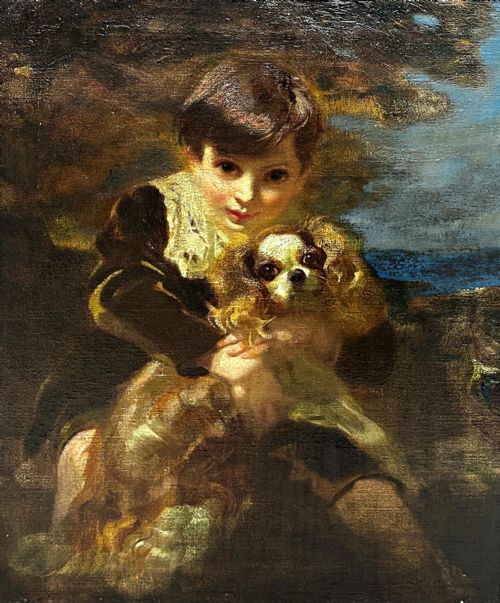

Antique Spaniel Artwork
Antique spaniel artwork captures the steadfast charm of working dogs and beloved pets through centuries of fine painting, drawing and needlework.
Antique Spaniel Artwork
When you search for antique spaniel artwork, you encounter a specialised selection of canine portraiture spanning from the eighteenth century into the twentieth century. These pieces record individual animals, sporting scenes and domestic companions through oil paintings, watercolours, pencil drawings and needlework.
The nineteenth century yields the highest volume of examples on this page, ranging from intimate pencil sketches of ladies and their pets to large oil paintings of sporting dogs in landscapes. Works often capture specific breeds including King Charles spaniels, cocker spaniels and clumber spaniels alongside their owners or quarry.
The variety extends to twentieth-century depictions, showing mid-century oil paintings and etchings that maintain the long tradition of canine portraiture. Whether executed as detailed sporting art or gentle domestic studies, these pieces reflect the enduring bond between humans and spaniels.
Markers of quality
Quality rests in the precision of the drawing and the fidelity with which the artist captures the anatomy and distinct character of the spaniel. Masterful handling of light, depth in landscape backgrounds and the psychological presence of both human and animal subjects elevate a piece above standard decorative work.
The preservation of the original medium, whether pigment on canvas, delicate watercolour on paper, or tightly worked needlework in its period frame, determines the integrity of the surviving piece. Works attributed to recorded artists or displaying strong provenance carry distinct weight through documented skill and period context.
Listings feature works spanning the eighteenth, nineteenth and twentieth centuries, encompassing oil paintings, watercolours, pencil drawings, etchings and needlework.
Herbert Dicksee·William Barraud·Mabel Gear·Charles Bilger Spalding·Frederick Tayler·George Stubbs·Samuel John Carter·Frank Owen Salisbury·William Albert Clark·Dean Wolstenholme·Francis Alleyne·B A Howe
The Antique Spaniel Artwork Glossary
- Berlin work
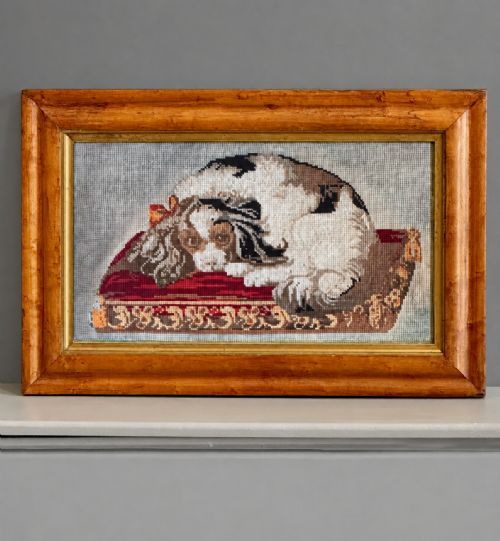
- A style of counted-thread embroidery popular in the nineteenth century using brightly coloured wools on canvas. It allowed makers to produce highly detailed pictorial scenes, including portraits of dogs.
- Etching
- A printmaking technique where lines are bitten into a metal plate with acid before ink is applied and pressed onto paper. This method produces fine, crisp lines ideal for detailed animal studies.
- Oil on panel
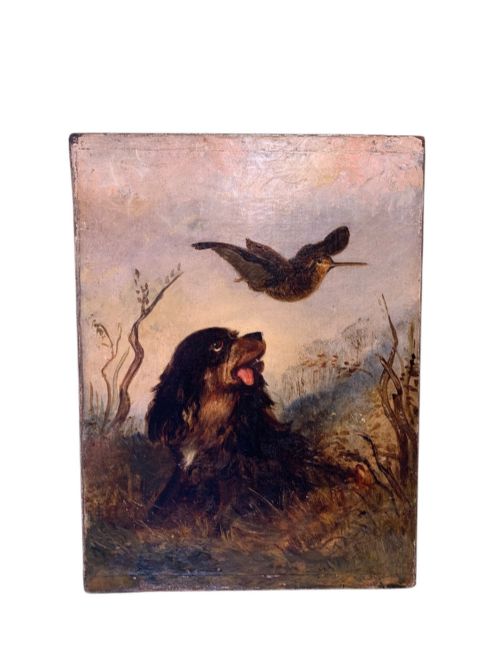
- A painting executed on a wooden board rather than stretched canvas. This rigid support provides a smooth, stable surface favoured for detailed portraiture.
- Victorian sporting art
- A genre of painting dedicated to field sports, horses and gundogs. It combines accurate animal husbandry with landscape composition.
Antique Spaniel Artwork: Frequently Asked Questions
How do I date an old dog painting?
Dating relies on stylistic clues within the artwork, including the cut of human clothing, the style of the framing, and the specific painting techniques employed by the artist. Many pieces carry signatures, dates or attribution records that place them precisely within the eighteenth, nineteenth or twentieth centuries.
The materials themselves offer further evidence. Canvases, wood panels, paper types and original frames reflect the manufacturing standards and aesthetics of their specific period of origin.
What is Berlin work needlework?
Berlin work is a type of nineteenth-century needlework that used patterned charts and brightly coloured wools to create intricate tapestries. Crafters stitched these designs onto canvas to produce decorative cushions, wall hangings and pictures.
Subjects frequently included popular pets like King Charles spaniels, rendered with remarkable texture and colour using specialised wool threads.
How should I display antique paper artwork?
Watercolours, drawings and etchings on paper require protection from direct sunlight to prevent fading of the pigments and discolouration of the paper support. Framing should utilise conservation-grade materials with UV-filtering glass to shield the delicate medium from environmental damage.
Maintaining stable temperature and humidity levels in the room prevents moisture damage, warping and foxing on the antique paper surfaces.
What is the difference between sporting art and pet portraits?
Sporting art places spaniels within the active context of field sports, pheasant shooting and wooded clearances alongside sportsmen and gundogs at work. These compositions emphasise action, landscape and the working partnership between dog and handler.
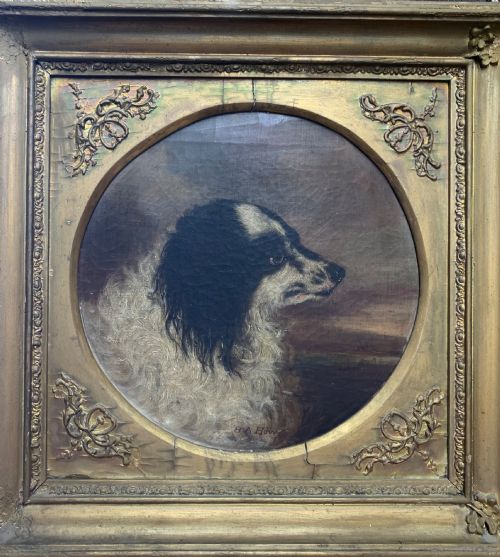
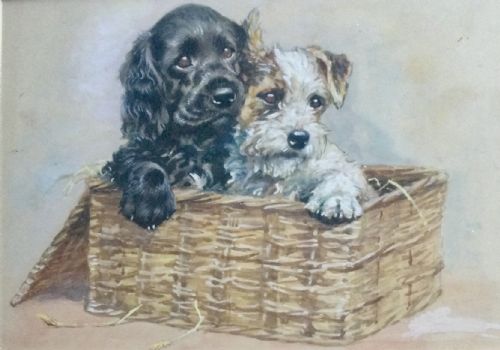
Pet portraits focus more intimately on the individual animal, often depicting a named favourite dog inside a domestic interior or beside its owner as a cherished companion.