


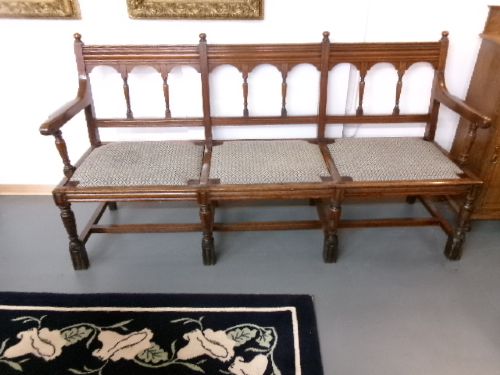
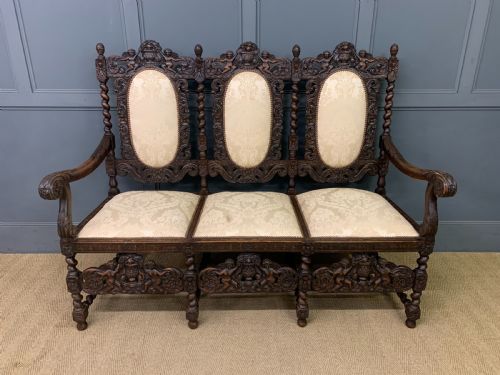
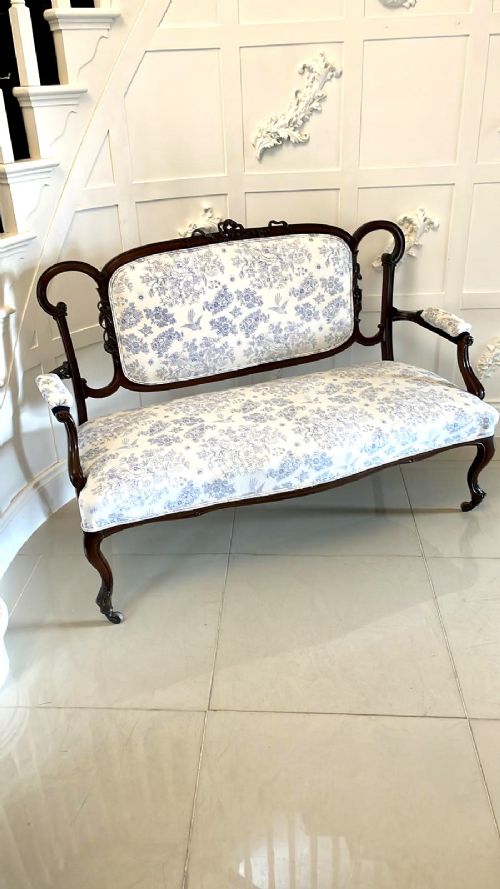
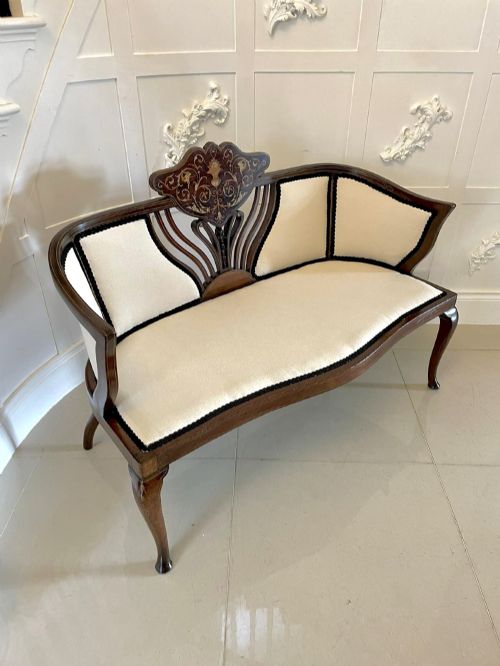

Antique Sofa Benches
These antique sofa benches bring together centuries of seating forms, offering robust timber frames and upholstered comfort for everyday rooms.
Antique Sofa Benches
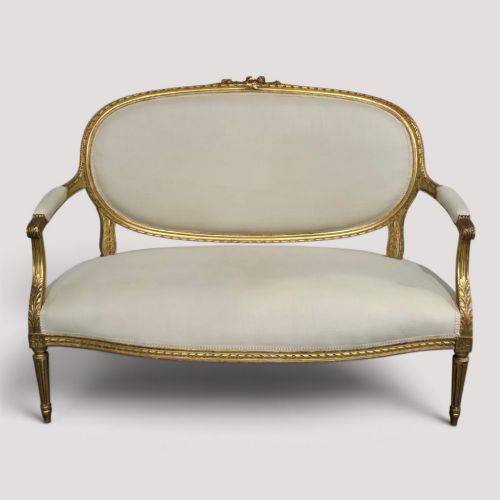
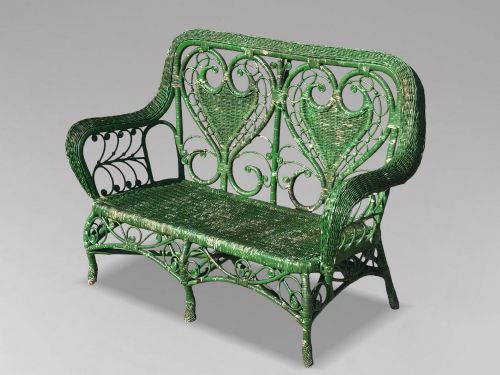
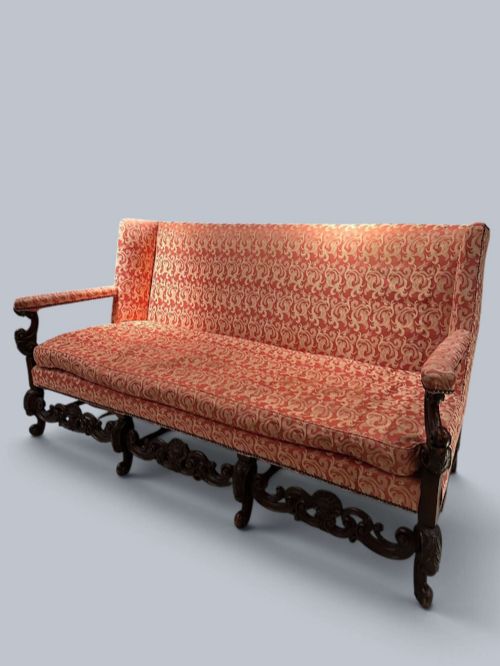
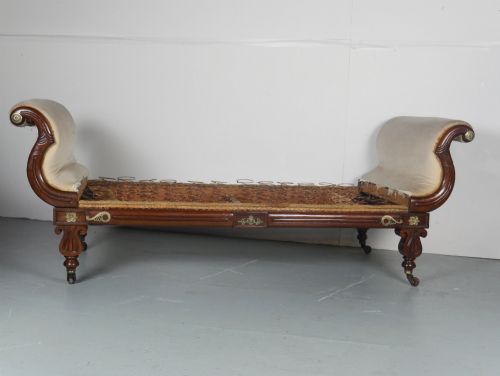
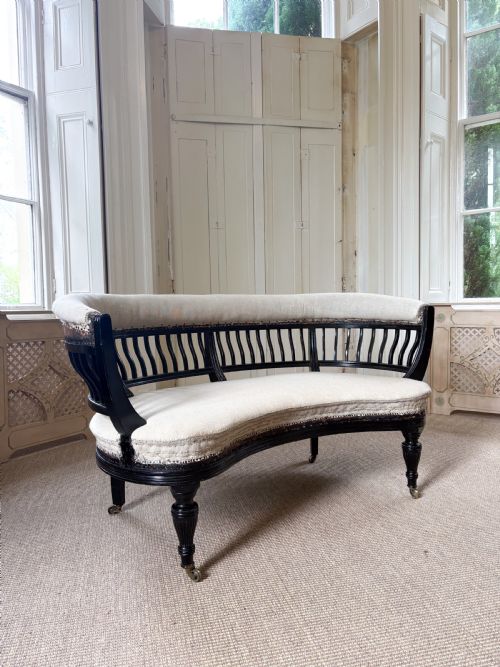
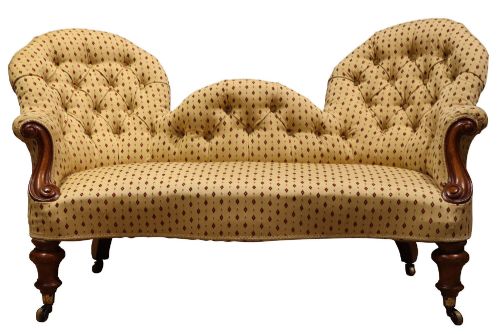
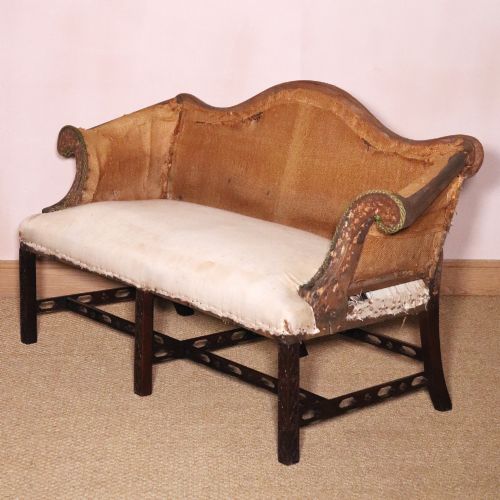
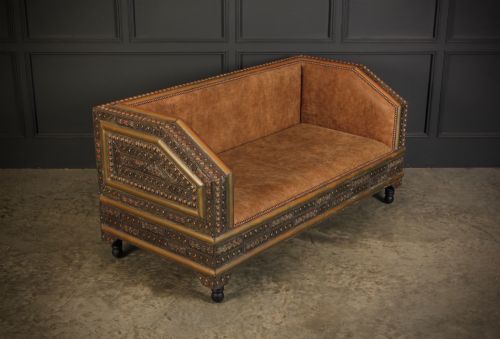
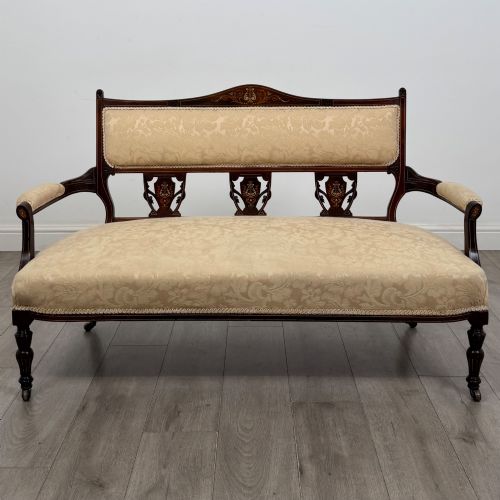
Antique sofa benches encompass a broad sweep of seating forms, ranging from solid timber benches and settle styles to upholstered Victorian and Edwardian settees. When you search for antique sofa benches, you encounter diverse regional iterations including French daybeds, Regency giltwood pieces, and walnut double-chair back designs.
The pieces appearing on this page stretch chronologically from the eighteenth century through the Victorian and Edwardian eras up to the nineteen-twenties. Common configurations include two-seater couches, salon sofas, window seats, and daybeds constructed for reclining or formal drawing-room use.
Origin variations run from British mahogany frames to continental European painted cane daybeds and ebonised salon seating. Buyers frequently meet nineteenth-century rosewood and walnut frames alongside lighter satinwood and mahogany Edwardian examples.
How they were made
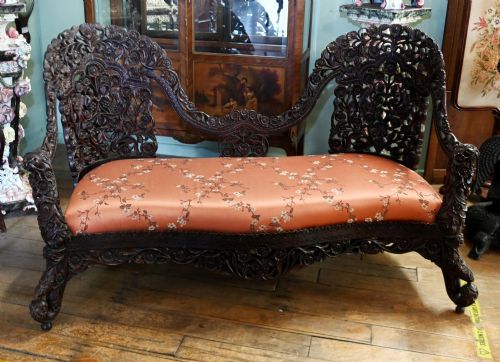
Cabinetmakers constructed these frames using dense hardwoods such as mahogany, walnut, rosewood, and oak, often enriching surfaces with intricate carved details, inlay, or parcel gilding. Many pieces incorporate bentwood techniques or cast iron components, particularly within daybeds and specialised seating.
Upholstery methods utilised traditional stuffing beneath fabrics including silk, patterned textiles, and cane panels set into wooden frameworks. Frames frequently showcase period stylistic influences such as Chippendale backs, Louis XVI painted woodwork, and Regency giltwood carving.
Antique Sofa Benches Retail Price Guide 2026
Typical asking prices for sofa benches among the pieces listed under this phrase on Sellingantiques today, from the lower quarter to the upper quarter. They describe what is for sale here now, not the wider market.
Listings feature periods spanning from the eighteenth century through the Edwardian era, utilising materials like mahogany, walnut, giltwood, and cane.
What varies in quality
The distinction between ordinary and superior pieces rests in the crispness of the timber carving and the fidelity of period stylistic details, such as authentic Chippendale or Louis XV interpretations. Superior examples demonstrate rigorous joinery in the frame and thoughtful selection of figured veneers like mahogany, rosewood, or satinwood.
Condition of original elements, including preserved cane panels, parcel gilt finishes, and structural integrity of the timber, marks the upper tier of the range. Pieces retaining their original configuration and refined upholstery framework command greater appreciation among collectors.
C. Hindley & Sons
The Antique Sofa Benches Glossary
- Settee
- A long upholstered seat for more than one person, typically featuring a back and arms. These forms evolved through the Georgian, Victorian, and Edwardian periods.
- Canapé
- An ornamental French sofa style, often featuring exposed giltwood or painted framing and cane panels. They reflect classical continental design traditions.
- Daybed
- A couch designed for reclining, which combines seating and sleeping functions. Examples range from nineteenth-century cast iron frames to fold-down oak variants.
- Giltwood
- Timber treated with gold leaf or gold paint applied to the carved surface. This finish frequently appears on Regency and Louis XV style seating.
- Inlay
- A decorative technique where contrasting woods or materials are inserted into recesses within the primary wood surface. Satinwood and mahogany framing often utilises this method.
Antique Sofa Benches: Frequently Asked Questions
Where should I place a sofa bench?
These pieces suit spaces where traditional seating adds character, such as at the foot of a bed, beneath a window, or along a spacious hallway wall. Edwardian end-of-bed sofas and nineteenth-century window seats fit particularly well in bedroom settings.
Larger salon sofas and Regency giltwood pieces work best as focal points in living rooms or studies. Ensure the physical dimensions and arm heights align with your surrounding furniture and walking paths.
How do I identify the period?
Period identification relies on observing timber choices, carved ornament, and structural silhouettes. Georgian and Regency pieces often feature heavy mahogany or rosewood with classical proportions, while Victorian items lean towards robust walnut and elaborate carving.
Edwardian examples frequently introduce lighter satinwood inlays and delicate framing. Comparing the decorative motifs to known historical styles helps narrow down the exact decade of manufacture.
Are these pieces comfortable for daily use?
Comfort depends heavily on the internal padding and upholstery style chosen by the maker or restorer. Many antique settees and couches provide firm, upright support characteristic of formal historic seating rather than deep modern lounging.
Some daybeds and upholstered window seats offer softer lounging options. Buyers seeking daily comfort often assess the depth of the seat platform and the angle of the backrest.