

Antique Sloping Writing Box
An antique sloping writing box offers a portable desk surface with concealed compartments, crafted to hold correspondence tools during travel across Georgian and Victorian eras.
Antique Sloping Writing Box
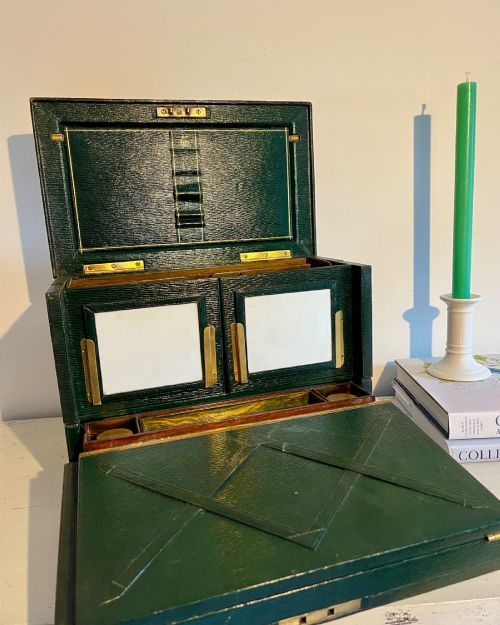
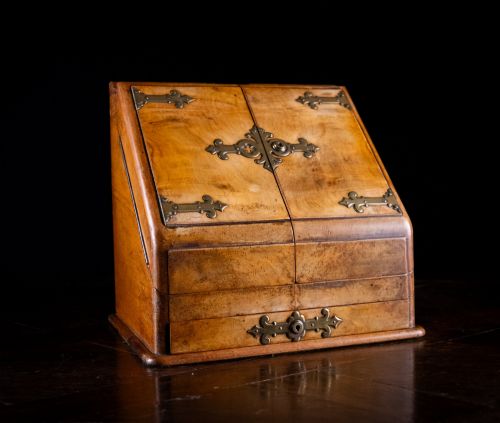
An antique sloping writing box encompasses portable writing slopes, lap desks, and correspondence boxes originating primarily from the Georgian, Regency, and Victorian periods. These pieces provide a slanted writing surface that lifts to reveal fitted compartments for stationery, inkwells, and nibs.
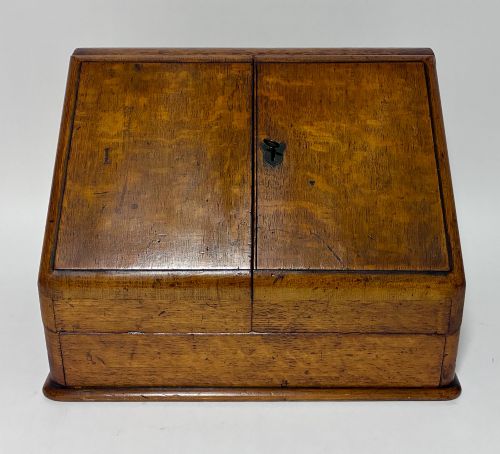
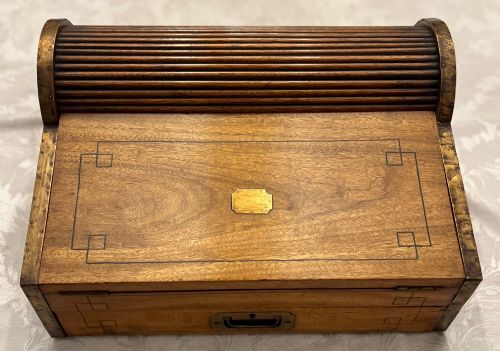
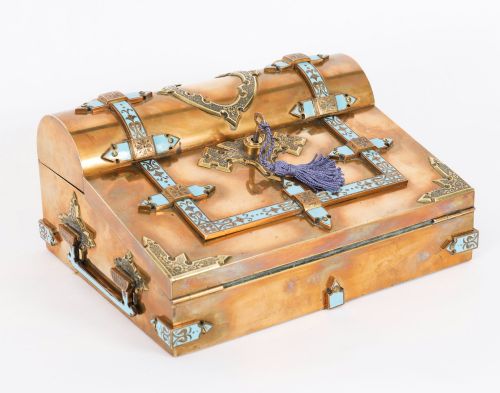
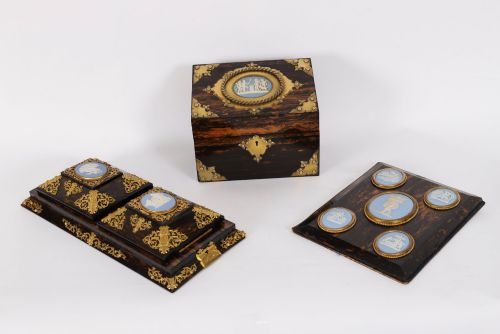
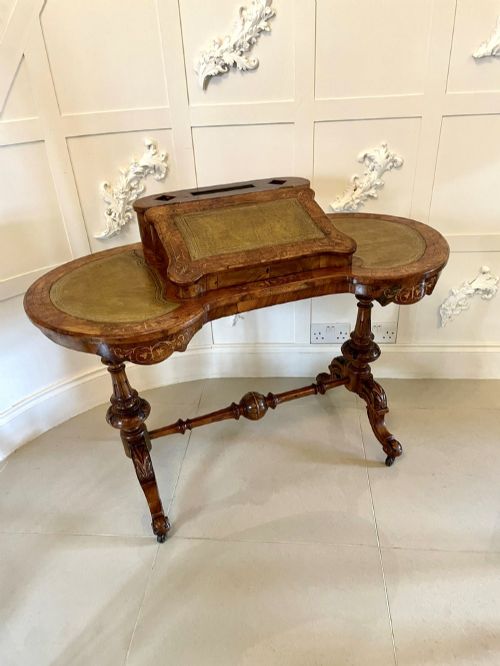
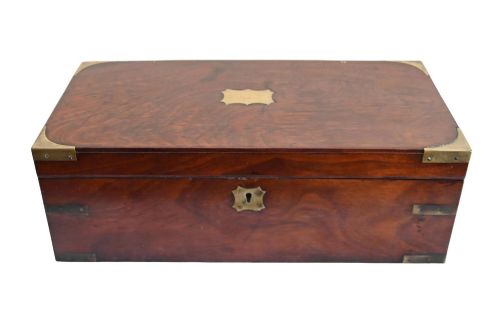
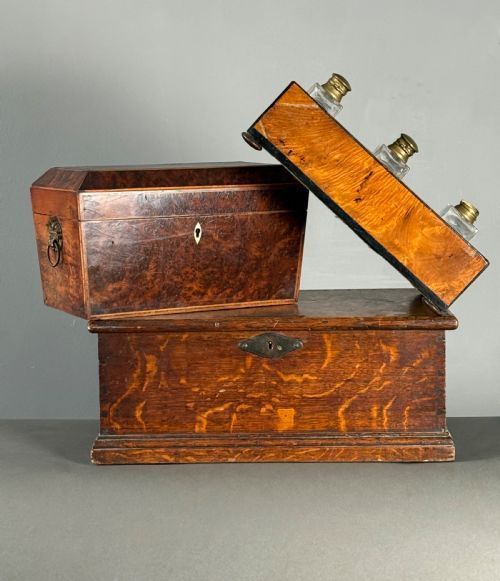
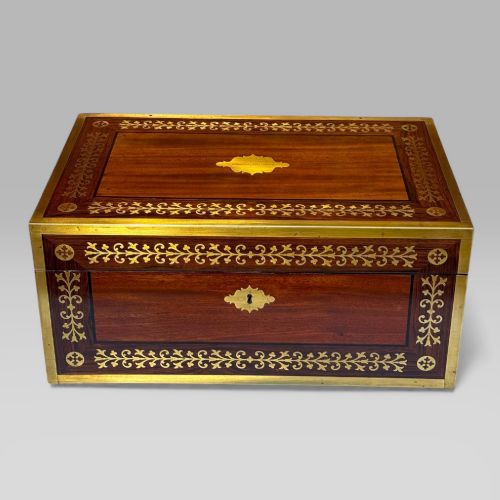
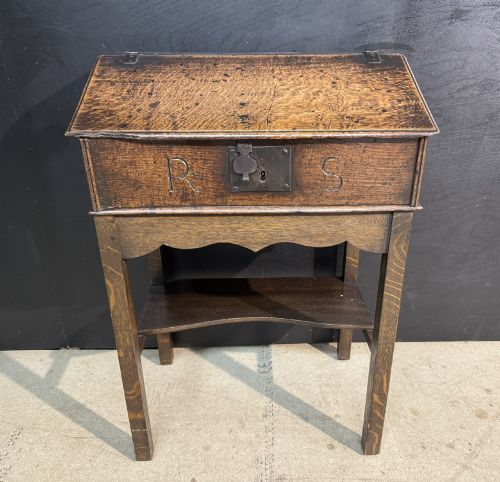
Buyers will most frequently encounter mahogany and rosewood campaign writing slopes alongside oak bible boxes from the seventeenth century. The selection ranges from brass-bound travel boxes to elaborate stationery cabinets finished in walnut or coromandel.
Quality factors
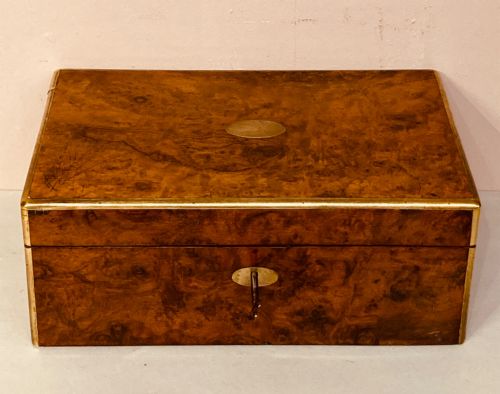
Quality rests upon the selection of timber grain, such as highly figured flame mahogany or burr walnut, and the precision of brass inlay and corner strapping. Superior examples maintain original fitted interiors with matching glass inkwells and functioning locks.
The sophistication of internal mechanisms, including secret release springs for hidden drawers, distinguishes finer workshops from standard production items. The condition of the sloping writing surface and the retention of original leather or velvet inserts also influence the standard of the piece.
Materials span native oak alongside imported hardwoods including padouk, camphor wood, rosewood, and coromandel.
F. West·Austin, William
The Antique Sloping Writing Box Glossary
- Campaign slope
- A portable writing desk built for travel, typically reinforced with brass corners and flush carrying handles to withstand movement. These boxes open to form a sloping writing surface.
- Bible box
- An early wooden box, often seventeenth-century oak, used originally to store sacred texts and later adapted for general correspondence. They frequently feature a slanted lid.
- Coromandel
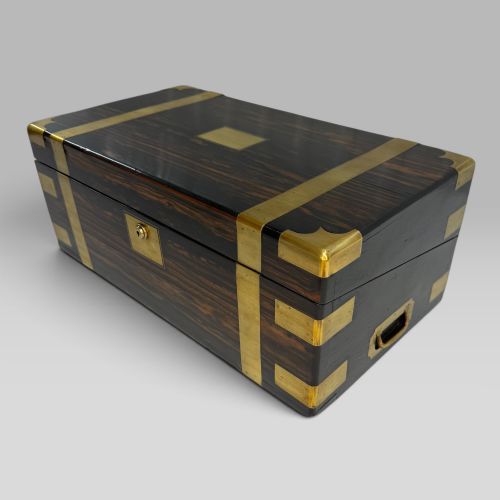
- A dense, heavily figured exotic timber from Asia utilised for high-end Victorian writing boxes and stationery cabinets. Its dark grain provides a dramatic contrast against brass mounts.
- Tunbridge ware
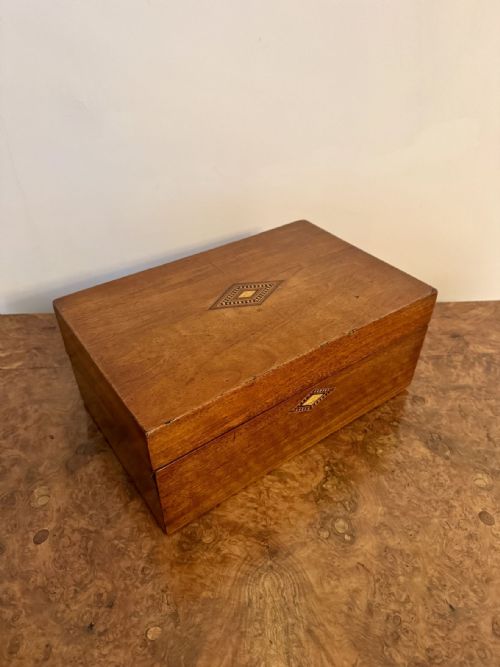
- Small wooden items decorated with precise mosaic patterns formed from thousands of tiny tinted wood blocks. This technique appears on specific mid-Victorian stationery boxes.
- Stationery cabinet
- An upright desk accessory designed to hold paper, envelopes, and writing implements rather than folding flat for travel. These pieces emerge predominantly in the Victorian period.
Antique Sloping Writing Box: Frequently Asked Questions
What is an antique sloping writing box?
An antique sloping writing box is a portable desk designed to fold open and create an inclined writing surface. These boxes contain internal compartments for paper, ink, and pens.
Cabinetmakers built them from solid and veneered timbers such as mahogany, oak, and rosewood, incorporating brass hardware for protection during travel.
How were writing boxes used?
Owners used these boxes to write letters, store important documents, and keep correspondence materials organised while travelling or at home. The slanted lid provided an ergonomic surface for writing before the widespread use of fixed-height desks.
Inside, dedicated slots held inkwells, sanders for drying ink, and small drawers secured secret letters or valuables.
What is a campaign writing slope?
A campaign writing slope is a rugged variation built for military officers and travellers on the move. They feature brass binding along the edges and flush-fitting handles to prevent snagging during transport.
These heavy-duty boxes often include double-folding mechanisms to create a stable writing platform on uneven surfaces.
How do I date a writing box?
Dating relies on timber choices, construction techniques, and hardware styles. Georgian and Regency examples often utilise flame mahogany or rosewood with delicate brass stringing, whereas Victorian pieces frequently feature heavier brass corner mounts, coromandel veneers, or elaborate fitted interiors.
Early seventeenth-century examples are constructed from heavy oak with carved panels and simple hinges, pre-dating the folding slope mechanism entirely.