

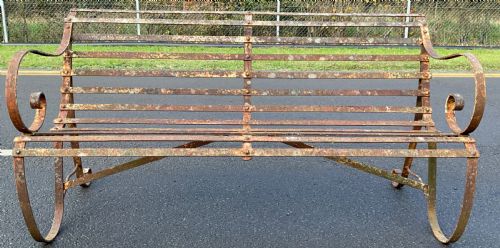
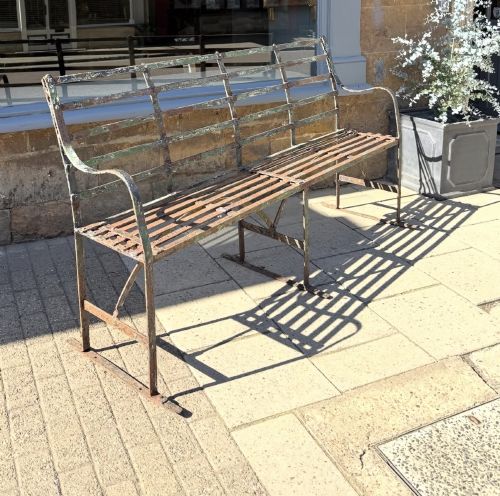
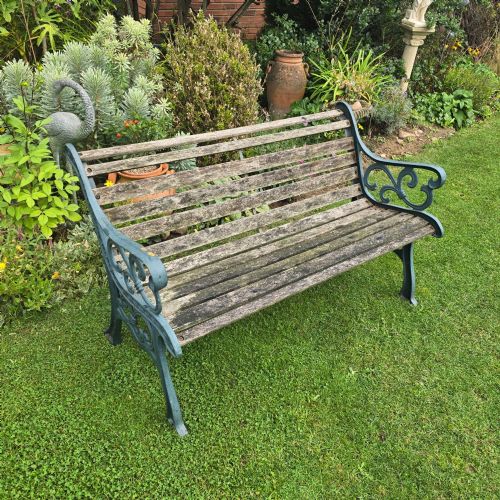
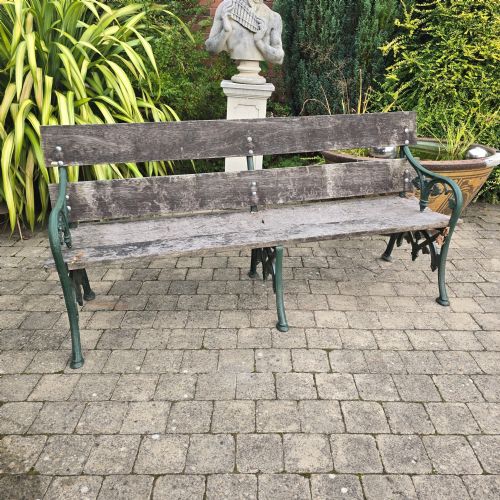
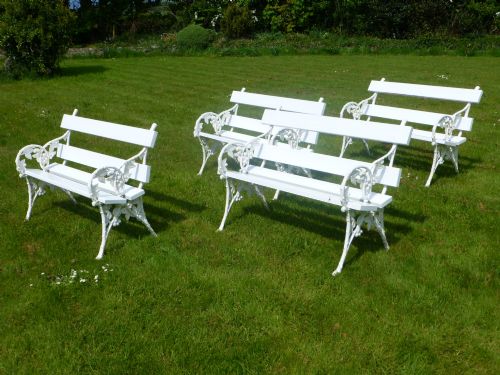
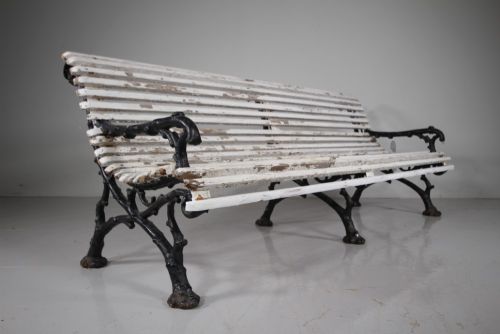
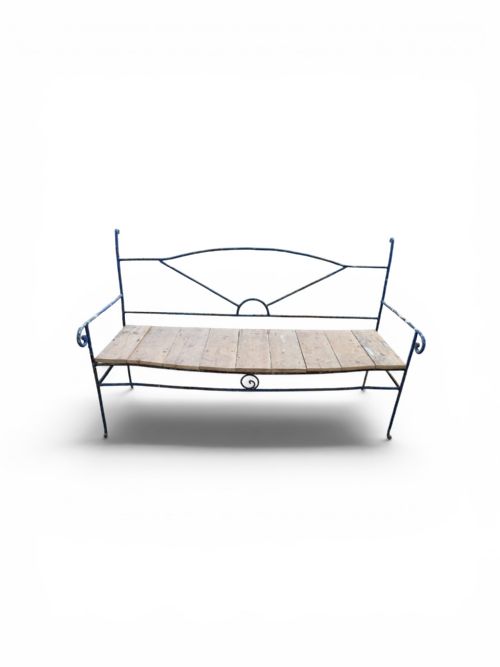
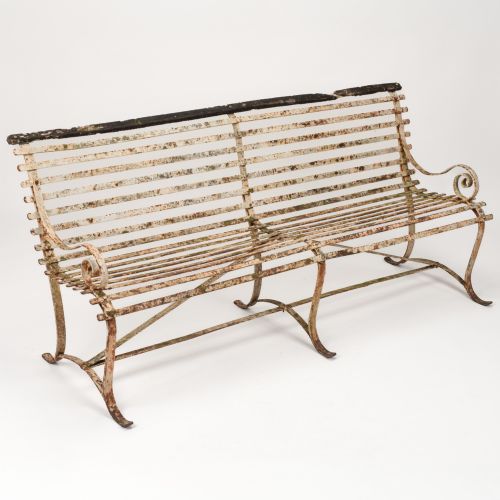


Antique Slatted Iron Bench
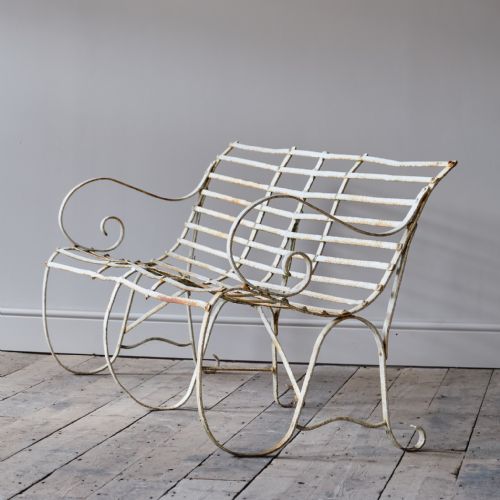
An antique slatted iron bench brings heavy industrial strength to a terrace, offering enduring outdoor seating shaped from cast and wrought iron.
Antique Slatted Iron Bench
When searching for an antique slatted iron bench, a buyer looks at robust garden seating designed to withstand outdoor elements through decades or centuries. These pieces serve as practical focal points for lawns, patios, and park spaces.
The versions most commonly met on this page span the Victorian and Edwardian eras, alongside pieces bearing Regency and early twentieth-century characteristics. Forms range from simple strapwork frames to elaborate rustic patterns featuring botanical motifs.
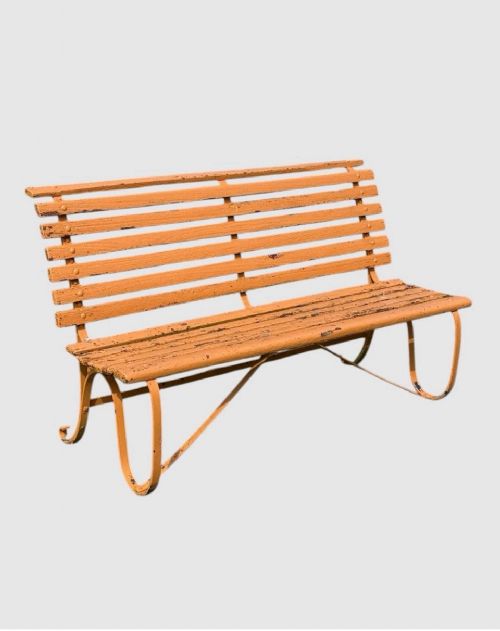
Makers utilised durable metals paired with timber slats to create sturdy garden seats that remain functional today. Surviving examples often display layers of original paint accumulated through years of exposure.
How they were made
Foundries shaped molten metal into heavy ends and structural supports using cast iron techniques, creating intricate scrollwork and relief patterns. Wrought iron and strap metal were forged by hand into frames and strapwork seats.
Wood and timber components were integrated with metal frameworks to form the seating surfaces and slats of the benches. Protective layers of paint were applied to shield the iron and wood from weathering.
Antique Slatted Iron Bench Retail Price Guide 2026
Typical asking prices for slatted iron bench among the pieces listed under this phrase on Sellingantiques today, from the lower quarter to the upper quarter. They describe what is for sale here now, not the wider market.
Listings on this site feature nineteenth-century and early twentieth-century periods, utilising cast iron, wrought iron, and timber.
What varies in quality
The refinement of the casting separates standard utility seating from finer decorative pieces, visible in the crispness of botanical details and scrollwork. Foundry work from established designers shows greater depth and clarity in relief patterns.
The integrity of the original construction and the survival of early or original paint surfaces distinguish unblemished historical examples from heavily restored or altered garden seats.
Falkirk foundry·Coalbrookdale Design
The Antique Slatted Iron Bench Glossary
- Cast iron
- Iron poured into a mould while molten to create rigid structural ends and decorative bench frames. This material provides substantial weight and allows for intricate relief designs.
- Wrought iron
- Iron heated and hammered into shape by hand, producing flexible and strong strapwork frames. It appears in scroll benches and strapwork garden seats.
- Strapwork
- Flat strips of metal interwoven or joined to form geometric patterns on the backrests or seats of benches. This technique gives a lighter appearance than solid cast components.
- Canopy
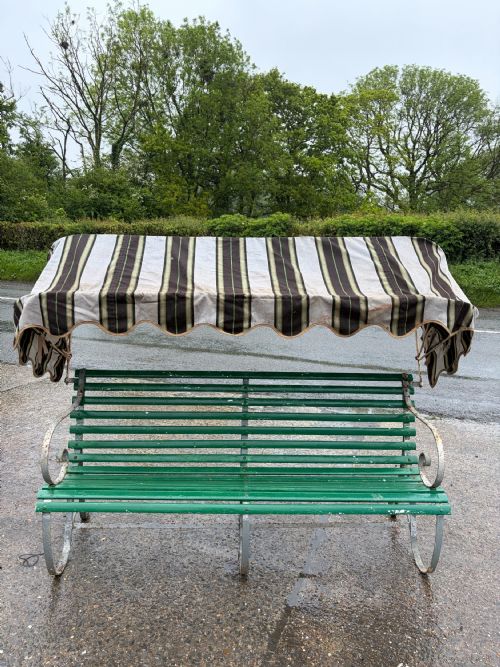
- An overhead architectural extension attached to certain garden seats, providing shelter from the elements. These covered structures represent more elaborate Victorian outdoor furniture.
- Rustic pattern
- A design style mimicking natural branches, bark, and leaves in cast iron. This aesthetic was popular during the nineteenth century for garden furnishings.
Antique Slatted Iron Bench: Frequently Asked Questions
How do I date an iron garden bench?
Dating relies on stylistic clues, construction methods, and material combinations recorded across nineteenth and twentieth-century periods. Victorian and Regency examples often feature distinct casting patterns or wrought iron strapwork.
Changes in foundry practices and the transition from heavy cast components to early twentieth-century tubular or lighter iron work further help narrow the decade.
Can these benches stay outside year-round?
Iron and timber garden benches are built for outdoor exposure and withstand weather conditions when properly maintained. Protective paint layers help prevent deep corrosion on the metal frames.
Wooden slats benefit from seasonal checks and occasional treatment to preserve the timber where it meets the iron structure.
What is the difference between cast and wrought iron?
Cast iron is poured into moulds, resulting in rigid, heavy components with detailed decorative reliefs. It provides the solid ends and frames seen on many garden seats.
Wrought iron is worked by hand while hot, yielding fibrous metal that bends into straps and scrolls rather than snapping under stress.
Are these benches comfortable to sit on?
The comfort depends on the ergonomic curve of the metal framework and the presence of timber slats. Many designs incorporate shaped backrests and contoured seats to support the body.
Buyers often add loose cushions to soften the iron and wood surfaces for extended seating during warmer months.