



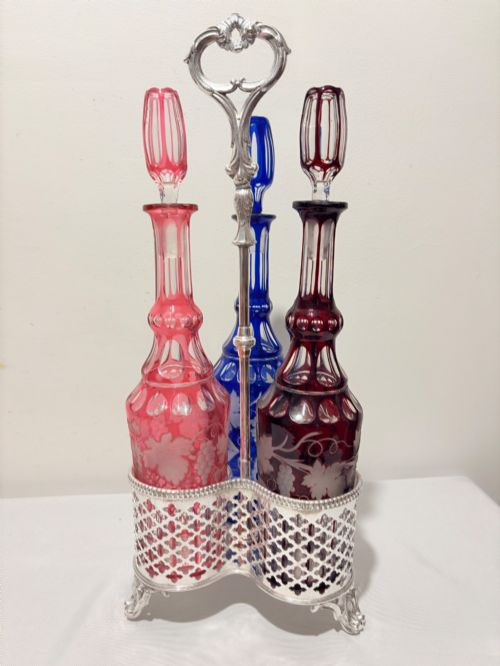
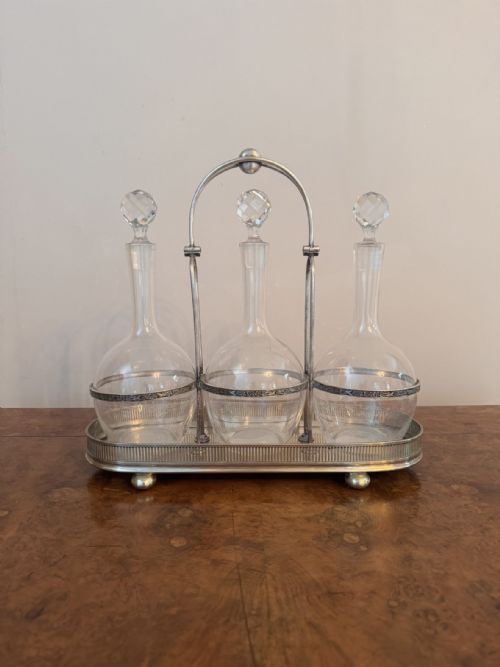
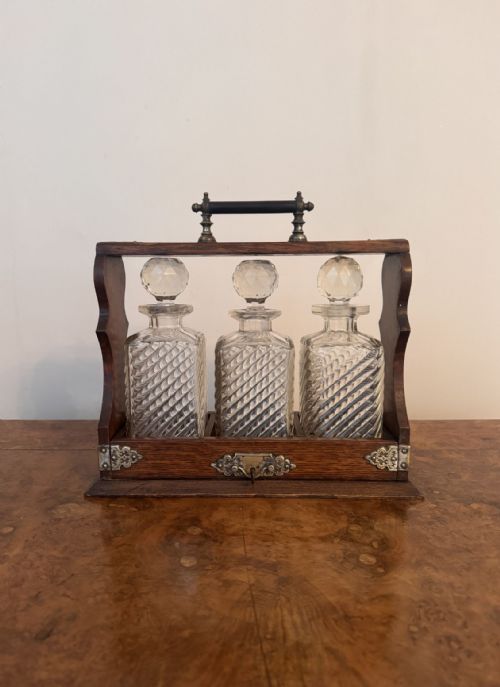
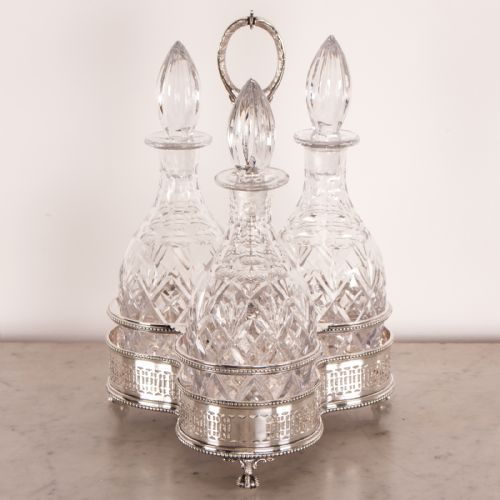


Antique Silver Plated Tantalus
An antique silver plated tantalus locks away the spirits while keeping them in plain sight, combining fine metalwork with heavy glassware.
Antique Silver Plated Tantalus
An antique silver plated tantalus is a locking frame designed to secure decanters of fine spirits away from unauthorised hands. The mechanism typically holds two or three bottles within a sturdy wooden base beneath a pivoting metal bar. Most examples found on this page date from the Victorian and Edwardian eras, spanning the latter half of the nineteenth century into the early twentieth century.
The primary forms include three-bottle tantalus frames, spirit barrel dispensers, and open decanter stands. Oak serves as the predominant timber for the bases, frequently figured or panelled to house the locking rods securely. The accompanying bottles and barrels utilise cut glass, cut crystal, and frosted crystal, often accompanied by original stoppers and glassware.
How they were made
Makers constructed the frames using solid oak or similar hardwoods, mounted with silver plated metalwork and locking mechanisms. Silversmiths applied silver plate over base metals or utilised Old Sheffield Plate techniques for the structural bars, handles, and lock housings.
The glassware component relied on heavy-duty glass blowing and deep wheel-cutting. Artisans shaped cut crystal and coloured glass into decanters or barrel dispensers, fitting them precisely to the dimensions of the wooden framework.
Antique Silver Plated Tantalus Retail Price Guide 2026
Typical asking prices for silver plated tantalus among the pieces listed under this phrase on Sellingantiques today, from the lower quarter to the upper quarter. They describe what is for sale here now, not the wider market.
Victorian hosts locked up the gin and brandy not from thieves, but to stop the household staff from sampling the cellar.
What varies in quality
The standard of an antique silver plated tantalus rests on the heaviness of the silver plating and the complexity of the locking mechanism. Superior examples feature robust metal bars, fully operational locks with keys, and substantial oak bases with fitted compartments.
Glassware quality creates a distinct divide between standard models and finer productions. Cut crystal decanters with deep hand-cut facets, matching stoppers, and branded maker mounts elevate a piece above simpler glass containers housed in basic metal frames.
Walker & Hall·Elkington·Hukin and Heath·Philip Ashberry·Mappin Brothers
The Antique Silver Plated Tantalus Glossary
- Tantalus
- A locking drink container frame named after the mythological figure who was kept just out of reach of food and water. The locking bar prevents the removal of decanters until the key is turned.
- Old Sheffield Plate
- An early method of fusing a thin sheet of silver to a thicker copper base before rolling them together. This technique appears on nineteenth-century barware and cruet frames.
- Cut Crystal
- Glass containing lead oxide that is heavily faceted by wheel-cutting to create sharp light-refracting patterns. It forms the heavy decanters held within the tantalus frames.
- Tot Pail
- A small metal bucket or container often found alongside barrel dispensers and decanter sets in Victorian barware collections. These held ice or water for diluting spirits.
Antique Silver Plated Tantalus: Frequently Asked Questions
How does the tantalus lock work?
The mechanism relies on a metal retaining bar that drops down over the glass stoppers of the decanters. Turning a key in the lock secures this bar upright, preventing the bottles from being lifted from the wooden base.
Unlocking the frame allows the bar to pivot or slide aside so the decanters can be removed freely for pouring drinks.
What is the difference between a tantalus and a decanter stand?
A tantalus incorporates a locking metal framework that physically restrains the bottles to prevent unpermitted access to the contents. This security feature distinguished them from standard household barware.
Decanter stands and cruets hold the bottles securely in open frames without any locking mechanism, allowing immediate access to the glassware.
How do I date an antique tantalus?
Dating relies heavily on the style of the oak base, the method of silver plating, and registration marks or maker signatures on the metalwork. Victorian pieces often display heavier oak construction and ornate cast mounts.
Edwardian examples tend to exhibit refined lines and simpler woodwork, while specific registry dates stamped into the metal provide a definite point of origin.
Can I replace missing decanters?
Finding exact replacement decanters that match the exact contours and neck heights of an original tantalus frame presents a significant challenge. The bottles were manufactured specifically to fit the tolerances of the wooden base and locking bar.
Collectors generally prefer pieces that retain their original matched set of glass bottles and stoppers to preserve historical integrity.