

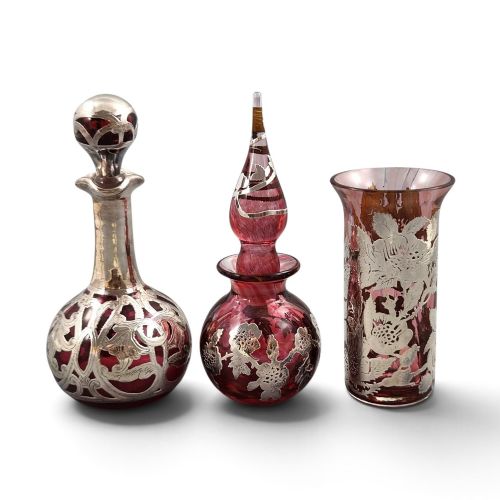


Antique Silver Perfume Decanter
An antique silver perfume decanter brings tactile refinement to a dressing table, combining cut glass and bright metal mounts.
Antique Silver Perfume Decanter
An antique silver perfume decanter is a small vessel designed to hold fragrance, typically combining a glass body with metal collars and stoppers. These pieces encompass scent bottles and cologne flasks originating from the late Victorian, Edwardian, and George V eras.
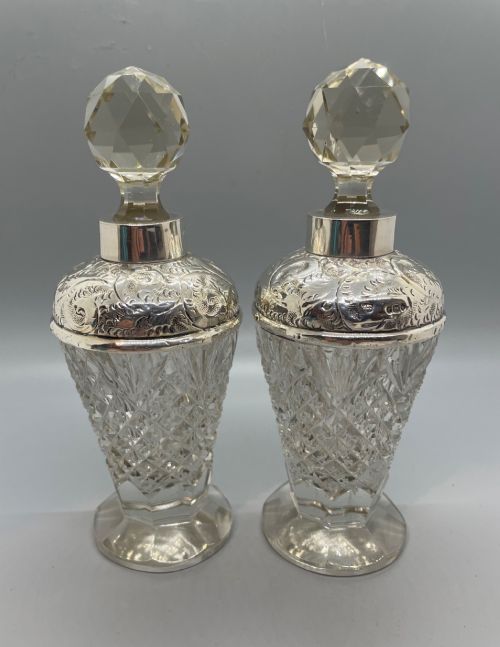
The versions most commonly met on this page span the years around nineteen hundred to the nineteen twenties, often featuring cut glass or crystal bodies fitted with sterling silver mounts. Makers and workshops from London and Birmingham produced both single examples and matched pairs for daily dressing room use.
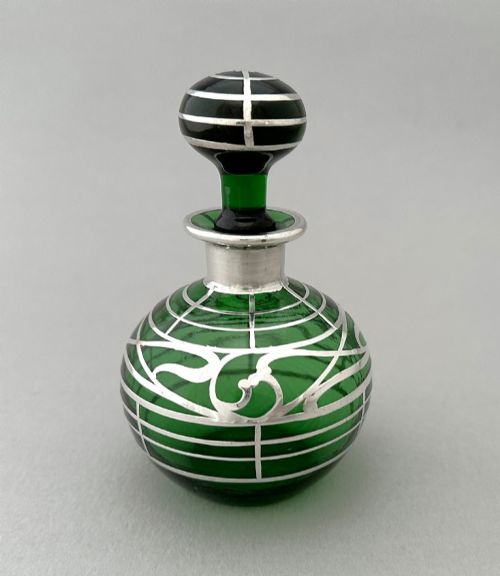
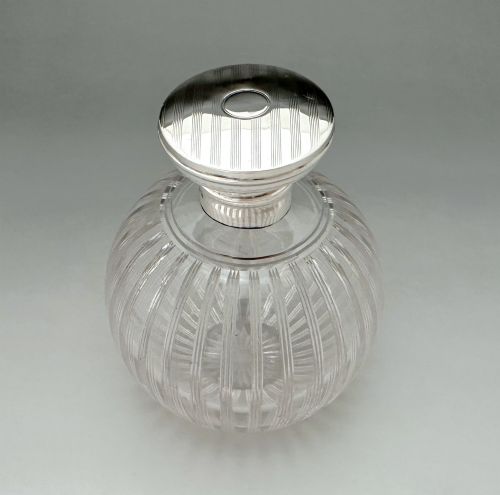
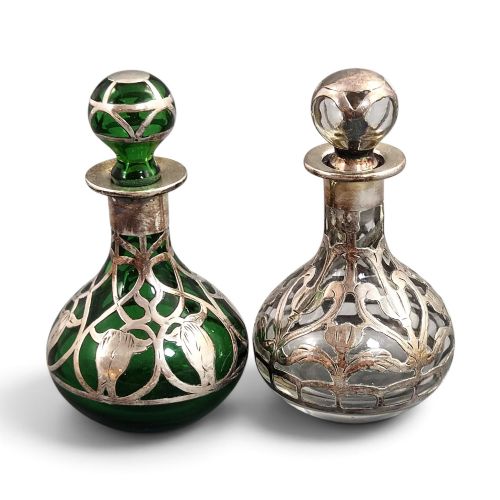
Forms range from miniature champagne bottles to traditional panel-cut decanters and organic plant-form overlay designs. Collectors encounter various glass colours alongside clear crystal, all secured by hinged or screw-down silver lids.
How they were made
The body of each piece relies upon heavy glass or crystal, often shaped by blowing into moulds before receiving hand-cut facets or smooth polished surfaces. Coloured glass variants utilise mineral additions during melting to achieve distinct hues.
Silver components are shaped through smithing and stamping, frequently incorporating pierced metal overlays soldered directly onto the glass body or forming secure collars around the neck. Hallmarks stamped into the silver provide precise town marks, date letters, and maker initials.
Antique Silver Perfume Decanter Retail Price Guide 2026
Typical asking prices for silver perfume decanter among the pieces listed under this phrase on Sellingantiques today, from the lower quarter to the upper quarter. They describe what is for sale here now, not the wider market.
Makers even shaped silver-topped glass bottles into miniature champagne flasks, ready for a very discreet toast on the move.
What varies in quality
Quality separates ordinary utilitarian vessels from exceptional dressing table objects through the crispness of the glass cutting and the weight of the silver mounts. Finer examples display intricate floral or foliate metalwork that integrates seamlessly with the glass contour.
The presence of crisp hallmarks and substantial gauge silver elevates a piece above standard production wares. Condition of the inner stopper and the clarity of the glass further define the standing of individual bottles within the broader range.
George May·Gorham·Barnsley and Co
The Antique Silver Perfume Decanter Glossary
- Sterling silver
- A standard alloy consisting of ninety-two point five percent silver by mass, utilised for the collars, caps, and decorative overlays on these bottles.
- Cut glass
- Glass decorated by grinding facets or patterns into the surface using rotating wheels, catching light across the body of the scent bottle.
- Hallmark
- A series of official marks stamped onto precious metal items to guarantee the purity of the silver alongside the assay office and year of manufacture.
- Overlay
- A technique where pierced sheet silver is applied over the glass body, frequently seen in flowing Art Nouveau botanical motifs.
Antique Silver Perfume Decanter: Frequently Asked Questions
What is an antique silver perfume decanter?
An antique silver perfume decanter is a portable glass or crystal container fitted with a silver collar, mount, or hinged cap designed for holding liquid fragrance.
These objects were standard accessories on nineteenth and early twentieth century dressing tables, serving both practical and decorative roles in daily routines.
How do I date a silver scent bottle?
Dating relies primarily on the hallmarks stamped into the silver mounts, which indicate the assay office, standard, and specific year of production.
Stylistic indicators such as Art Nouveau plant motifs or George V structural proportions also help narrow the manufacturing era.
Are the stoppers original?
Many surviving bottles retain their matching glass or cork-backed silver stoppers, though replacements are common due to the fragile nature of small glass components.
Checking for consistent wear and matching glass tone helps determine whether the stopper has stayed with the bottle over the decades.
How should I clean antique glass and silver?
Cleaning requires gentle care to preserve both the polished glass facets and the aged patina on the silver mounts without abrasive friction.
Specialist non-abrasive cloths keep the silver bright while protecting the surrounding glass from accidental scratching during upkeep.