

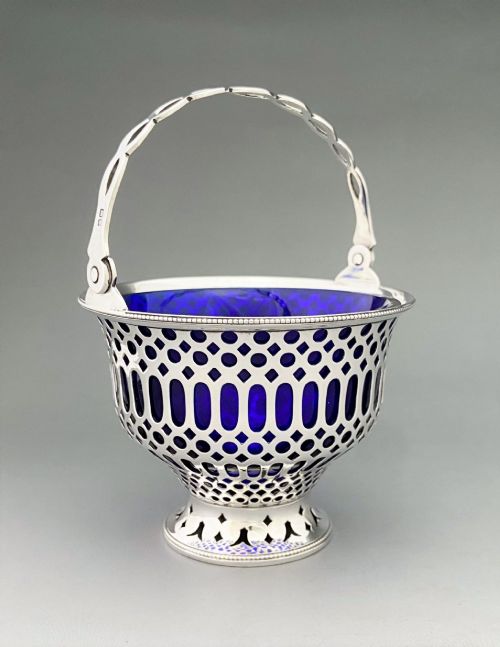


Antique Silver Pail
An antique silver pail combines utility and display, offering centuries of craftsmanship in forms from ice buckets to sugar baskets.
Antique Silver Pail
When you search for an antique silver pail, you encounter a diverse group of domestic vessels spanning multiple centuries. These objects range from eighteenth-century Georgian sugar baskets and cream pails to twentieth-century champagne coolers and ice buckets.
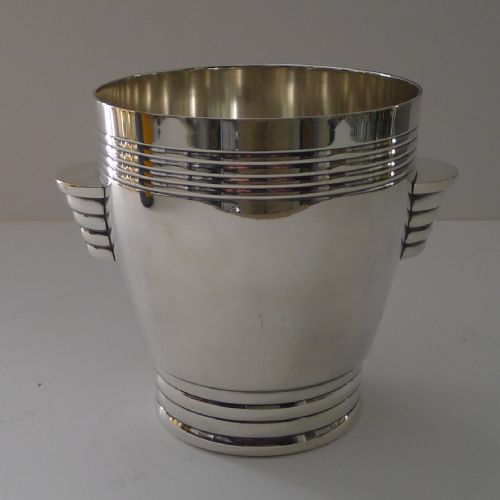
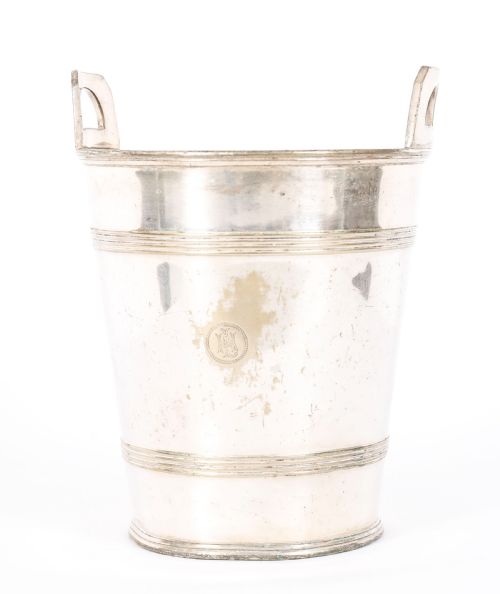
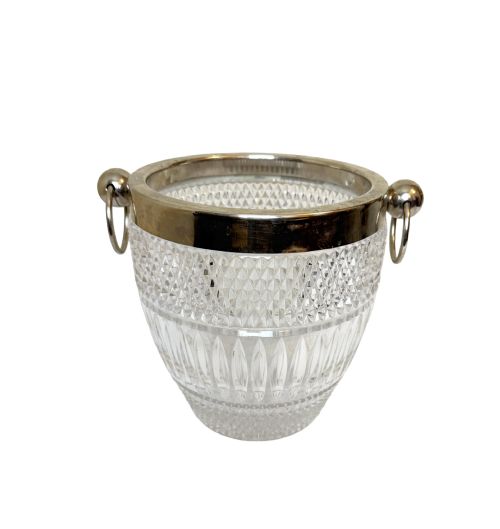
The versions most commonly met on this page include silver-plated ice buckets and wine coolers from the nineteenth and twentieth centuries. Alongside these barware pieces, collectors frequently encounter Georgian wirework and pierced baskets designed for the tea table.
Materials vary widely across these items, incorporating sterling silver, silver plate, cut glass, cobalt glass, ceramic liners, oak, and copper. Origins stretch across English, French, and Italian workshops, reflecting changing domestic habits from formal dining to casual entertaining.
Materials and construction
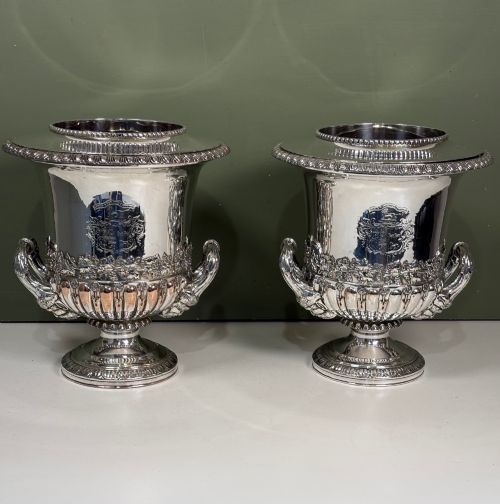
Makers utilised sterling silver and silver plate over base metals, frequently combining metalwork with heavy lead crystal, cut glass, or ceramic liners. Old Sheffield plate appears alongside electroplated nickel silver on nineteenth-century coolers and ice pails.
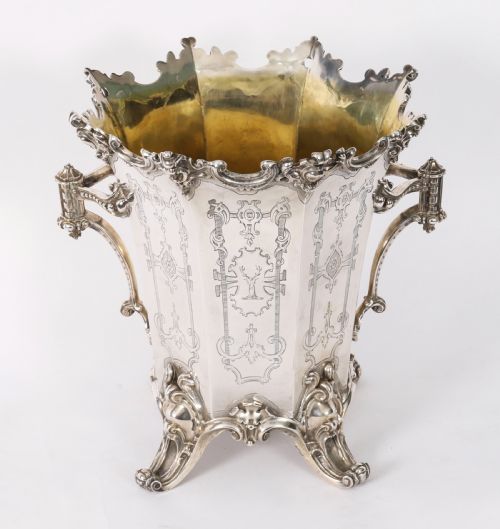
Craftsmen employed piercing, wirework, and heavy embossing to decorate eighteenth-century baskets and Victorian vessels. Cast mounts, claw tongs, and swing handles demonstrate the detailed metalworking techniques applied to functional tableware.
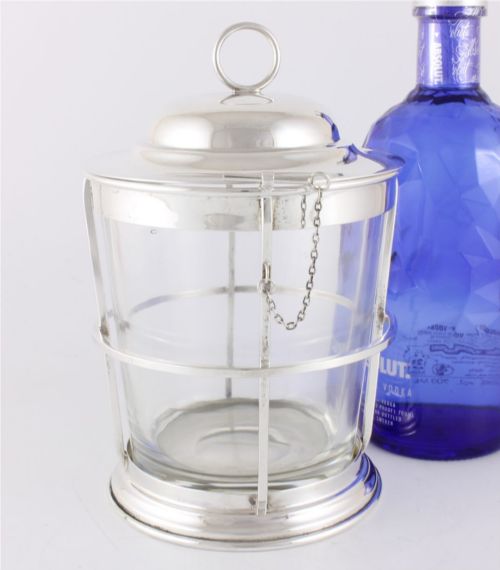
Glass bodies were often hand-cut or frosted, fitted precisely into pierced or solid metal frames designed to hold ice or wine securely.
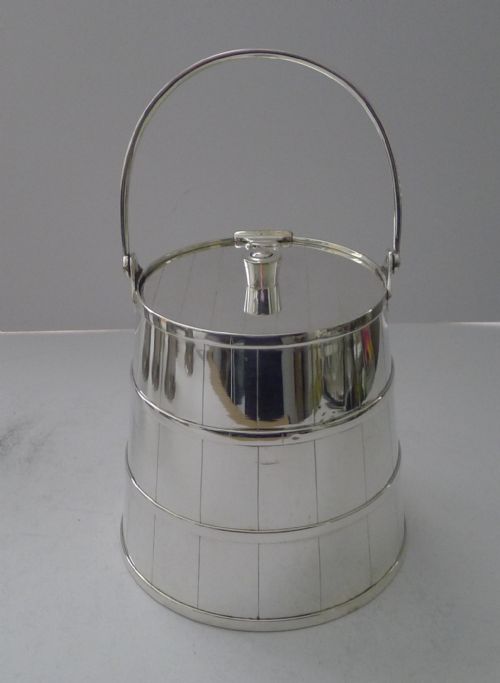
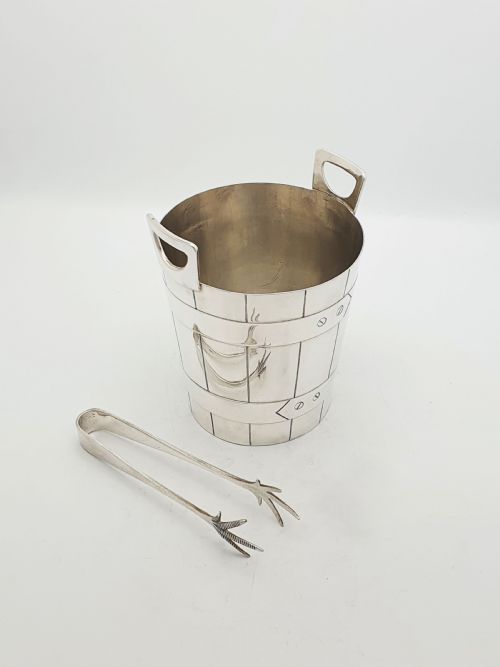
Certain ice pails double as novelty barrels equipped with matching claw tongs and tiny tot pails for a spirited evening.
Assessing craftsmanship and condition
The distinction between standard production and superior craftsmanship rests in the weight of the metal and the crispness of the chased or pierced decoration. Finer pieces display substantial gauge silver or heavy silver plate that resists distortion over decades of use.
Quality also reveals itself in the integration of secondary materials like cut crystal and ceramic liners, where precise fits and unmarked joints indicate skilled manufacturing. Maker attribution to notable workshops elevates the standing of individual vessels.
Design complexity, such as cast figural handles or detailed armorial engravings, separates everyday utility items from exhibition-grade display pieces.
Aldridge And Green·John Mackfarlan·Elkington Mason And Co·Matthew Boulton And Co·Christofle Gallia
The Antique Silver Pail Glossary
- Silver Plate
- A layer of silver fused or electroplated onto a base metal such as copper or nickel silver. This technique allowed makers to produce large vessels like champagne coolers at a fraction of the cost of solid sterling.
- Old Sheffield Plate
- An early method of fusing a thin sheet of sterling silver to a copper core before rolling and shaping. Pieces made this way often reveal subtle traces of copper along high-wear edges.
- Pierced Work
- A decorative technique where metal is cut through to create openwork patterns such as lattices, scrolls, or geometric motifs. It is commonly found on eighteenth-century cream pails and sugar baskets.
- Ice Pail
- A covered or open vessel designed to hold ice at the dining or bar table. They frequently incorporate glass liners to protect the metal from moisture and melting ice.
- Swing Handle
- A movable arched handle attached to the sides of a basket or pail by pivots or hinges. This feature allows the handle to lie flat when the vessel is stored or placed on a crowded table.
Antique Silver Pail: Frequently Asked Questions
What was a silver pail used for?
These vessels served various functions depending on their size and period. Smaller pails acted as cream buckets or sugar baskets during eighteenth-century tea service.
Larger twentieth-century examples functioned as ice buckets or wine coolers for entertaining guests.
How do I clean an antique silver pail?
Clean silver plate and sterling silver gently using a mild, non-abrasive polish specifically formulated for antiques. Avoid scrubbing engraved or embossed areas too vigorously.
Rinse glass liners separately in warm soapy water and dry them thoroughly before returning them to the metal frame.
Are glass liners original to the pails?
Many pails retain their original hand-cut crystal, frosted glass, or ceramic liners fitted to the interior. Replacements are common due to the fragile nature of glass over a century of domestic use.
A snug fit and matching period characteristics usually indicate an original component.
How can I tell a Georgian pail from a Victorian one?
Georgian pails frequently feature delicate hand-piercing, wirework, and neoclassical motifs designed for sugar and cream. They are typically smaller and made of sterling silver.
Victorian and later pieces often incorporate heavier silver plate, embossing, and glass inserts intended for ice and wine.