
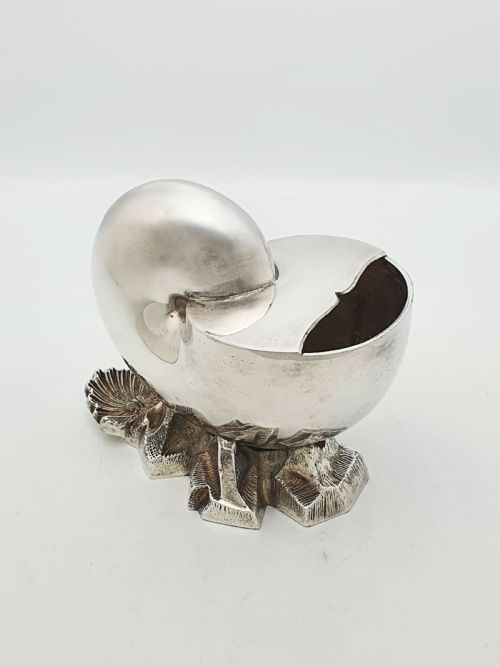


Antique Silver Dining Vessel
These antique silver dining vessel examples bring formal Victorian and Edwardian tables to life, offering both function and character for the modern dining room.
Antique Silver Dining Vessel
An antique silver dining vessel covers a diverse range of table objects designed for serving, warming, or holding food and condiments during formal meals. Buyers searching for an antique silver dining vessel will encounter everything from small mustard pots and menu holders to large tureens and unusual spoon warmers.
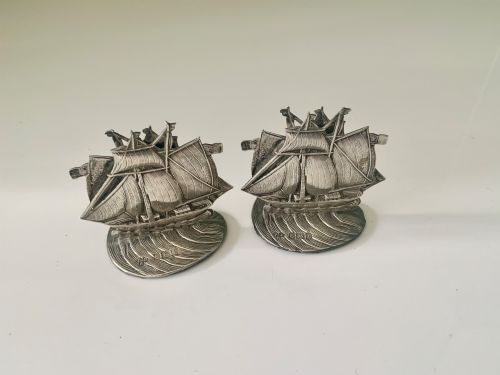
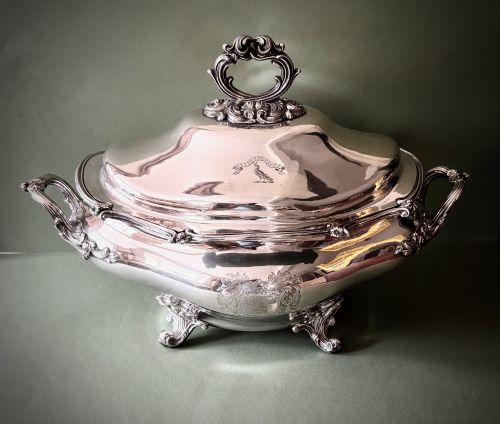
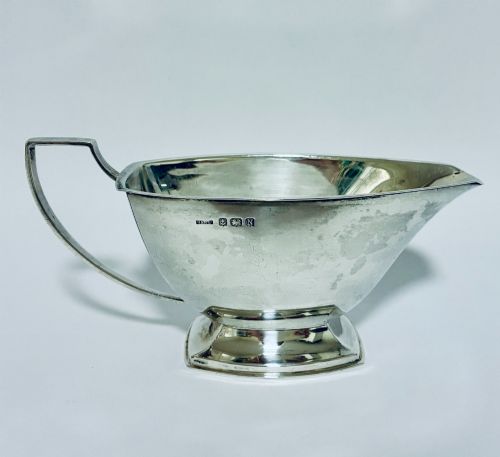
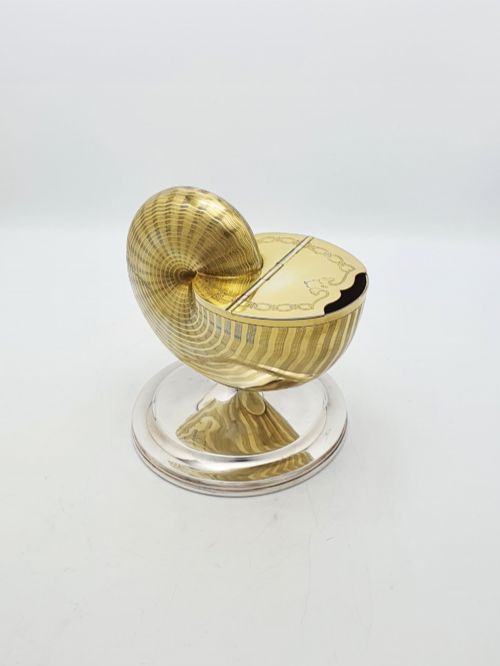
The pieces on this page span several distinct eras, with Victorian and Edwardian examples appearing most frequently alongside pieces from the Regency and Art Deco periods. Forms include nautilus shell spoon warmers, sauce boats, wine coolers, and sugar boxes shaped like animals.
Materials vary across the selection, featuring sterling silver, silver plate, old Sheffield plate, and 800 silver, sometimes combined with glass, copper, or gilt metal. Origins stretch across English workshops and continental makers, reflecting the varied formal dining habits of the nineteenth and early twentieth centuries.
How they were made
Silversmiths utilised traditional techniques such as casting, hammering, and repoussé to shape sterling silver and 800 silver into complex animal and shell forms. Many dining vessels utilise silver plate or old Sheffield plate over a base metal, applying thin layers of silver to create durable tableware.
Makers often incorporated secondary materials like cobalt blue glass liners within mustard pots and sugar boxes to protect the silver from corrosive foodstuffs. Gilt metal and copper also appear as accents or interior linings within specific vessels like spoon warmers and wine coolers.
What varies in quality
Quality in these dining vessels rests upon the crispness of the casting and the depth of the chased or engraved detail on the metal surface. Naturalistic forms, such as nautilus shells or bird sugar boxes, succeed when the silversmith captures organic textures with precision.
The condition of the underlying metal and any applied plating heavily influences the overall character of silver-plated and old Sheffield plate items. Intact interior glass liners and clear hallmarks or maker marks add significant conviction to a piece.
Charles Stuart Harris·Gioielleria Agliardi Cassino
The Antique Silver Dining Vessel Glossary
- Sterling silver
- A silver alloy containing 92.5 percent pure silver by mass, with the remainder consisting of other metals like copper. This standard alloy provides the durability required for functional dining vessels.
- Silver plate
- A layer of silver applied to a base metal such as copper or a white metal alloy. It allowed households to acquire impressive dining vessels at a lower cost than solid sterling silver.
- Old Sheffield plate
- An early form of plate created by fusing a sheet of silver to a thick copper ingot before rolling them together into sheets. This technique results in a rich depth that differs from later electroplated wares.
- EPNS
- Electroplated nickel silver, a common base metal composition for silver-plated items produced from the mid-nineteenth century onwards. It provides a sturdy and uniform foundation for the silver coating.
- Repoussé
- A metalworking technique where the silversmith hammers the metal from the reverse side to form a raised design in relief. It is frequently seen on decorative Victorian and continental vessels.
Antique Silver Dining Vessel: Frequently Asked Questions
What is a spoon warmer?
A spoon warmer is a specialised vessel used on Victorian and Edwardian dining tables to hold hot water, which kept serving spoons warm during the service of-multi course meals.
They often took whimsical forms, such as nautilus shells, ammonites, or galleon ships, functioning as decorative table ornaments when not in active use.
How do I clean antique silver?
Cleaning antique silver requires a gentle approach using a specialised silver cloth or mild, non-abrasive polish to preserve the original surface and any subtle chasing.
Avoid harsh chemical dips or scrubbing that can remove thin silver plating or damage secondary materials like glass liners and gilt accents.
Can I use these vessels daily?
Many smaller dining vessels, such as mustard pots, sauce boats, and condiment containers, remain entirely practical for contemporary dining use.
Care should be taken with silver-plated items and delicate pieces with glass inserts to ensure hand washing rather than machine dishwashing.
How do I date a silver vessel?
Dating silver typically relies on hallmarks stamped into the metal, which indicate the assay office, the maker, and the specific year of production.
Stylistic cues, such as the naturalistic motifs of the Victorian era or the geometric lines of Art Deco pieces, also help narrow down the period of manufacture.