






Antique Silver Dessert Service
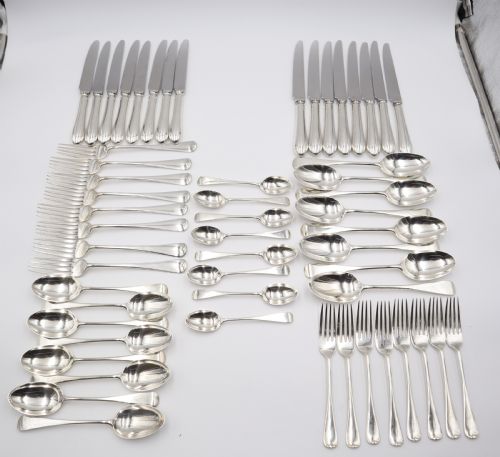
An antique silver dessert service brings proper nineteenth and early twentieth-century ceremony to the dining table with fitted knives, forks, and occasionally plates.
Antique Silver Dessert Service
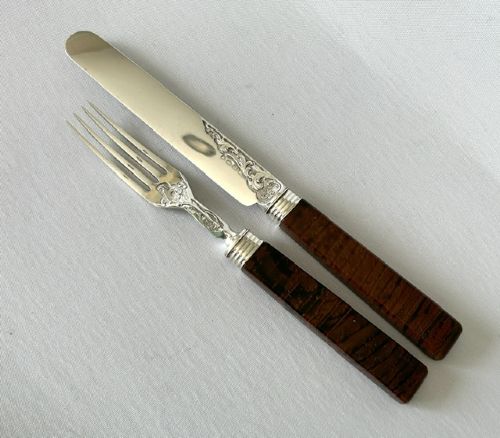
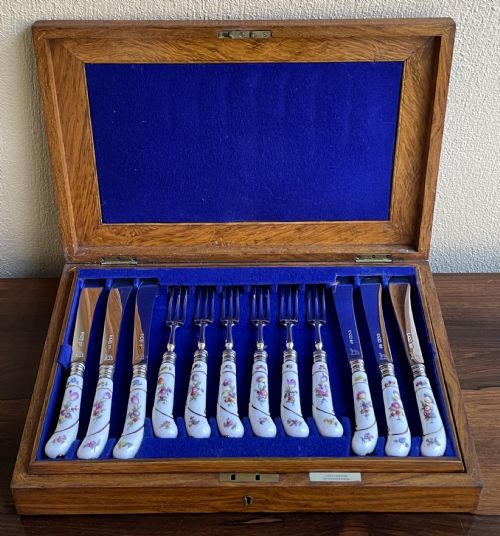
An antique silver dessert service comprises matched sets of specialised cutlery and serving pieces designed specifically for the final course of a formal meal. These collections frequently pair sterling silver or silver plate with organic materials such as mother-of-pearl, agate, and porcelain.
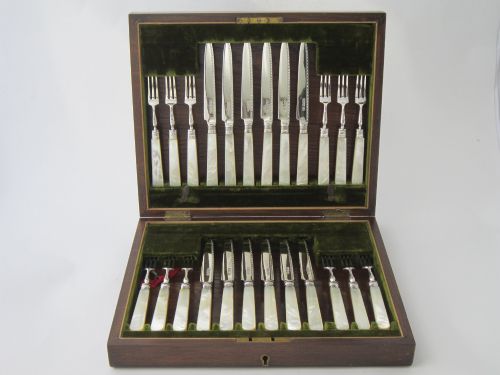
The options appearing on this page span the Victorian, Edwardian, and Art Deco periods, encompassing everything from compact cased sets for two people to large canteens intended for twelve. Fitted wooden presentation cases lined in velvet often accompany these services, preserving the contents together.
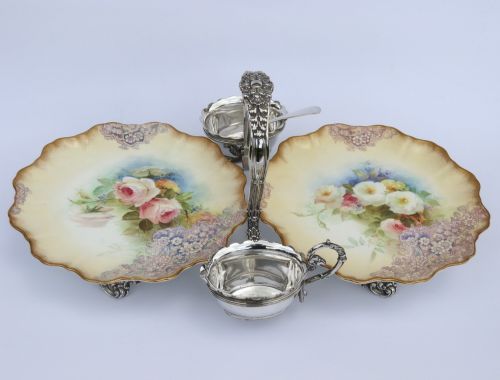
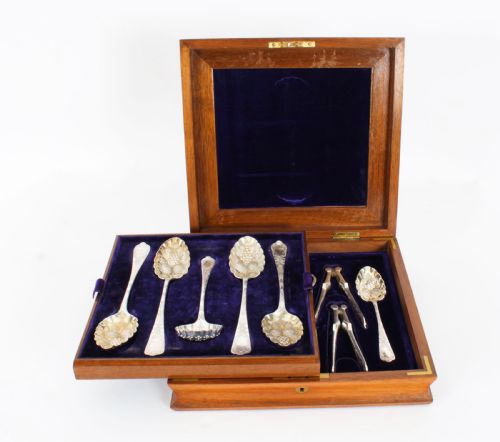
Formations include dedicated fruit and nut serving sets, strawberry sets complete with hand-painted plates, and comprehensive cutlery sets. Buyers will encounter both solid sterling silver and silver-plated configurations matched with steel blades.
Distinctions in quality
The distinction between standard utility sets and superior examples rests upon the harmony of the fitted case and the integrity of natural handle materials. Services retaining their original velvet-lined wooden boxes with every matched element intact command greater interest than assembled groupings.
Subtleties of execution, such as hand-painted porcelain details by established potteries and crisp hallmarks on sterling silver components, elevate the standing of a service. The choice between solid sterling silver and silver plate also defines the tier of the piece.
Antique Silver Dessert Service Retail Price Guide 2026
Typical asking prices for silver dessert service among the pieces listed under this phrase on Sellingantiques today, from the lower quarter to the upper quarter. They describe what is for sale here now, not the wider market.
Listings feature periods from the Georgian era through to Art Deco, incorporating sterling silver, silver plate, porcelain, and mother-of-pearl.
Walker and Hall·Tiffany·Carrington·Hukin and Heath·Doulton Burslem
The Antique Silver Dessert Service Glossary
- Sterling silver
- An alloy containing a high proportion of pure silver, valued for its durability and bright finish in tableware. It carries official hallmarks indicating the assay office and date.
- Silver plate
- A base metal substrate coated with a thin layer of silver through electroplating or older techniques. This method offered a bright appearance at a more accessible cost during the Victorian era.
- Mother-of-pearl
- The iridescent inner layer of certain mollusc shells, carved into smooth, tactile handles for dessert knives and forks. Its natural shimmer made it a preferred choice for nineteenth-century dining implements.
- Canteen
- A fitted box, chest, or cabinet designed to hold a complete set of cutlery or flatware securely in designated slots. These cases often feature multiple tiers and brass fastenings.
- Agate
- A fine-grained quartz displaying natural banded patterns, occasionally shaped into ornamental handles for fruit knives and forks. It provides a weighty, stone texture distinct from shell or wood.
Antique Silver Dessert Service: Frequently Asked Questions
What pieces are in a dessert service?
A dessert service typically includes specialised knives and forks with matching spoons, sometimes accompanied by nutcrackers, grape scissors, or ceramic plates. They are designed for serving fruit, cheese, and sweets at the conclusion of a formal meal.
Larger configurations provide enough matched settings for twelve guests, while smaller canteens cater to intimate dining or pairs. Many services remain stored inside their original fitted wooden presentation cases.
How do I date an Edwardian service?
Dating an Edwardian service involves examining the hallmarks stamped onto sterling silver components or checking for registration numbers. Maker's marks and retailer stamps also help narrow the production window to the early twentieth century.
The inclusion of specific stylistic cues, such as restrained Edwardian ornamentation or Art Deco geometric lines in later examples, assists in placing the service within its proper decade.
Are these sets safe for daily use?
Many buyers choose to use antique cutlery for special occasions, provided the pieces receive careful hand washing rather than machine cleaning. Organic handles like mother-of-pearl require gentle handling to preserve their surface.
Storing the implements back within their original velvet-lined wooden boxes protects the delicate blades and handles from unnecessary wear between meals.
What is the difference between plate and sterling?
Sterling silver consists of solid precious metal throughout and carries official assay hallmarks to prove its standard. Silver plate uses a base metal foundation coated with a thin exterior layer of silver.
Solid sterling pieces generally hold greater intrinsic weight and long-term durability, whereas silver plate provided Victorian households with an elegant dining service at a lower cost.